Revision 5

#79139

Store at -20C

CST Logo
Orders:

877-616-CELL (2355)

[email protected]

Support:

877-678-TECH (8324)

3 Trask Lane | Danvers | Massachusetts | 01923 | USA

For Research Use Only. Not for Use in Diagnostic Procedures.

Applications:
W, W-S, IP, FC-FP

Reactivity:
H M R

Sensitivity:
Endogenous

MW (kDa):
145

Source/Isotype:
Rabbit IgG

UniProt ID:
#Q92835

Entrez-Gene Id:
3635

Product Usage Information

Application Dilution
Western Blotting 1:1000
Simple Western™ 1:50 - 1:250
Immunoprecipitation 1:50
Flow Cytometry (Fixed/Permeabilized) 1:50 - 1:200

Storage

Supplied in 10 mM sodium HEPES (pH 7.5), 150 mM NaCl, 100 µg/mL BSA, 50% glycerol, and less than 0.02% sodium azide. Store at –20°C. Do not aliquot the antibody.

Specificity/Sensitivity

Phospho-SHIP1 (Tyr865) (F3N9M) Rabbit Monoclonal Antibody recognizes endogenous levels of SHIP1 protein only when phosphorylated at Tyr865 of human SHIP1, Tyr868 of mouse SHIP1, or Tyr867 of rat SHIP1.

Source / Purification

Monoclonal antibody is produced by immunizing animals with a synthetic peptide corresponding to residues surrounding Tyr865 of human SHIP1 protein.

Background

SH2-containing inositol phosphatase 1 (SHIP1) is a hematopoietic phosphatase that hydrolyzes phosphatidylinositol-3,4,5-triphosphate to phosphatidylinositol-3,4-bisphosphate (1). SHIP1 is a cytosolic phosphatase with an SH2 domain in its amino terminus and two NPXY Shc binding motifs in its carboxy terminus (1,2). Upon receptor cross-linking, SHIP is first recruited to the membrane junction through binding of its SH2 domain to the phospho-tyrosine in the ITIM motif (2), followed by tyrosine phosphorylation on the NPXY motif (2). The membrane relocalization and phosphorylation on the NPXY motif is essential for the regulatory function of SHIP1 (3-5). Its effect on calcium flux, cell survival, growth, cell cycle arrest, and apoptosis is mediated through the PI3K and Akt pathways (3-5). Tyr1022 is located in one of the NPXY motifs in SHIP1, and its phosphorylation is important for SHIP1 function (6).

SHIP1 can also shuttle to the nucleus where it has a pro-proliferative function. Nuclear accumulation of SHIP1 has been linked to acute myeloid leukemia (AML). Phosphorylation of SHIP1 at Tyr865, as well as, Tyr1022 decreases nuclear localization, shuttling the protein to the cell membrane where it has an inhibitory effect on PI3K signaling (7).

Species Reactivity

Species reactivity is determined by testing in at least one approved application (e.g., western blot).

Western Blot Buffer

IMPORTANT: For western blots, incubate membrane with diluted primary antibody in 5% w/v BSA, 1X TBS, 0.1% Tween® 20 at 4°C with gentle shaking, overnight.

Applications Key

W: Western Blotting W-S: Simple Western™ IP: Immunoprecipitation FC-FP: Flow Cytometry (Fixed/Permeabilized)

Cross-Reactivity Key

H: Human M: Mouse R: Rat

Trademarks and Patents

Cell Signaling Technology is a trademark of Cell Signaling Technology, Inc.

All other trademarks are the property of their respective owners. Visit cellsignal.com/trademarks for more information.

Limited Uses

Except as otherwise expressly agreed in a writing signed by a legally authorized representative of CST, the following terms apply to Products provided by CST, its affiliates or its distributors. Any Customer's terms and conditions that are in addition to, or different from, those contained herein, unless separately accepted in writing by a legally authorized representative of CST, are rejected and are of no force or effect.

Products are labeled with For Research Use Only or a similar labeling statement and have not been approved, cleared, or licensed by the FDA or other regulatory foreign or domestic entity, for any purpose. Customer shall not use any Product for any diagnostic or therapeutic purpose, or otherwise in any manner that conflicts with its labeling statement. Products sold or licensed by CST are provided for Customer as the end-user and solely for research and development uses. Any use of Product for diagnostic, prophylactic or therapeutic purposes, or any purchase of Product for resale (alone or as a component) or other commercial purpose, requires a separate license from CST. Customer shall (a) not sell, license, loan, donate or otherwise transfer or make available any Product to any third party, whether alone or in combination with other materials, or use the Products to manufacture any commercial products, (b) not copy, modify, reverse engineer, decompile, disassemble or otherwise attempt to discover the underlying structure or technology of the Products, or use the Products for the purpose of developing any products or services that would compete with CST products or services, (c) not alter or remove from the Products any trademarks, trade names, logos, patent or copyright notices or markings, (d) use the Products solely in accordance with CST Product Terms of Sale and any applicable documentation, and (e) comply with any license, terms of service or similar agreement with respect to any third party products or services used by Customer in connection with the Products.

Orders: 877-616-CELL (2355) [email protected] Support: 877-678-TECH (8324) [email protected] Web: cellsignal.com
For Research Use Only. Not for Use in Diagnostic Procedures.

Revision 5

Cell Signaling Technology Logo
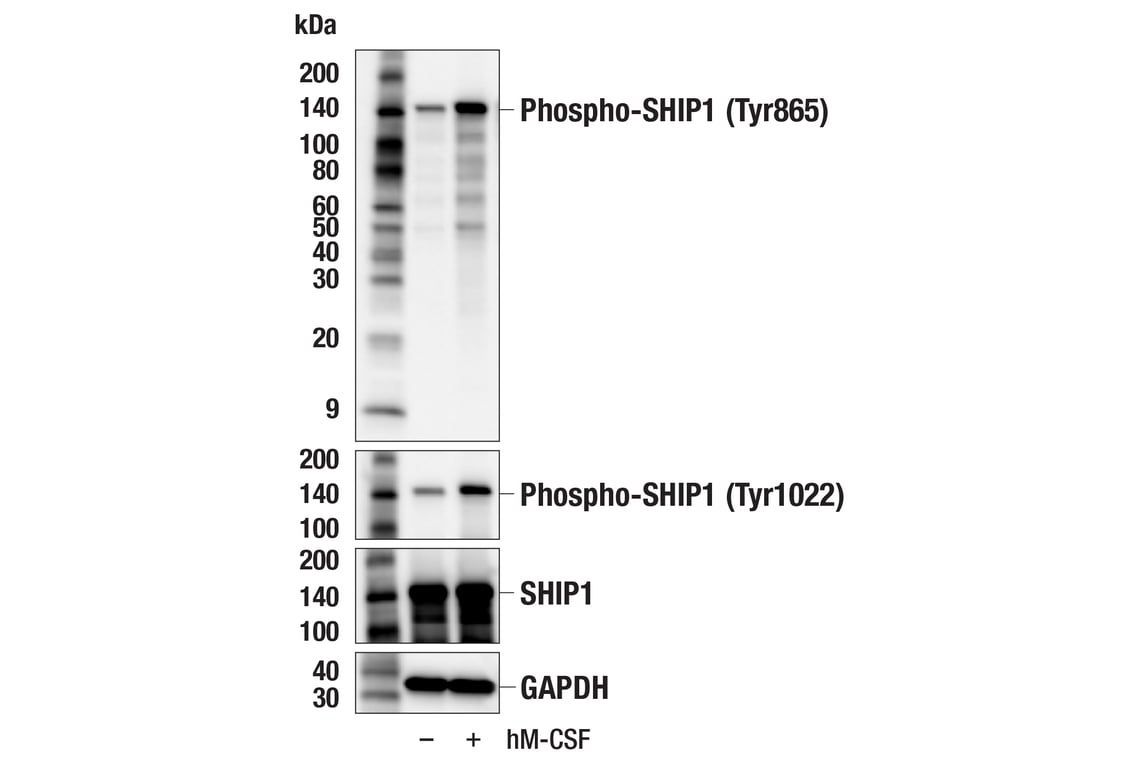
Western blot analysis of extracts from GDM-1 cells, serum-starved overnight and untreated (-) or treated with Human Macrophage Colony Stimulating Factor (hM-CSF) (100 ng/mL, 5 min; +), using Phospho-SHIP1 (Tyr865) (F3N9M) Rabbit mAb (upper), Phospho-SHIP1 (Tyr1022) Antibody #3941 (upper-middle), SHIP1 (C40G9) Rabbit mAb #2727 (lower-middle), or GAPDH (D16H11) XP® Rabbit mAb #5174 (lower).
Western Blotting Image 1: Phospho-SHIP1 (Tyr865) (F3N9M) Rabbit Monoclonal Antibody
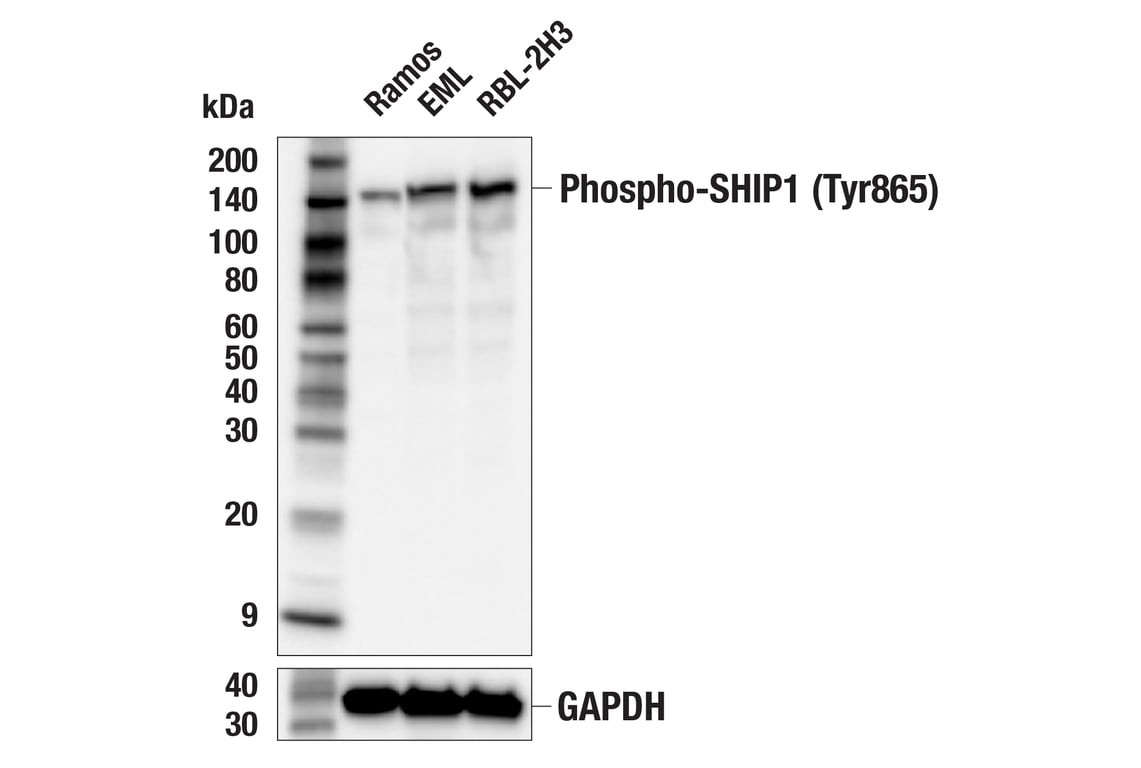
Western blot analysis of extracts from Ramos, EML, and RBL-2H3 cells using Phospho-SHIP1 (Tyr865) (F3N9M) Rabbit mAb (upper) or GAPDH (D16H11) XP® Rabbit mAb #5174 (lower).
Western Blotting Image 2: Phospho-SHIP1 (Tyr865) (F3N9M) Rabbit Monoclonal Antibody
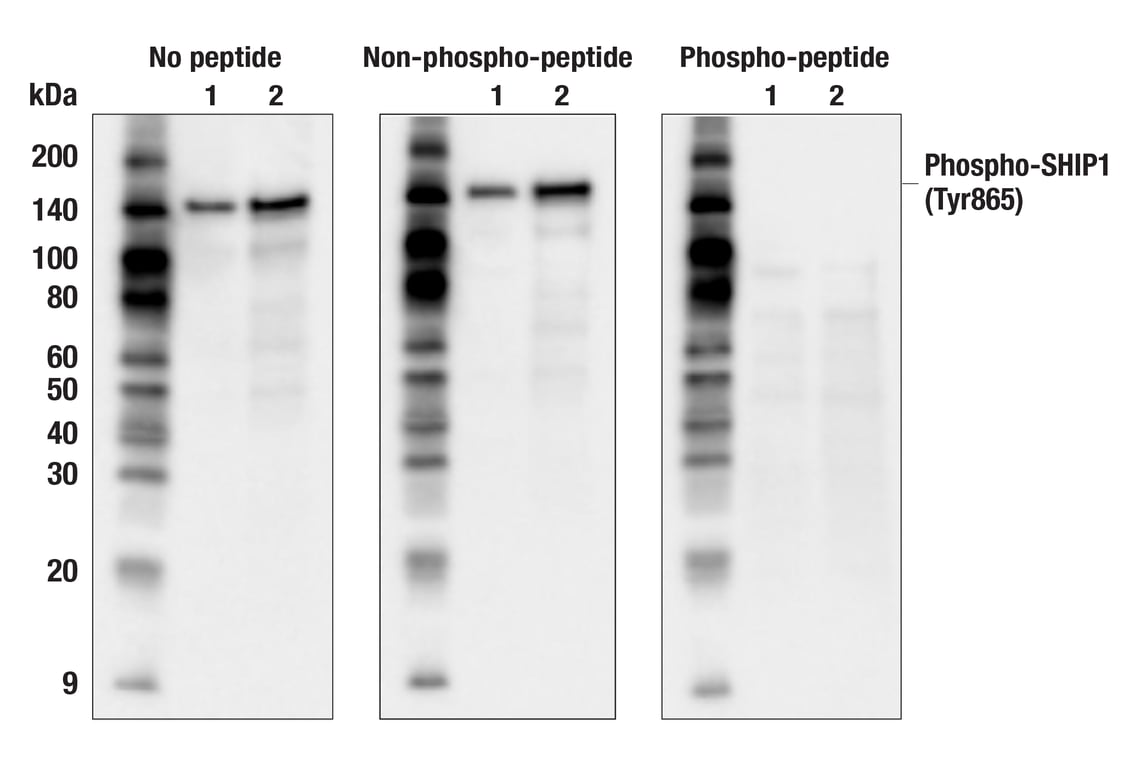
Western blot analysis of extracts from Ramos (lane 1) and EML (lane 2) cells using Phospho-SHIP1 (Tyr865) (F3N9M) Rabbit mAb (left). Phospho-specificity is demonstrated by pre-incubating the antibody with non-phosphorylated (middle) or phosphorylated (right) peptides against a region surrounding Tyr865 of SHIP1.
Western Blotting Image 3: Phospho-SHIP1 (Tyr865) (F3N9M) Rabbit Monoclonal Antibody
Orders: 877-616-CELL (2355) [email protected] Support: 877-678-TECH (8324) [email protected] Web: cellsignal.com
For Research Use Only. Not for Use in Diagnostic Procedures.

Revision 5

Cell Signaling Technology Logo
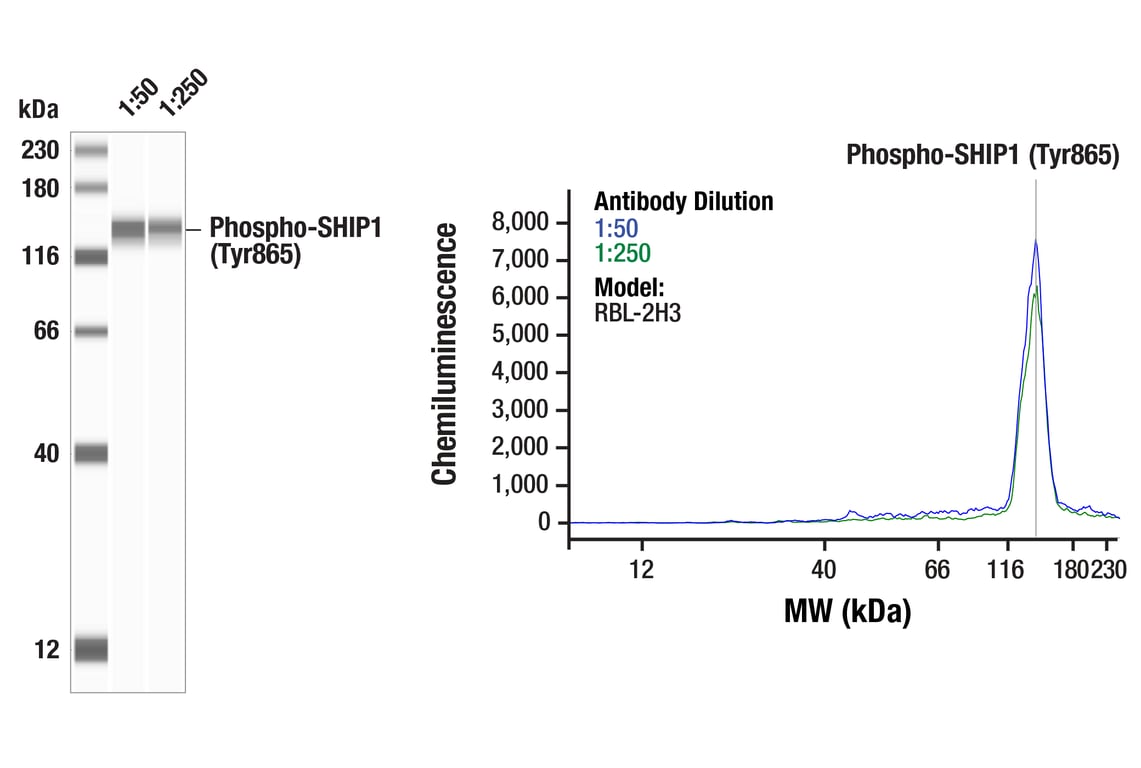
Simple Western™ analysis of lysates (1.0 mg/mL) from RBL-2H3 using Phospho-SHIP1 (Tyr865) (F3N9M) Rabbit mAb #79139. The virtual lane view (left) shows the target band (as indicated) at 1:50 and 1:250 dilutions of primary antibody. The corresponding electropherogram view (right) plots chemiluminescence by molecular weight along the capillary at 1:50 (blue line) and 1:250 (green line) dilutions of primary antibody. This experiment was performed under reducing conditions on the JessTM Simple Western instrument from ProteinSimple, a BioTechne brand, using the 12-230 kDa separation module.
Western Blotting Image 1: Phospho-SHIP1 (Tyr865) (F3N9M) Rabbit Monoclonal Antibody
Immunoprecipitation of phospho-SHIP1 (Tyr865) protein from Ramos cell extracts. Lane 1 is 10% input, lane 2 is Rabbit (DA1E) mAb IgG XP® Isotype Control #3900, and lane 3 is Phospho-SHIP1 (Tyr865) (F3N9M) Rabbit mAb. Western blot analysis was performed using Phospho-SHIP1 (Tyr865) (F3N9M) Rabbit mAb. Anti-rabbit IgG, HRP-linked Antibody #7074 was used as a secondary antibody.
Immunoprecipitation Image 1: Phospho-SHIP1 (Tyr865) (F3N9M) Rabbit Monoclonal Antibody
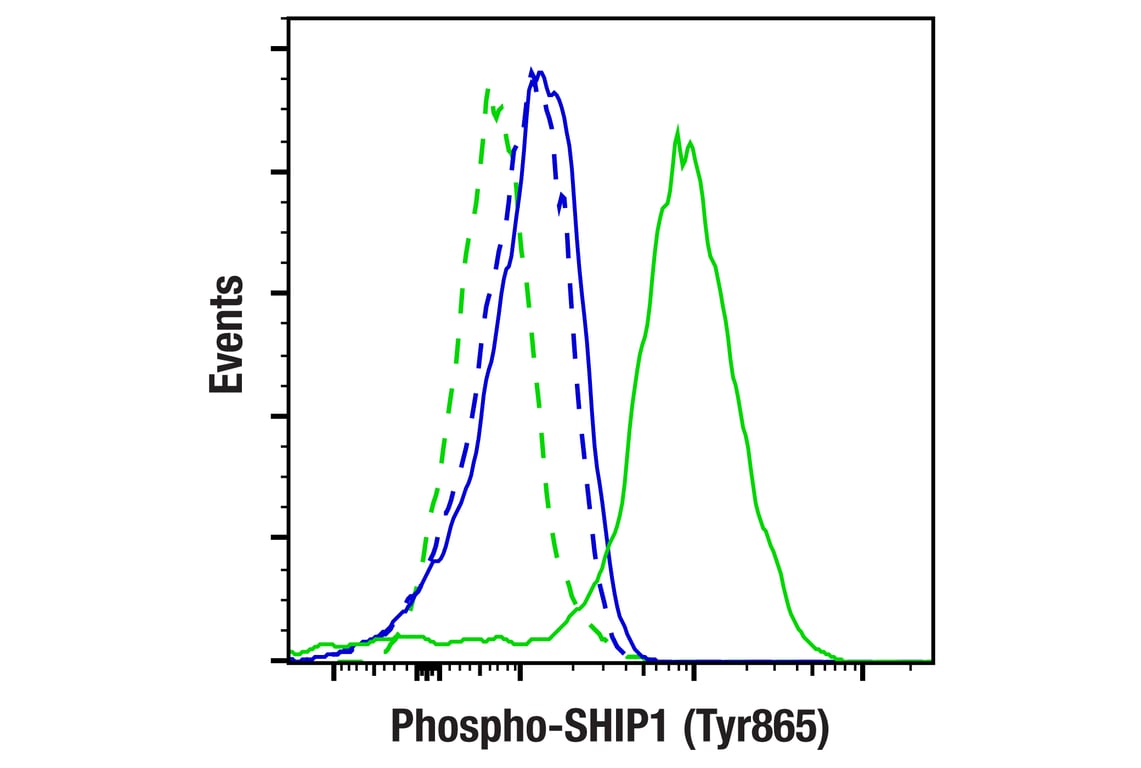
Flow cytometric analysis of Renca cells (blue, negative) and EML cells (green, positive) using Phospho-SHIP1 (Tyr865) (F3N9M) Rabbit mAb (solid lines) or concentration-matched Rabbit (DA1E) mAb IgG XP® Isotype Control #3900 (dashed lines). Anti-rabbit IgG (H+L), F(ab')2 Fragment (Alexa Fluor® 488 Conjugate) #4412 was used as a secondary antibody.
Flow Cytometry Image 1: Phospho-SHIP1 (Tyr865) (F3N9M) Rabbit Monoclonal Antibody
Orders: 877-616-CELL (2355) [email protected] Support: 877-678-TECH (8324) [email protected] Web: cellsignal.com
For Research Use Only. Not for Use in Diagnostic Procedures.

Revision 5

Cell Signaling Technology Logo
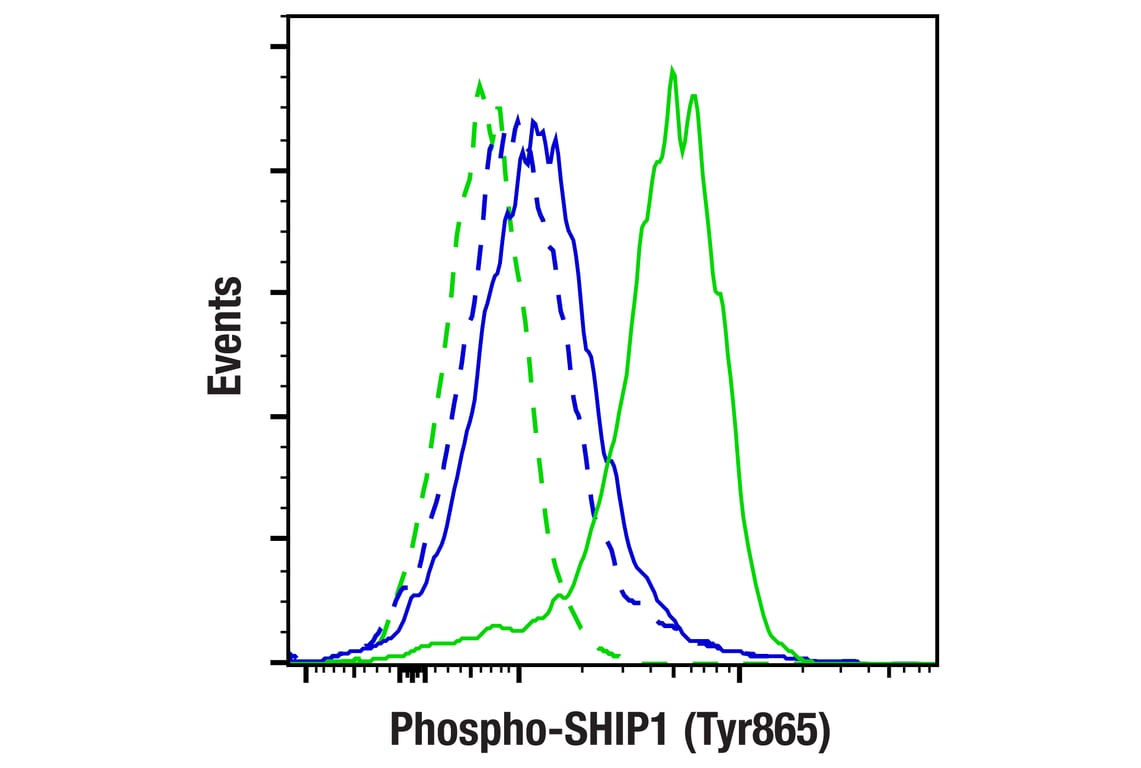
Flow cytometric analysis of NCI-H69 cells (blue) and Ramos cells treated with anti-human IgM (12 µg/mL, 5 min; green) using Phospho-SHIP1 (Tyr865) (F3N9M) Rabbit mAb (solid lines) or concentration-matched Rabbit (DA1E) mAb IgG XP® Isotype Control #3900 (dashed lines). Anti-rabbit IgG (H+L), F(ab')2 Fragment (Alexa Fluor® 488 Conjugate) #4412 was used as a secondary antibody.
Flow Cytometry Image 2: Phospho-SHIP1 (Tyr865) (F3N9M) Rabbit Monoclonal Antibody
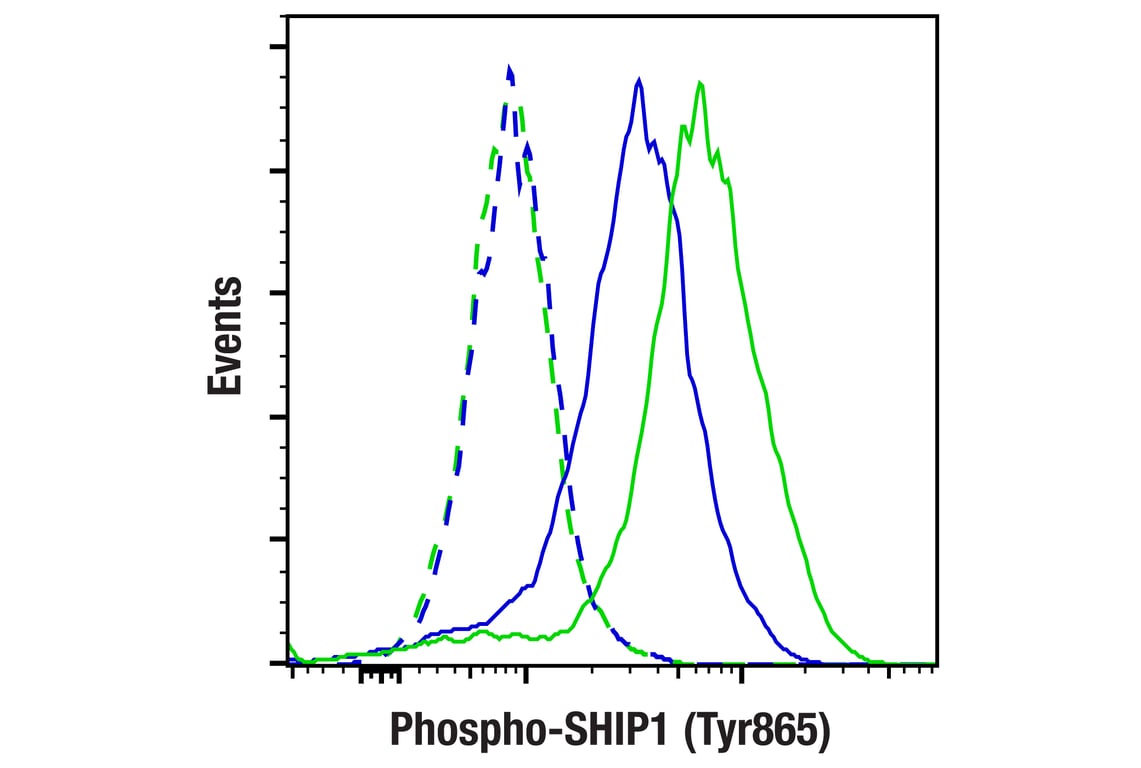
Flow cytometric analysis of EML cells, treated post-fixation with λ phosphatase (blue) or untreated (green) using Phospho-SHIP1 (Tyr865) (F3N9M) Rabbit mAb (solid lines) or concentration-matched Rabbit (DA1E) mAb IgG XP® Isotype Control #3900 (dashed lines). Anti-rabbit IgG (H+L), F(ab')2 Fragment (Alexa Fluor® 488 Conjugate) #4412 was used as a secondary antibody.
Flow Cytometry Image 3: Phospho-SHIP1 (Tyr865) (F3N9M) Rabbit Monoclonal Antibody
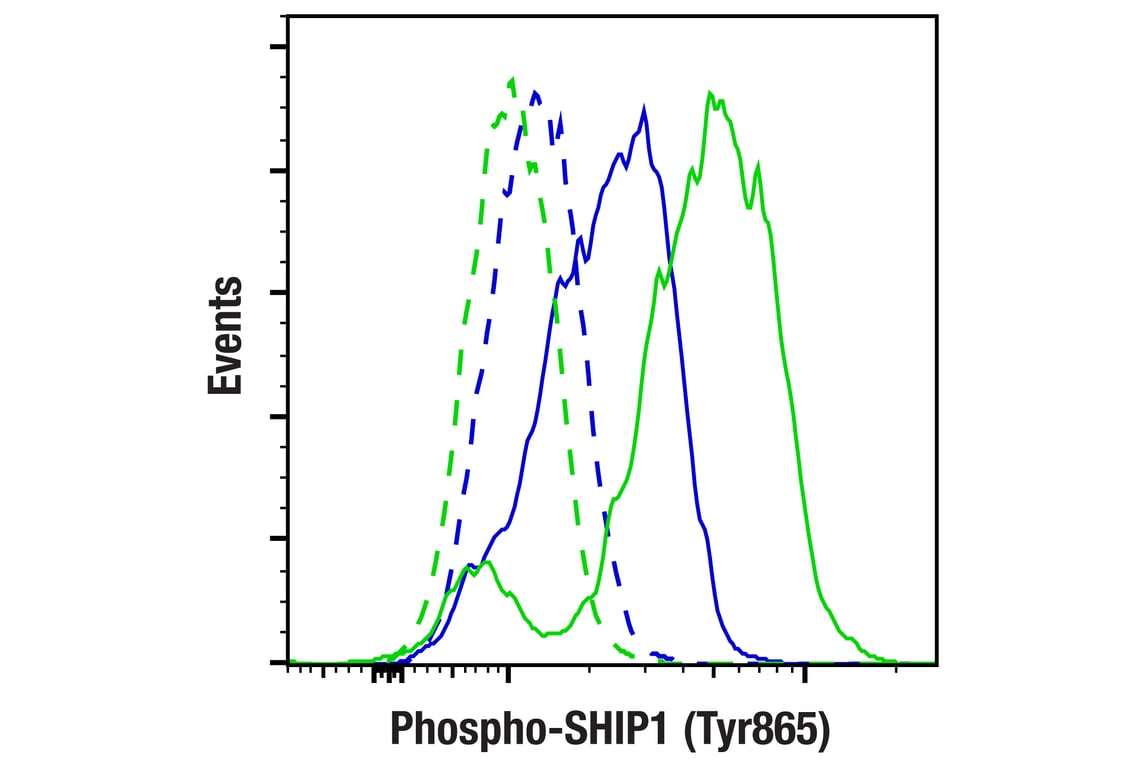
Flow cytometric analysis of Ramos cells treated with anti-human IgM (12 µg/mL, 5 min), and either treated post-fixation with λ phosphatase (blue) or untreated (green), using Phospho-SHIP1 (Tyr865) (F3N9M) Rabbit mAb (solid lines) or concentration-matched Rabbit (DA1E) mAb IgG XP® Isotype Control #3900 (dashed lines). Anti-rabbit IgG (H+L), F(ab')2 Fragment (Alexa Fluor® 488 Conjugate) #4412 was used as a secondary antibody.
Flow Cytometry Image 4: Phospho-SHIP1 (Tyr865) (F3N9M) Rabbit Monoclonal Antibody
Orders: 877-616-CELL (2355) [email protected] Support: 877-678-TECH (8324) [email protected] Web: cellsignal.com
For Research Use Only. Not for Use in Diagnostic Procedures.