Revision 3

#92657

Store at -20C

CST Logo
Orders:

877-616-CELL (2355)

[email protected]

Support:

877-678-TECH (8324)

3 Trask Lane | Danvers | Massachusetts | 01923 | USA

For Research Use Only. Not for Use in Diagnostic Procedures.

Applications:
W, W-S, IP, IF-F, IF-IC

Reactivity:
H M R

Sensitivity:
Endogenous

MW (kDa):
49

Source/Isotype:
Rabbit IgG

UniProt ID:
#Q13562

Entrez-Gene Id:
4760

Product Usage Information

Application Dilution
Western Blotting 1:1000
Simple Western™ 1:10 - 1:50
Immunoprecipitation 1:100
Immunofluorescence (Frozen) 1:50
Immunofluorescence (Immunocytochemistry) 1:100

Storage

Supplied in 10 mM sodium HEPES (pH 7.5), 150 mM NaCl, 100 µg/mL BSA, 50% glycerol, and less than 0.02% sodium azide. Store at –20°C. Do not aliquot the antibody.

Specificity/Sensitivity

Phospho-NeuroD1 (Ser274) (F3C7A) Rabbit Monoclonal Antibody recognizes endogenous levels of NeuroD1 protein only when phosphorylated at Ser274. This antibody does not cross-react with other NeuroD1 phosphorylation sites. Species reactivity for immunofluorescence is mouse only.

Source / Purification

Monoclonal antibody is produced by immunizing animals with a synthetic phosphopeptide corresponding to residues surrounding Ser274 of human NeuroD1 protein.

Background

Neurogenic differentiation factor 1 (NeuroD1) is a member of the basic helix-loop-helix (bHLH) family of transcription factors. These proteins function by forming heterodimers with E-proteins and binding to the canonical E-box sequence CANNTG (1,2). Neuronal activity results in CaMKII-mediated phosphorylation of NeuroD1 at Ser336, which is necessary for dendrite formation and growth (3,4). NeuroD1 is also phosphorylated at Ser274, though the results are context dependent, as phosphorylation by Erk stimulates NeuroD1 activity in pancreatic β cells while phosphorylation by GSK-3β inhibits NeuroD1 in neurons (3). NeuroD1 is crucially important in both the pancreas and the developing nervous system and plays a large role in the development of the inner ear and mammalian retina (3). Mice lacking NeuroD1 become severely diabetic and die shortly after birth due to defects in β cell differentiation (2,3,5,6). The lack of NeuroD1 in the brain results in severe defects in development (5). Human mutations have been linked to a number of types of diabetes, including type I diabetes mellitus and maturity-onset diabetes of the young (1,3).

Erk1/2 kinase activity is stimulated by glucose and calcium influx in pancreatic beta cells, and the subsequent phosphorylation of NeuroD1 at Ser274 promotes insulin gene transcription (7,8). Phosphorylated NeuroD1 in the pancreas is increasingly translocated to the nucleus, where it directly interacts with the insulin promoter (9). Active, nuclear NeuroD1 acts in synergy with Pdx1 to activate insulin, NKX2.2, and islet amyloid polypeptide (IAPP) transcription while suppressing Pdx1-driven transcription of somatostatin (10,11). In developing rat pineal gland, phosphorylation of NeuroD1 at Ser274 and Ser336 is tightly correlated with NeuroD1 nuclear localization, and cytoplasmic to nuclear shuttling of the protein is under cyclical day and night adrenergic control (12). In 293T cells, transfection of a nonphosphorylatable Ser274Ala mutant blocked NeuroD1 ubiquitination and proteasomal degradation (13). The localization of phosphorylated NeuroD1 is reversed in these cells compared to pancreatic beta cells, with a Ser274Glu phospho-mimic localized primarily to the cytoplasm in the former, further evidence of the context-specific nature of this modification. (13).

Species Reactivity

Species reactivity is determined by testing in at least one approved application (e.g., western blot).

Western Blot Buffer

IMPORTANT: For western blots, incubate membrane with diluted primary antibody in 5% w/v BSA, 1X TBS, 0.1% Tween® 20 at 4°C with gentle shaking, overnight.

Applications Key

W: Western Blotting W-S: Simple Western™ IP: Immunoprecipitation IF-F: Immunofluorescence (Frozen) IF-IC: Immunofluorescence (Immunocytochemistry)

Cross-Reactivity Key

H: Human M: Mouse R: Rat

Trademarks and Patents

Cell Signaling Technology is a trademark of Cell Signaling Technology, Inc.

All other trademarks are the property of their respective owners. Visit cellsignal.com/trademarks for more information.

Limited Uses

Except as otherwise expressly agreed in a writing signed by a legally authorized representative of CST, the following terms apply to Products provided by CST, its affiliates or its distributors. Any Customer's terms and conditions that are in addition to, or different from, those contained herein, unless separately accepted in writing by a legally authorized representative of CST, are rejected and are of no force or effect.

Products are labeled with For Research Use Only or a similar labeling statement and have not been approved, cleared, or licensed by the FDA or other regulatory foreign or domestic entity, for any purpose. Customer shall not use any Product for any diagnostic or therapeutic purpose, or otherwise in any manner that conflicts with its labeling statement. Products sold or licensed by CST are provided for Customer as the end-user and solely for research and development uses. Any use of Product for diagnostic, prophylactic or therapeutic purposes, or any purchase of Product for resale (alone or as a component) or other commercial purpose, requires a separate license from CST. Customer shall (a) not sell, license, loan, donate or otherwise transfer or make available any Product to any third party, whether alone or in combination with other materials, or use the Products to manufacture any commercial products, (b) not copy, modify, reverse engineer, decompile, disassemble or otherwise attempt to discover the underlying structure or technology of the Products, or use the Products for the purpose of developing any products or services that would compete with CST products or services, (c) not alter or remove from the Products any trademarks, trade names, logos, patent or copyright notices or markings, (d) use the Products solely in accordance with CST Product Terms of Sale and any applicable documentation, and (e) comply with any license, terms of service or similar agreement with respect to any third party products or services used by Customer in connection with the Products.

Orders: 877-616-CELL (2355) [email protected] Support: 877-678-TECH (8324) [email protected] Web: cellsignal.com
For Research Use Only. Not for Use in Diagnostic Procedures.

Revision 3

Cell Signaling Technology Logo
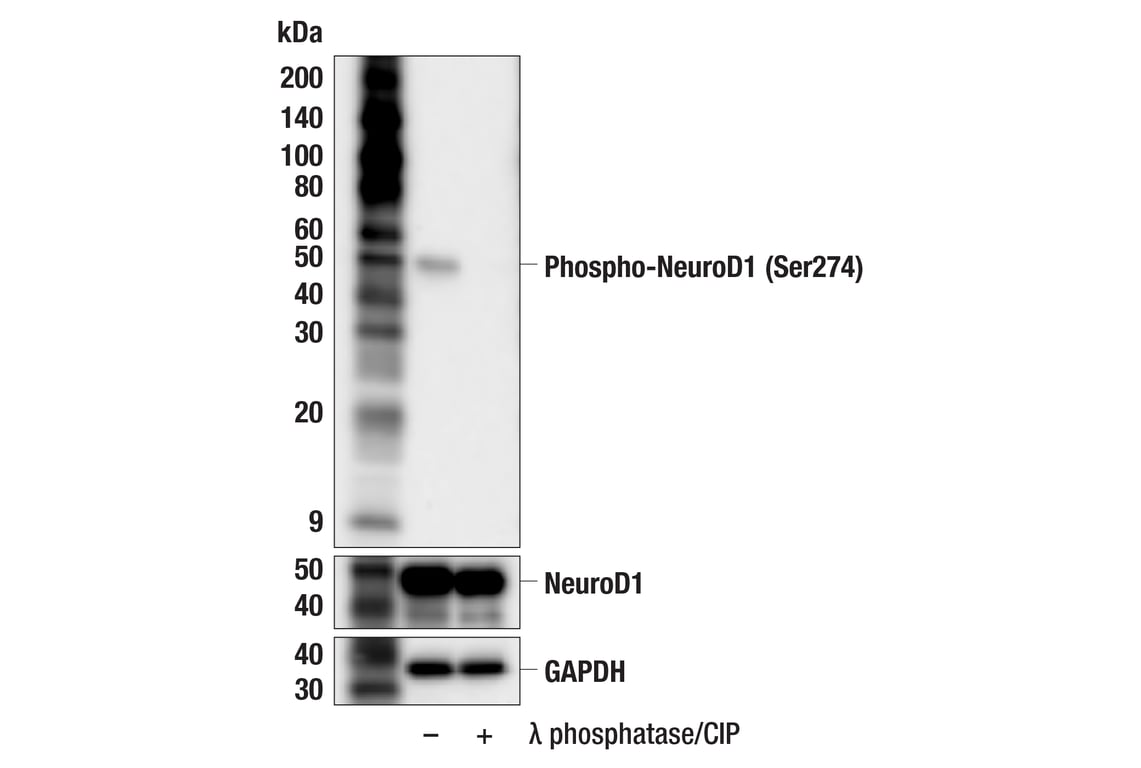
Western blot analysis of extracts from NCI-H82 cells, untreated (-) or treated with λ phosphatase/calf intestinal phosphatase (CIP) (+), using Phospho-NeuroD1 (Ser274) (F3C7A) Rabbit mAb (upper), NeuroD1 (E3E4F) Rabbit mAb #62953 (middle), or GAPDH (D16H11) XP® Rabbit mAb #5174 (lower).
Western Blotting Image 1: Phospho-NeuroD1 (Ser274) (F3C7A) Rabbit Monoclonal Antibody
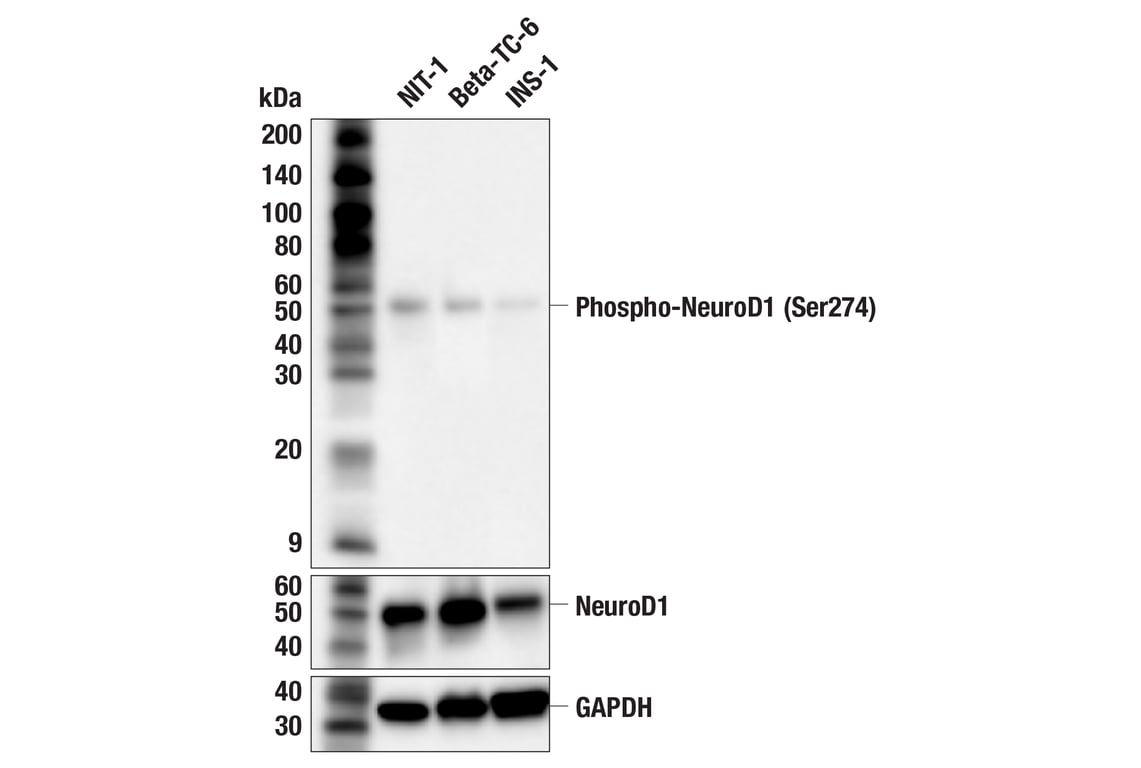
Western blot analysis of extracts from NIT-1, Beta-TC-6, and INS-1 cells using Phospho-NeuroD1 (Ser274) (F3C7A) Rabbit mAb (upper), NeuroD1 (E3E4F) Rabbit mAb #62953 (middle), or GAPDH (D16H11) XP® Rabbit mAb #5174 (lower).
Western Blotting Image 2: Phospho-NeuroD1 (Ser274) (F3C7A) Rabbit Monoclonal Antibody
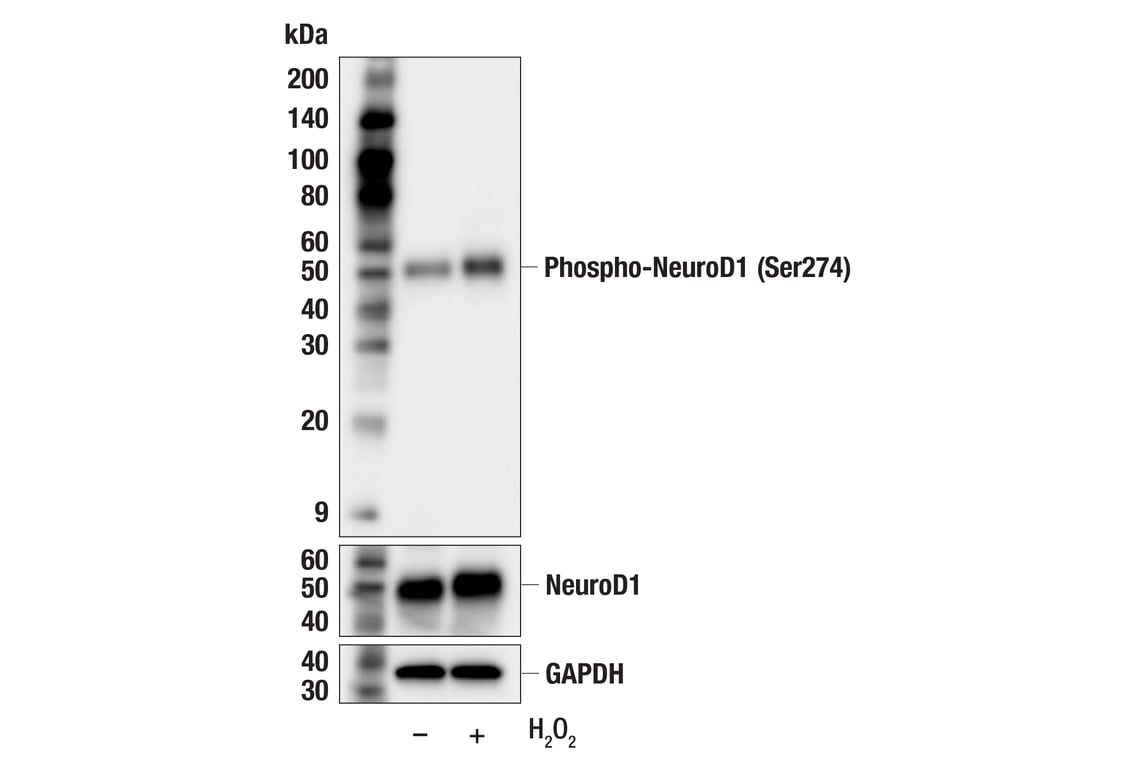
Western blot analysis of extracts from WERI-Rb-1 cells, untreated (-) or treated with hydrogen peroxide (H2O2) (4 mM, 15 min; +), using Phospho-NeuroD1 (Ser274) (F3C7A) Rabbit mAb (upper), NeuroD1 (E3E4F) Rabbit mAb #62953 (middle), or GAPDH (D16H11) XP® Rabbit mAb #5174 (lower).
Western Blotting Image 3: Phospho-NeuroD1 (Ser274) (F3C7A) Rabbit Monoclonal Antibody
Orders: 877-616-CELL (2355) [email protected] Support: 877-678-TECH (8324) [email protected] Web: cellsignal.com
For Research Use Only. Not for Use in Diagnostic Procedures.

Revision 3

Cell Signaling Technology Logo
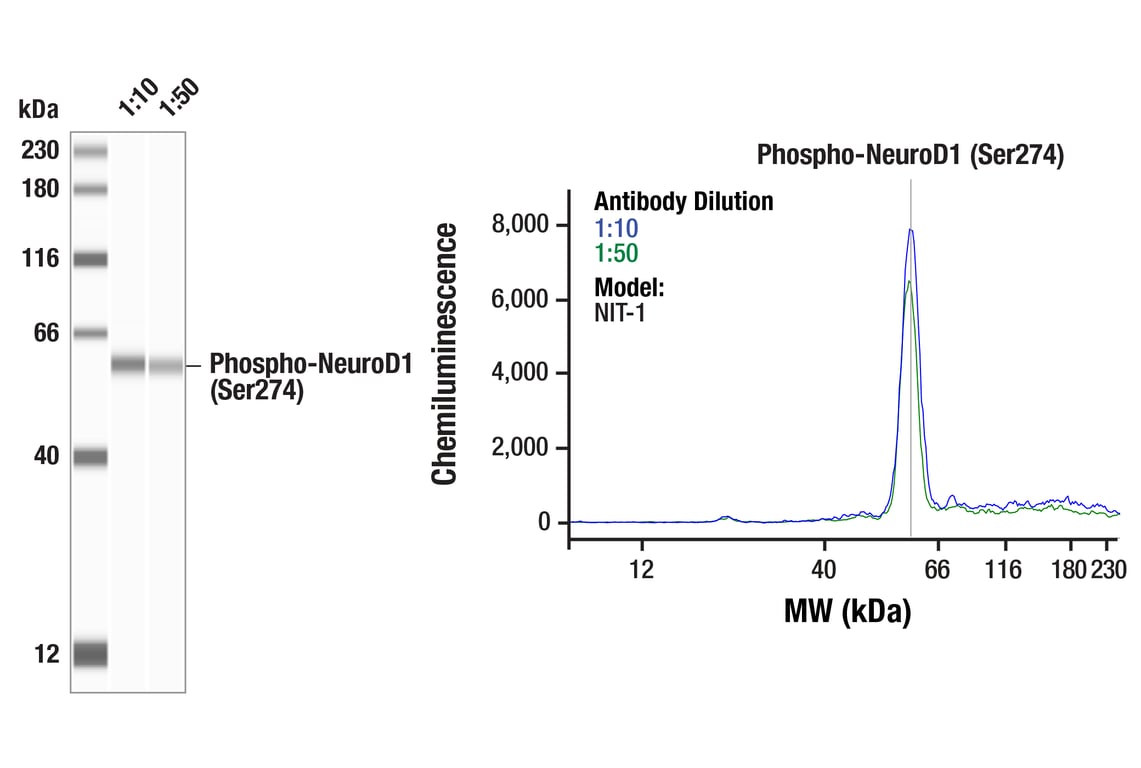
Simple Western™ analysis of lysates (1 mg/mL) from NIT-1 cells using Phospho-NeuroD1 (Ser274) (F3C7A) Rabbit mAb #92657. The virtual lane view (left) shows the target band (as indicated) at 1:10 and 1:50 dilutions of primary antibody. The corresponding electropherogram view (right) plots chemiluminescence by molecular weight along the capillary at 1:10 (blue line) and 1:50 (green line) dilutions of primary antibody. This experiment was performed under reducing conditions on the Jess™ Simple Western instrument from ProteinSimple, a BioTechne brand, using the 12-230 kDa separation module.
Western Blotting Image 1: Phospho-NeuroD1 (Ser274) (F3C7A) Rabbit Monoclonal Antibody
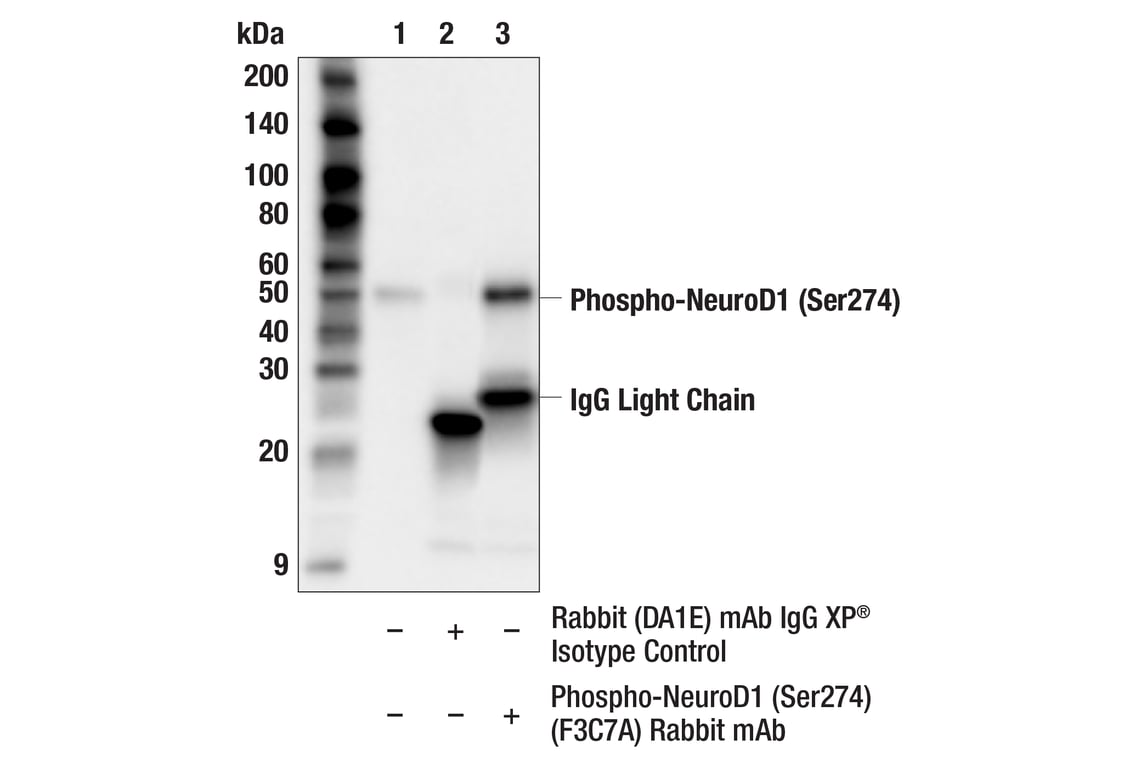
Immunoprecipitation of phospho-NeuroD1 (Ser274) protein from NCI-H524 cell extracts. Lane 1 is 10% input, lane 2 is Rabbit (DA1E) mAb IgG XP® Isotype Control #3900, and lane 3 is Phospho-NeuroD1 (Ser274) (F3C7A) Rabbit mAb. Western blot analysis was performed using Phospho-NeuroD1 (Ser274) (F3C7A) Rabbit mAb. Mouse Anti-Rabbit IgG (Light-Chain Specific) (D4W3E) mAb (HRP Conjugate) #93702 was used as a secondary antibody.
Immunoprecipitation Image 1: Phospho-NeuroD1 (Ser274) (F3C7A) Rabbit Monoclonal Antibody
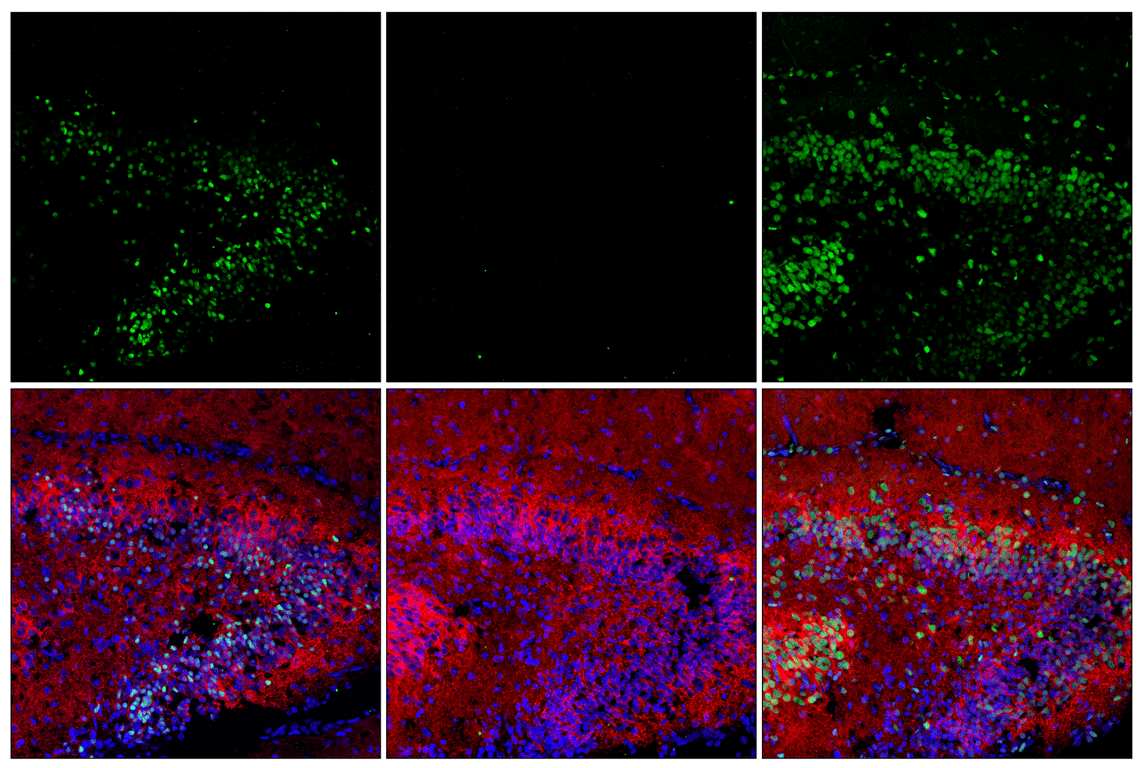
Confocal immunofluorescent analysis of fixed frozen P5 mouse hippocampus using Phospho-NeuroD1 (Ser274) (F3C7A) Rabbit mAb (left, green) and NeuroD1 (E3E4F) Rabbit mAb #62953 (right, green). The phospho-specificity of F3C7A was verified by post-processing tissues with Lambda Protein Phosphatase Kit #89726 (middle). After blocking free secondary antibody binding sites with Rabbit (DA1E) mAb IgG XP® Isotype Control #3900, tissues were then labeled with Doublecortin (F6K9E) Rabbit mAb (Alexa Fluor® 647 Conjugate) #55010 (red) and mounted in ProLong Gold Antifade Reagent with DAPI #8961 (blue).
Immunofluorescence Image 1: Phospho-NeuroD1 (Ser274) (F3C7A) Rabbit Monoclonal Antibody
Orders: 877-616-CELL (2355) [email protected] Support: 877-678-TECH (8324) [email protected] Web: cellsignal.com
For Research Use Only. Not for Use in Diagnostic Procedures.

Revision 3

Cell Signaling Technology Logo
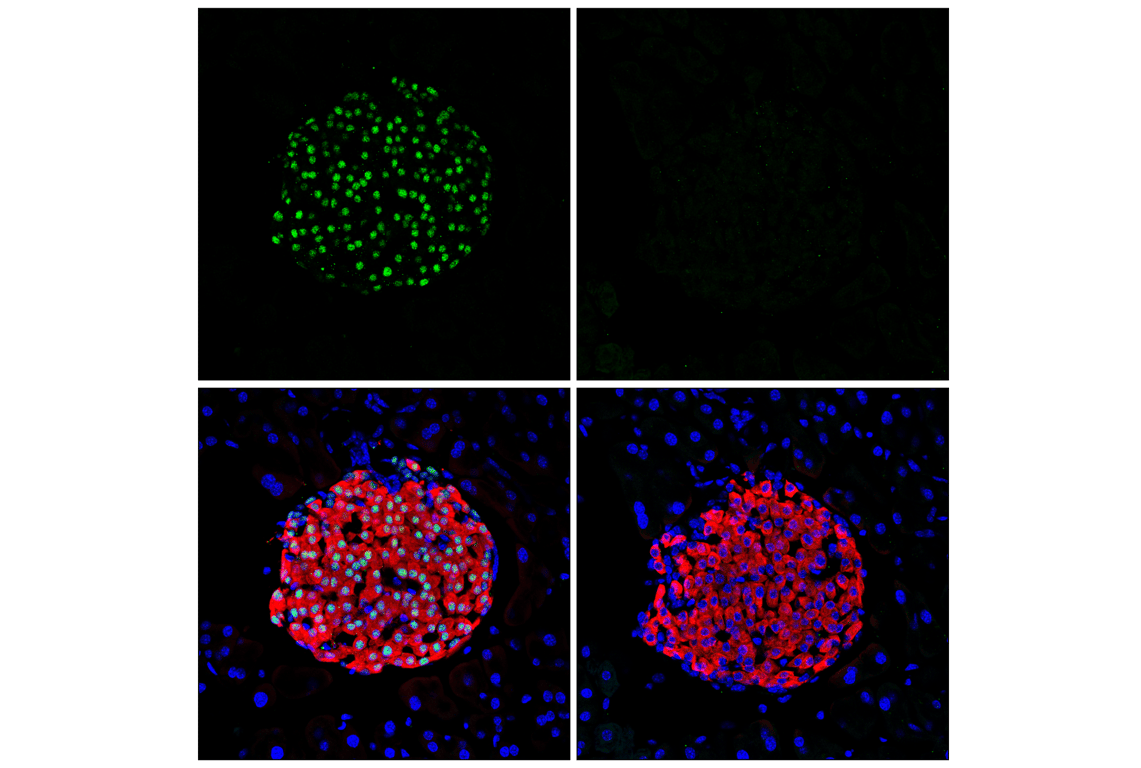
Confocal immunofluorescent analysis of fixed frozen C57BL/6 mouse pancreas, untreated (left) or or post-processed with Lambda Protein Phosphatase Kit #89726 (right), using Phospho-NeuroD1 (Ser274) (F3C7A) Rabbit mAb (green), Insulin (C27C9) Rabbit mAb (Alexa Fluor® 647 Conjugate) #9008 (red), and ProLong Gold Antifade Reagent with DAPI #8961 (blue).
Immunofluorescence Image 2: Phospho-NeuroD1 (Ser274) (F3C7A) Rabbit Monoclonal Antibody
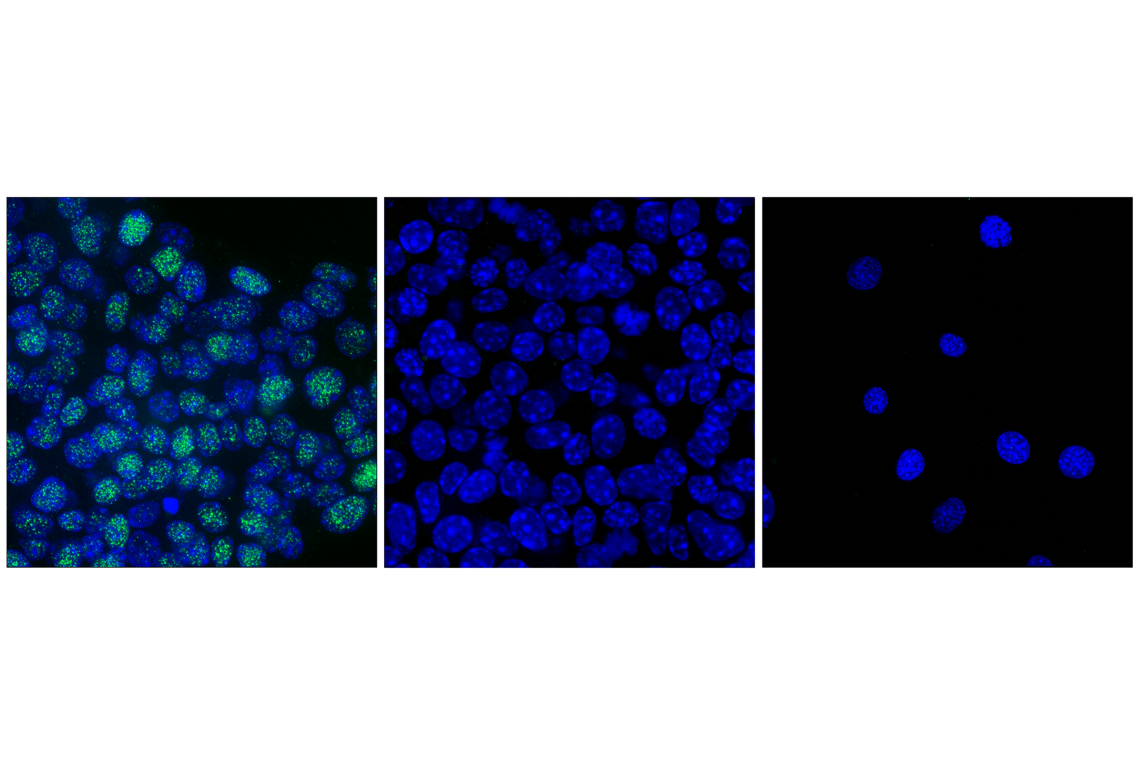
Confocal immunofluorescent analysis of NIT-1 cells, untreated (left) or post-processed with Lambda Protein Phosphatase Kit #89726 (middle), and NIH/3T3 cells (right, negative) using Phospho-NeuroD1 (Ser274) (F3C7A) Rabbit mAb (green) and DAPI #4083 (blue).
Immunofluorescence Image 1: Phospho-NeuroD1 (Ser274) (F3C7A) Rabbit Monoclonal Antibody
Orders: 877-616-CELL (2355) [email protected] Support: 877-678-TECH (8324) [email protected] Web: cellsignal.com
For Research Use Only. Not for Use in Diagnostic Procedures.