Revision 1
#95895
Store at -20C

877-616-CELL (2355)
877-678-TECH (8324)
3 Trask Lane | Danvers | Massachusetts | 01923 | USA
For Research Use Only. Not for Use in Diagnostic Procedures.
Applications:
W
Reactivity:
H
Sensitivity:
Endogenous
MW (kDa):
135
Source/Isotype:
Rabbit
UniProt ID:
#Q7Z4V5
Entrez-Gene Id:
84717
Product Usage Information
| Application | Dilution |
|---|---|
| Western Blotting | 1:1000 |
Storage
Specificity/Sensitivity
Source / Purification
Background
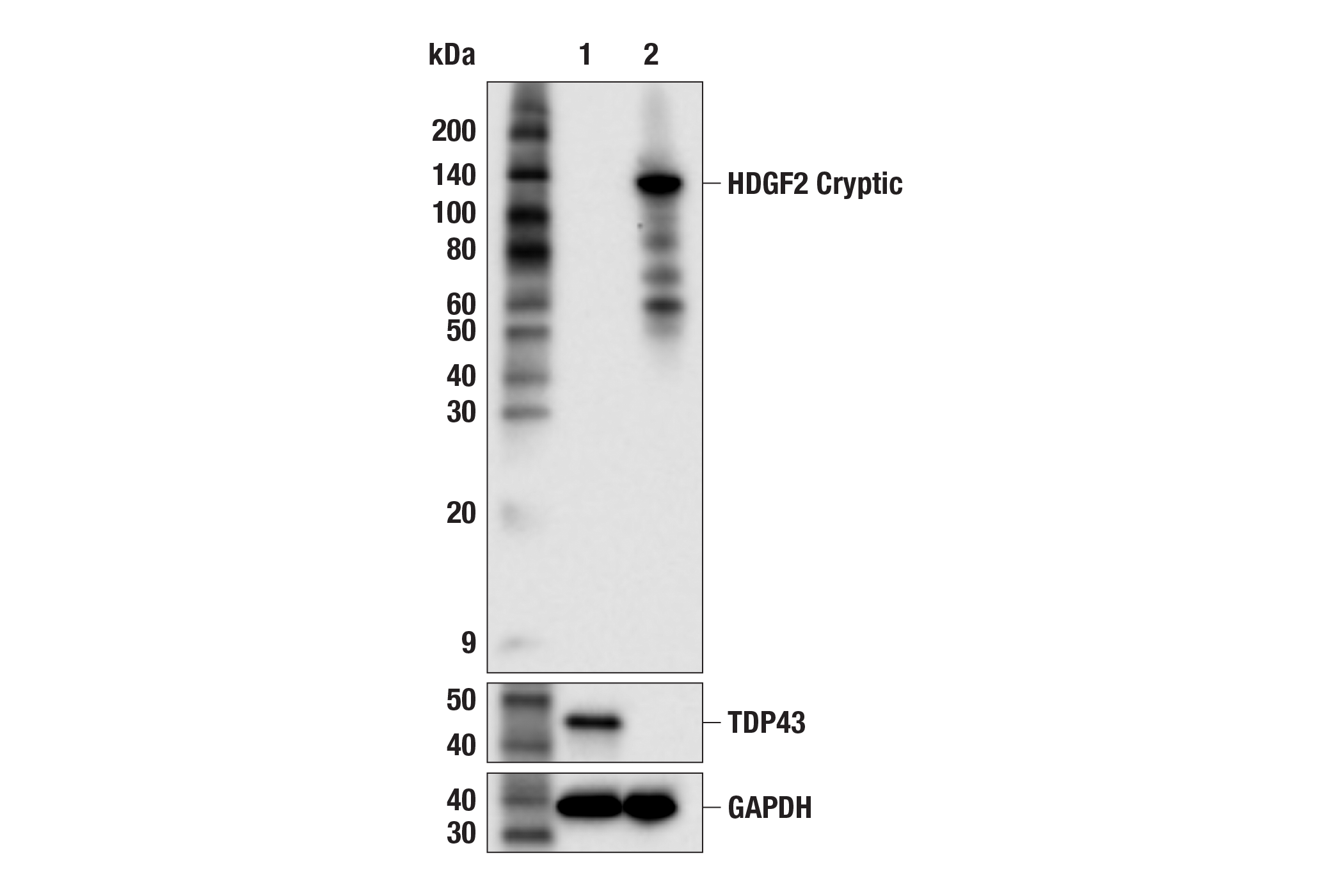
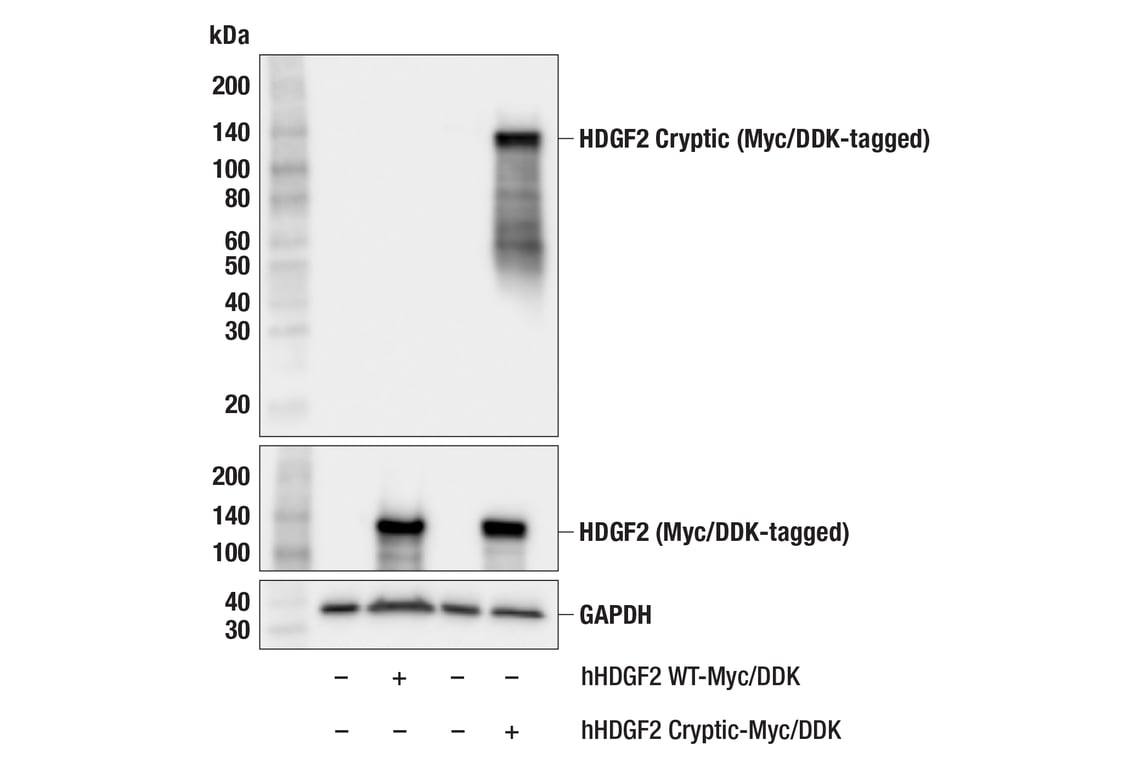
Exon splicing of HDGF2 mRNA is regulated by TAR DNA-binding protein 43 (TDP43), a ubiquitously expressed DNA/RNA-binding protein belonging to the heterogeneous nuclear ribonucleoprotein (hnRNP) family. Dysfunctional TDP43, driven by genetic mutations, hyperphosphorylation, ubiquitination, and cleavage forms insoluble cytoplasmic aggregates. These aggregates are pathological hallmarks of patients with amyotrophic lateral sclerosis (ALS), frontotemporal lobar degeneration (FTLD), and limbic predominant age-related TDP-43 encephalopathy (LATE). These inclusions are also present in some patients with other neurodegenerative diseases (NDDs), including Alzheimer’s disease (AD) and Chronic traumatic encephalopathy (CTE) (4,5). TDP43 cytoplasmic mislocalization and aggregation lead to altered HDGF2 mRNA splicing and the inclusion of cryptic exons. This results in an alternative translated HDGF2 protein that includes cryptic exon-encoded neo epitopes. Neo epitope-containing HDGF2 is detected in CSF and plasma, suggesting it may be a biomarker for neurodegenerative diseases with TDP43 pathology (6,7).
Background References
- Baude, A. et al. (2016) Nucleic Acids Res 44, 2214-26.
- LeRoy, G. et al. (2019) Sci Adv 5, eaay3068.
- Albagli, E.A. et al. (2024) Mol Neurodegener 19, 79.
- Jo, M. et al. (2020) Exp Mol Med 52, 1652-1662.
- de Boer, E.M.J. et al. (2020) J Neurol Neurosurg Psychiatry 92, 86-95.
- Agra Almeida Quadros, A.R. et al. (2024) Acta Neuropathol 147, 9.
- Irwin, K.E. et al. (2024) Nat Med 30, 382-393.
Species Reactivity
Species reactivity is determined by testing in at least one approved application (e.g., western blot).
Western Blot Buffer
IMPORTANT: For western blots, incubate membrane with diluted primary antibody in 5% w/v BSA, 1X TBS, 0.1% Tween® 20 at 4°C with gentle shaking, overnight.
Applications Key
W: Western Blotting
Cross-Reactivity Key
H: Human
Trademarks and Patents
Cell Signaling Technology is a trademark of Cell Signaling Technology, Inc.
All other trademarks are the property of their respective owners. Visit cellsignal.com/trademarks for more information.
Limited Uses
Except as otherwise expressly agreed in a writing signed by a legally authorized representative of CST, the following terms apply to Products provided by CST, its affiliates or its distributors. Any Customer's terms and conditions that are in addition to, or different from, those contained herein, unless separately accepted in writing by a legally authorized representative of CST, are rejected and are of no force or effect.
Products are labeled with For Research Use Only or a similar labeling statement and have not been approved, cleared, or licensed by the FDA or other regulatory foreign or domestic entity, for any purpose. Customer shall not use any Product for any diagnostic or therapeutic purpose, or otherwise in any manner that conflicts with its labeling statement. Products sold or licensed by CST are provided for Customer as the end-user and solely for research and development uses. Any use of Product for diagnostic, prophylactic or therapeutic purposes, or any purchase of Product for resale (alone or as a component) or other commercial purpose, requires a separate license from CST. Customer shall (a) not sell, license, loan, donate or otherwise transfer or make available any Product to any third party, whether alone or in combination with other materials, or use the Products to manufacture any commercial products, (b) not copy, modify, reverse engineer, decompile, disassemble or otherwise attempt to discover the underlying structure or technology of the Products, or use the Products for the purpose of developing any products or services that would compete with CST products or services, (c) not alter or remove from the Products any trademarks, trade names, logos, patent or copyright notices or markings, (d) use the Products solely in accordance with CST Product Terms of Sale and any applicable documentation, and (e) comply with any license, terms of service or similar agreement with respect to any third party products or services used by Customer in connection with the Products.
Revision 1