Revision 3

#69219

Store at -20C

CST Logo
Orders:

877-616-CELL (2355)

[email protected]

Support:

877-678-TECH (8324)

3 Trask Lane | Danvers | Massachusetts | 01923 | USA

For Research Use Only. Not for Use in Diagnostic Procedures.

Product Includes Product # Quantity Mol. Wt Isotype/Source
Phospho-Pyruvate Dehydrogenase alpha1 (Ser293) (E4V9L) Rabbit Monoclonal Antibody3711520 µl43 kDaRabbit IgG
Pyruvate Dehydrogenase (C54G1) Rabbit Monoclonal Antibody320520 µl43 kDaRabbit IgG
PDHK1 (C47H1) Rabbit Monoclonal Antibody382020 µl47 kDaRabbit IgG
LDHA (C4B5) Rabbit Monoclonal Antibody358220 µl37 kDaRabbit IgG
LDHB (E8J8T) Rabbit Monoclonal Antibody5629820 µl37 kDaRabbit IgG
Anti-rabbit IgG, HRP-linked Antibody7074100 µlGoat

Please visit cellsignal.com for individual component applications, species cross-reactivity, dilutions, protocols, and additional product information.

Description

The Glycolysis/TCA Cycle Molecular Checkpoint Antibody Sampler Kit provides an economical means of detecting select components involved in the regulation of the connection between glycolysis and the citric acid cycle (tricarboxylic acid (TCA) cycle). The kit includes enough antibodies to perform two western blot experiments with each primary antibody.

Storage

Supplied in 10 mM sodium HEPES (pH 7.5), 150 mM NaCl, 100 µg/mL BSA, 50% glycerol, and less than 0.02% sodium azide. Store at –20°C. Do not aliquot the antibody.

Background

The pyruvate dehydrogenase complex catalyzes the conversion of pyruvate and CoA into acetyl-CoA and CO2 in the presence of NAD+. Acetyl-CoA then goes into the citric acid cycle (tricarboxylic acid (TCA) cycle), where it reacts with oxaloacetate to form citrate. The reaction of oxidative decarboxylation of pyruvate serves as a critical link between glycolysis and the citric acid cycle (TCA cycle). In mammalian cells, the pyruvate dehydrogenase complex is located in the mitochondrial matrix (1). This complex is composed of three enzymes: pyruvate dehydrogenase (E1), dihydrolipoamide acetyltransferase (E2), and dihydrolipoamide dehydrogenase (E3). Pyruvate dehydrogenase (E1) consists of two subunits: α and β. This enzyme catalyzes the removal of CO2 from pyruvate. Mutations in the α subunits of pyruvate dehydrogenase (E1) lead to congenital defects that are usually associated with lactic acidosis, neurodegeneration, and early death (2).

Pyruvate dehydrogenase kinase 1 (PDHK1) phosphorylates pyruvate dehydrogenase (E1) α1 subunit at Ser293 to inactivate its activity (3,4). This phosphorylation contributes to the tumor metabolic reprogramming toward glycolysis in hypoxia by inhibiting the citric acid cycle (TCA cycle) (4).

Lactate dehydrogenase (LDH) catalyzes the reversible conversion between pyruvate and lactate. LDH is a tetramer composed of various combinations of LDHA subunit and LDHB subunit to form five different isozymes. LDHA has a higher affinity for pyruvate and preferentially catalyzes the conversion of pyruvate to lactate. LDHA levels are upregulated in many cancers. On the other hand, LDHB has a higher affinity for lactate and preferentially catalyzes the conversion of lactate to pyruvate, enabling cells to use lactate as a nutrient (5-7). Studies show that LDHA/LDHB deficiency suppresses glycolysis and ATP production, inhibiting STING signaling and antitumor immune responses mediated by dendritic cells (8). In addition, acetylation of LDHB inhibits its activity, reduces hepatic lactate clearance, and promotes the progression of non-alcoholic fatty liver disease (NAFLD) (9).

Trademarks and Patents

Cell Signaling Technology is a trademark of Cell Signaling Technology, Inc.

U.S. Patent No. 7,429,487, foreign equivalents, and child patents deriving therefrom.

All other trademarks are the property of their respective owners. Visit cellsignal.com/trademarks for more information.

Limited Uses

Except as otherwise expressly agreed in a writing signed by a legally authorized representative of CST, the following terms apply to Products provided by CST, its affiliates or its distributors. Any Customer's terms and conditions that are in addition to, or different from, those contained herein, unless separately accepted in writing by a legally authorized representative of CST, are rejected and are of no force or effect.

Products are labeled with For Research Use Only or a similar labeling statement and have not been approved, cleared, or licensed by the FDA or other regulatory foreign or domestic entity, for any purpose. Customer shall not use any Product for any diagnostic or therapeutic purpose, or otherwise in any manner that conflicts with its labeling statement. Products sold or licensed by CST are provided for Customer as the end-user and solely for research and development uses. Any use of Product for diagnostic, prophylactic or therapeutic purposes, or any purchase of Product for resale (alone or as a component) or other commercial purpose, requires a separate license from CST. Customer shall (a) not sell, license, loan, donate or otherwise transfer or make available any Product to any third party, whether alone or in combination with other materials, or use the Products to manufacture any commercial products, (b) not copy, modify, reverse engineer, decompile, disassemble or otherwise attempt to discover the underlying structure or technology of the Products, or use the Products for the purpose of developing any products or services that would compete with CST products or services, (c) not alter or remove from the Products any trademarks, trade names, logos, patent or copyright notices or markings, (d) use the Products solely in accordance with CST Product Terms of Sale and any applicable documentation, and (e) comply with any license, terms of service or similar agreement with respect to any third party products or services used by Customer in connection with the Products.

Orders: 877-616-CELL (2355) [email protected] Support: 877-678-TECH (8324) [email protected] Web: cellsignal.com
For Research Use Only. Not for Use in Diagnostic Procedures.

Revision 3

Cell Signaling Technology Logo
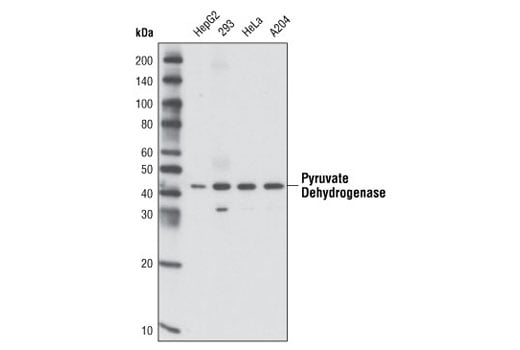
Western blot analysis of extracts from various cell lines using Pyruvate Dehydrogenase (C54G1) Rabbit mAb.
undefined Image 1: Glycolysis/TCA Cycle Molecular Checkpoint Antibody Sampler Kit
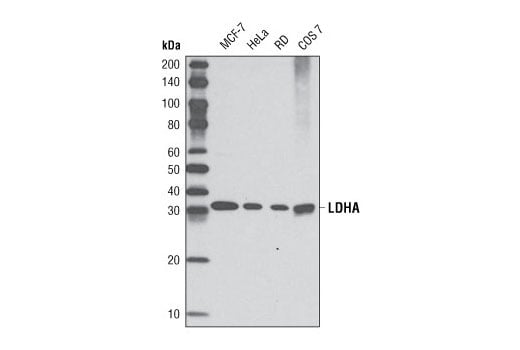
Western blot analysis of extracts from various cell types using LDHA (C4B5) Rabbit mAb.
undefined Image 2: Glycolysis/TCA Cycle Molecular Checkpoint Antibody Sampler Kit
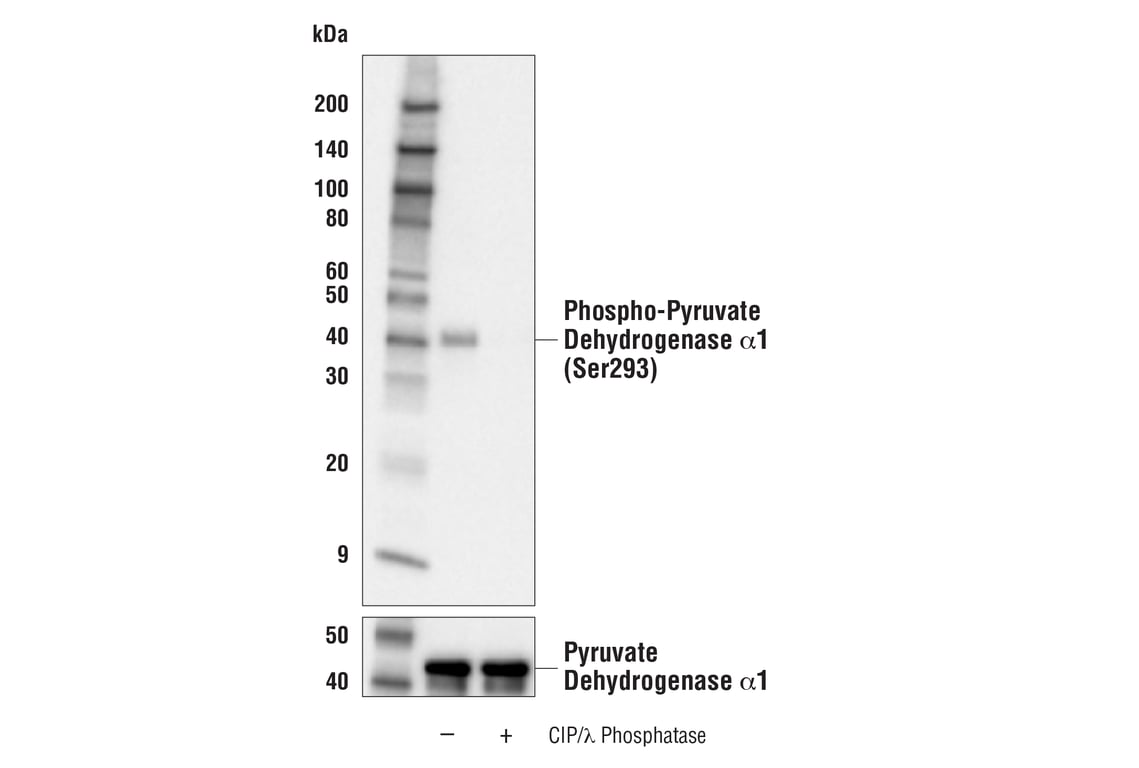
Western blot analysis of extracts from HeLa cells, vehicle-treated (-) or treated (+) with calf intestinal alkaline phosphatase (CIP)/λ phosphatase, using Phospho-Pyruvate Dehydrogenase α1 (Ser293) (E4V9L) Rabbit mAb (upper) or Pyruvate Dehydrogenase (C54G1) Rabbit mAb #3205 (lower).
undefined Image 3: Glycolysis/TCA Cycle Molecular Checkpoint Antibody Sampler Kit
Orders: 877-616-CELL (2355) [email protected] Support: 877-678-TECH (8324) [email protected] Web: cellsignal.com
For Research Use Only. Not for Use in Diagnostic Procedures.

Revision 3

Cell Signaling Technology Logo
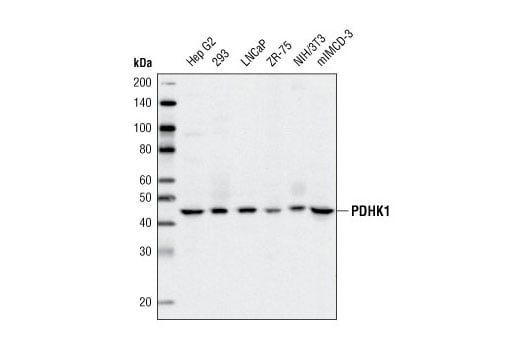
Western blot analysis of extracts from various cell types using PDHK1 (C47H1) Rabbit mAb.
undefined Image 4: Glycolysis/TCA Cycle Molecular Checkpoint Antibody Sampler Kit
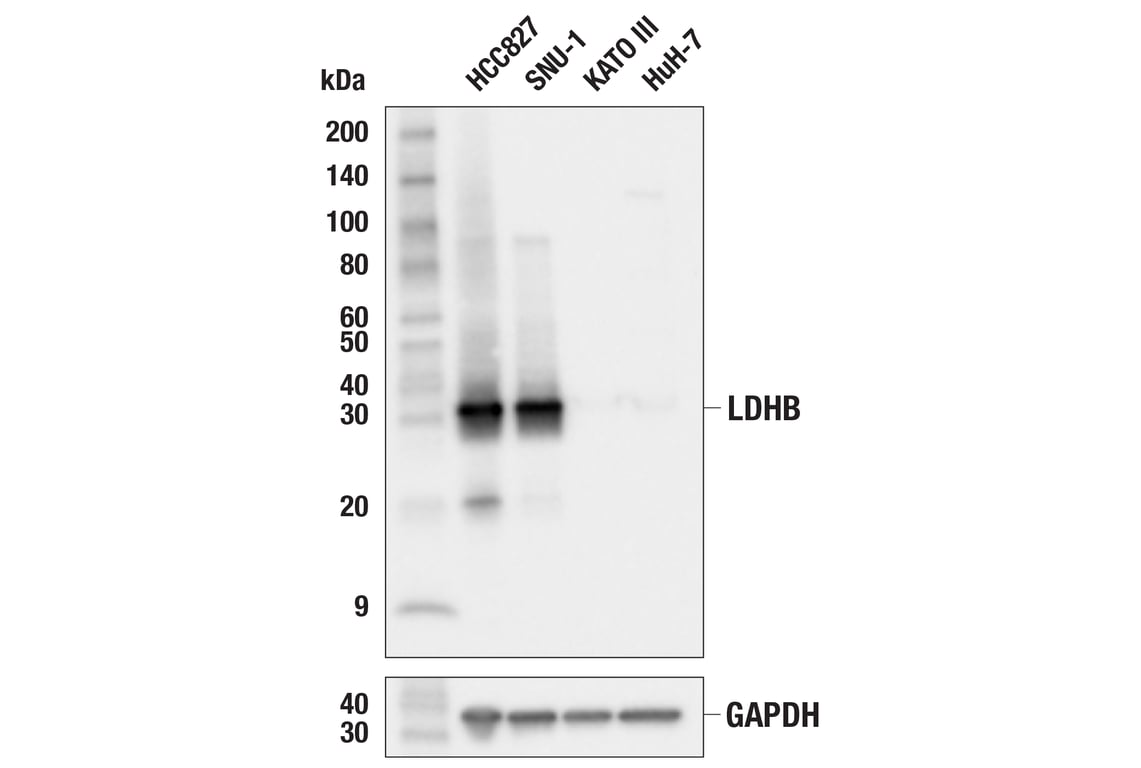
Western blot analysis of extracts from various cell lines using LDHB (E8J8T) Rabbit mAb (upper) or GAPDH (D16H11) XP® Rabbit mAb #5174 (lower). Low expression of LDHB protein in KATO III and HuH-7 cells is consistent with the predicted expression pattern.
undefined Image 5: Glycolysis/TCA Cycle Molecular Checkpoint Antibody Sampler Kit
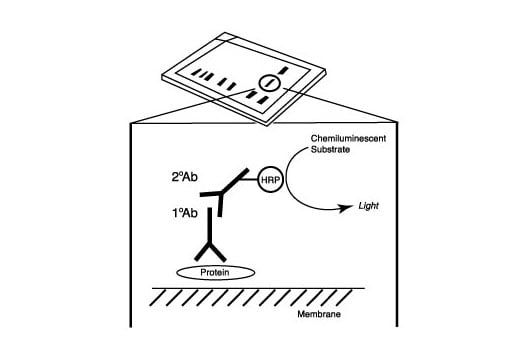
After the primary antibody is bound to the target protein, a complex with HRP-linked secondary antibody is formed. The LumiGLO® is added and emits light during enzyme catalyzed decomposition.
undefined Image 6: Glycolysis/TCA Cycle Molecular Checkpoint Antibody Sampler Kit
Orders: 877-616-CELL (2355) [email protected] Support: 877-678-TECH (8324) [email protected] Web: cellsignal.com
For Research Use Only. Not for Use in Diagnostic Procedures.

Revision 3

Cell Signaling Technology Logo
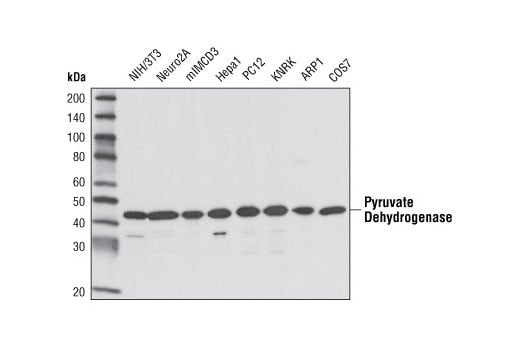
Western blot analysis of various cell lines using Pyruvate Dehydrogenase (C54G1) Rabbit mAb.
undefined Image 7: Glycolysis/TCA Cycle Molecular Checkpoint Antibody Sampler Kit
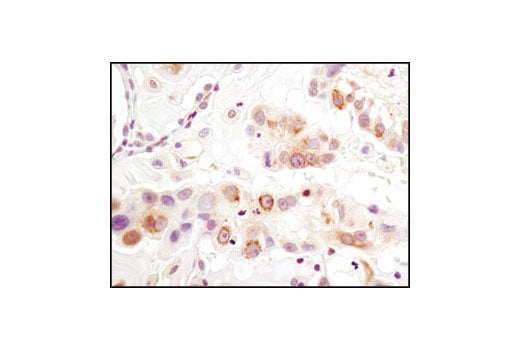
Immunohistochemical analysis of paraffin-embedded human lung carcinoma using LDHA (C4B5) Rabbit mAb.
undefined Image 8: Glycolysis/TCA Cycle Molecular Checkpoint Antibody Sampler Kit
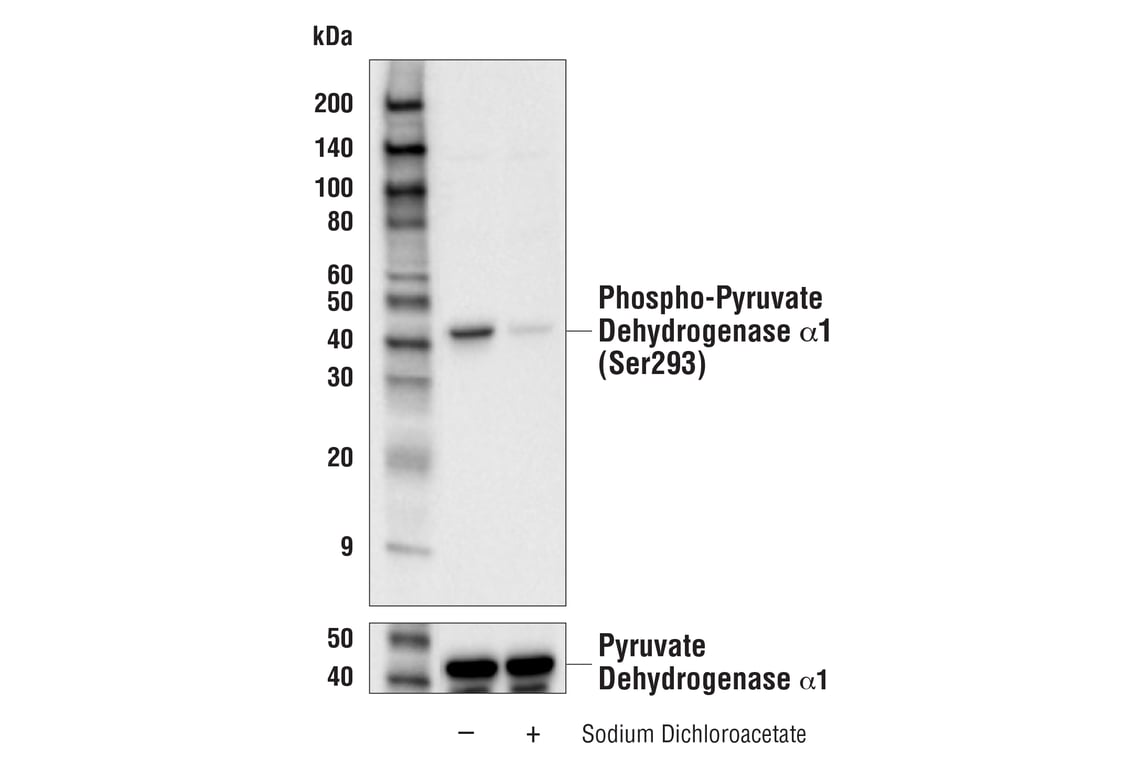
Western blot analysis of extracts from HeLa cells, vehicle-treated (-) or treated (+) with sodium dichloroacetate to reduce phosphorylation of Ser293, using Phospho-Pyruvate Dehydrogenase α1 (Ser293) (E4V9L) Rabbit mAb (upper) or Pyruvate Dehydrogenase (C54G1) Rabbit mAb #3205 (lower).
undefined Image 9: Glycolysis/TCA Cycle Molecular Checkpoint Antibody Sampler Kit
Orders: 877-616-CELL (2355) [email protected] Support: 877-678-TECH (8324) [email protected] Web: cellsignal.com
For Research Use Only. Not for Use in Diagnostic Procedures.

Revision 3

Cell Signaling Technology Logo
Immunohistochemical analysis of paraffin-embedded human lung carcinoma using Pyruvate Dehydrogenase (C54G1) Rabbit mAb.
undefined Image 10: Glycolysis/TCA Cycle Molecular Checkpoint Antibody Sampler Kit
Confocal immunofluorescent analysis of MCF-7 cells using LDHA (C4B5) Rabbit mAb (green). Actin filaments have been labeled with DY-554 phalloidin (red). Blue pseudocolor = DRAQ5® #4084 (fluorescent DNA dye).
undefined Image 11: Glycolysis/TCA Cycle Molecular Checkpoint Antibody Sampler Kit
Immunoprecipitation of phospho-pyruvate dehydrogenase α1 protein from HeLa cell extracts. Lane 1 is 10% input, lane 2 is Rabbit (DA1E) mAb IgG XP® Isotype Control #3900, and lane 3 is Phospho-Pyruvate Dehydrogenase α1 (Ser293) (E4V9L) Rabbit mAb. Western blot analysis was performed using Phospho-Pyruvate Dehydrogenase α1 (Ser293) (E4V9L) Rabbit mAb. Anti-rabbit IgG, HRP-linked Antibody #7074 was used as the secondary antibody.
undefined Image 12: Glycolysis/TCA Cycle Molecular Checkpoint Antibody Sampler Kit
Orders: 877-616-CELL (2355) [email protected] Support: 877-678-TECH (8324) [email protected] Web: cellsignal.com
For Research Use Only. Not for Use in Diagnostic Procedures.

Revision 3

Cell Signaling Technology Logo
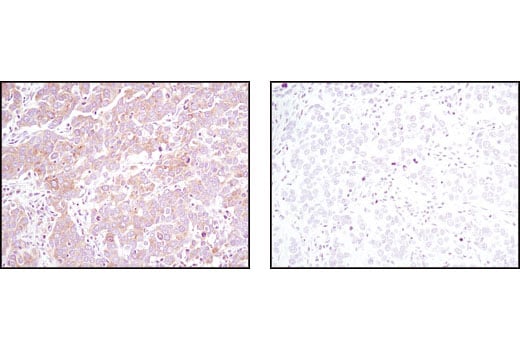
Immunohistochemical analysis of paraffin-embedded human breast carcinoma using Pyruvate Dehydrogenase (C54G1) Rabbit mAb in the presence of control peptide (left) or antigen-specific peptide (right).
undefined Image 13: Glycolysis/TCA Cycle Molecular Checkpoint Antibody Sampler Kit
Confocal immunofluorescent analysis of HeLa cells (left, high-expressing), treated with 5 mM sodium dichloroacetate for 16 hours to reduce phosphorylation of Ser293 (middle, low-expressing), or post-processed with λ-phosphatase (right, negative) using Phospho-Pyruvate Dehydrogenase α1 (Ser293) (E4V9L) Rabbit mAb (green) and Phospho-S6 Ribosomal Protein (Ser235/236) (E2R1O) Mouse mAb #62016 (red). Actin filaments were labeled with DyLight™ 554 Phalloidin #13054 (cyan pseudocolor). Samples were mounted in ProLong® Gold Antifade Reagent with DAPI #8961 (blue).
undefined Image 14: Glycolysis/TCA Cycle Molecular Checkpoint Antibody Sampler Kit
Immunoprecipitation of  PDHK1 protein from KNRK cell extracts. Lane 1 is 10% input, lane 2 is Rabbit (DA1E) mAb IgG XP® Isotype Control #3900, and lane 3 is  PDHK1 (C47H1) Rabbit mAb. Western blot analysis was performed using  PDHK1 (C47H1) Rabbit mAb.  Mouse Anti-rabbit IgG (Light-Chain Specific) (L57A3) mAb #3677, followed by Anti-mouse IgG, HRP-linked Antibody #7076 was used as a secondary antibody.
undefined Image 15: Glycolysis/TCA Cycle Molecular Checkpoint Antibody Sampler Kit
Orders: 877-616-CELL (2355) [email protected] Support: 877-678-TECH (8324) [email protected] Web: cellsignal.com
For Research Use Only. Not for Use in Diagnostic Procedures.

Revision 3

Cell Signaling Technology Logo
Flow cytometric analysis of Hela cells, vehicle-treated (green) or λ phosphatase-treated (blue) using Phospho-Pyruvate Dehydrogenase α1 (Ser293) (E4V9L) Rabbit mAb (solid lines) or concentration-matched Rabbit (DA1E) mAb IgG XP® Isotype Control #3900 (dashed lines). Anti-rabbit IgG (H+L), F(ab')2 Fragment (Alexa Fluor® 488 Conjugate) #4412 was used as a secondary antibody.
undefined Image 16: Glycolysis/TCA Cycle Molecular Checkpoint Antibody Sampler Kit
Flow cytometric analysis of Caki-1 cells using LDHA (C4B5) Rabbit mAb (solid line) or concentration-matched Rabbit (DA1E) mAb IgG XP® Isotype control #3900 (dashed line). Anti-rabbit IgG (H+L), F(ab')2 Fragment (Alexa Fluor® 488 Conjugate) #4412 was used as a secondary antibody.
undefined Image 17: Glycolysis/TCA Cycle Molecular Checkpoint Antibody Sampler Kit
Simple Western™ analysis of lysates (0.1 mg/mL) from HCC827 cells using LDHB (E8J8T) Rabbit mAb #56298. The virtual lane view (left) shows a single target band (as indicated) at 1:10 and 1:50 dilutions of primary antibody. The corresponding electropherogram view (right) plots chemiluminescence by molecular weight along the capillary at 1:10 (blue line) and 1:50 (green line) dilutions of primary antibody. This experiment was performed under reducing conditions on the Jess™ Simple Western instrument from ProteinSimple, a BioTechne brand, using the 12-230 kDa separation module.
undefined Image 18: Glycolysis/TCA Cycle Molecular Checkpoint Antibody Sampler Kit
Orders: 877-616-CELL (2355) [email protected] Support: 877-678-TECH (8324) [email protected] Web: cellsignal.com
For Research Use Only. Not for Use in Diagnostic Procedures.