Revision 3

#64994

Store at -20C

CST Logo
Orders:

877-616-CELL (2355)

[email protected]

Support:

877-678-TECH (8324)

3 Trask Lane | Danvers | Massachusetts | 01923 | USA

For Research Use Only. Not for Use in Diagnostic Procedures.

Applications:
W, IP, ChIP, C&R

Reactivity:
H

Sensitivity:
Endogenous

MW (kDa):
49

Source/Isotype:
Rabbit IgG

UniProt ID:
#Q86U70

Entrez-Gene Id:
8861

Product Usage Information

For optimal ChIP results, use 2.5 μL of antibody and 10 μg of chromatin (approximately 4 × 10⁶ cells) per IP. This antibody has been validated using SimpleChIP® Enzymatic Chromatin IP Kits.

The CUT&RUN dilution was determined using CUT&RUN Assay Kit #86652.

Application Dilution
Western Blotting 1:1000
Immunoprecipitation 1:100
Chromatin IP 1:200
CUT&RUN 1:50

Storage

Supplied in 10 mM sodium HEPES (pH 7.5), 150 mM NaCl, 100 µg/mL BSA, 50% glycerol, and less than 0.02% sodium azide. Store at –20°C. Do not aliquot the antibody.

Specificity/Sensitivity

LDB1 (E2Y9Q) Rabbit Monoclonal Antibody recognizes endogenous levels of total LDB1 protein.

Source / Purification

Monoclonal antibody is produced by immunizing animals with a synthetic peptide corresponding to residues near the carboxy terminus of human LDB1 protein.

Background

LIM domain-containing protein 1 (LDB1) is a nuclear adaptor protein and transcription cofactor that interacts with a multitude of LIM domain-containing transcription factors. Through such interactions, LDB1 facilitates promoter-enhancer bridging and is necessary for the activation and/or repression of genes in multiple cell lineages, including neuronal, cardiac, and hematopoietic cell lineages. Specifically, LDB1 associates with the T cell acute lymphocytic leukemia protein 1 (TAL1) and the nuclear adaptor LIM domain only protein 2 (LMO2) protein to regulate erythroid gene expression (1). LDB1 is crucial for hematopoietic development, and deletion of LDB1 results in embryonic lethality (2). LDB1 is also required for the maintenance of basal mammary epithelial stem cells and promotes breast tumorigenesis (3). In addition, LDB1 stabilizes LMO2 and is necessary to promote oncogenic properties of LMO2-driven leukemia (4). Structurally, LDB1 contains an amino-terminal homodimerization domain and a carboxy-terminal LIM interaction domain (LID). This protein has no known enzymatic or nucleic-acid binding functions (5).

Species Reactivity

Species reactivity is determined by testing in at least one approved application (e.g., western blot).

Western Blot Buffer

IMPORTANT: For western blots, incubate membrane with diluted primary antibody in 5% w/v BSA, 1X TBS, 0.1% Tween® 20 at 4°C with gentle shaking, overnight.

Applications Key

W: Western Blotting IP: Immunoprecipitation ChIP: Chromatin IP C&R: CUT&RUN

Cross-Reactivity Key

H: Human

Trademarks and Patents

Cell Signaling Technology is a trademark of Cell Signaling Technology, Inc.

All other trademarks are the property of their respective owners. Visit cellsignal.com/trademarks for more information.

Limited Uses

Except as otherwise expressly agreed in a writing signed by a legally authorized representative of CST, the following terms apply to Products provided by CST, its affiliates or its distributors. Any Customer's terms and conditions that are in addition to, or different from, those contained herein, unless separately accepted in writing by a legally authorized representative of CST, are rejected and are of no force or effect.

Products are labeled with For Research Use Only or a similar labeling statement and have not been approved, cleared, or licensed by the FDA or other regulatory foreign or domestic entity, for any purpose. Customer shall not use any Product for any diagnostic or therapeutic purpose, or otherwise in any manner that conflicts with its labeling statement. Products sold or licensed by CST are provided for Customer as the end-user and solely for research and development uses. Any use of Product for diagnostic, prophylactic or therapeutic purposes, or any purchase of Product for resale (alone or as a component) or other commercial purpose, requires a separate license from CST. Customer shall (a) not sell, license, loan, donate or otherwise transfer or make available any Product to any third party, whether alone or in combination with other materials, or use the Products to manufacture any commercial products, (b) not copy, modify, reverse engineer, decompile, disassemble or otherwise attempt to discover the underlying structure or technology of the Products, or use the Products for the purpose of developing any products or services that would compete with CST products or services, (c) not alter or remove from the Products any trademarks, trade names, logos, patent or copyright notices or markings, (d) use the Products solely in accordance with CST Product Terms of Sale and any applicable documentation, and (e) comply with any license, terms of service or similar agreement with respect to any third party products or services used by Customer in connection with the Products.

Orders: 877-616-CELL (2355) [email protected] Support: 877-678-TECH (8324) [email protected] Web: cellsignal.com
For Research Use Only. Not for Use in Diagnostic Procedures.

Revision 3

Cell Signaling Technology Logo
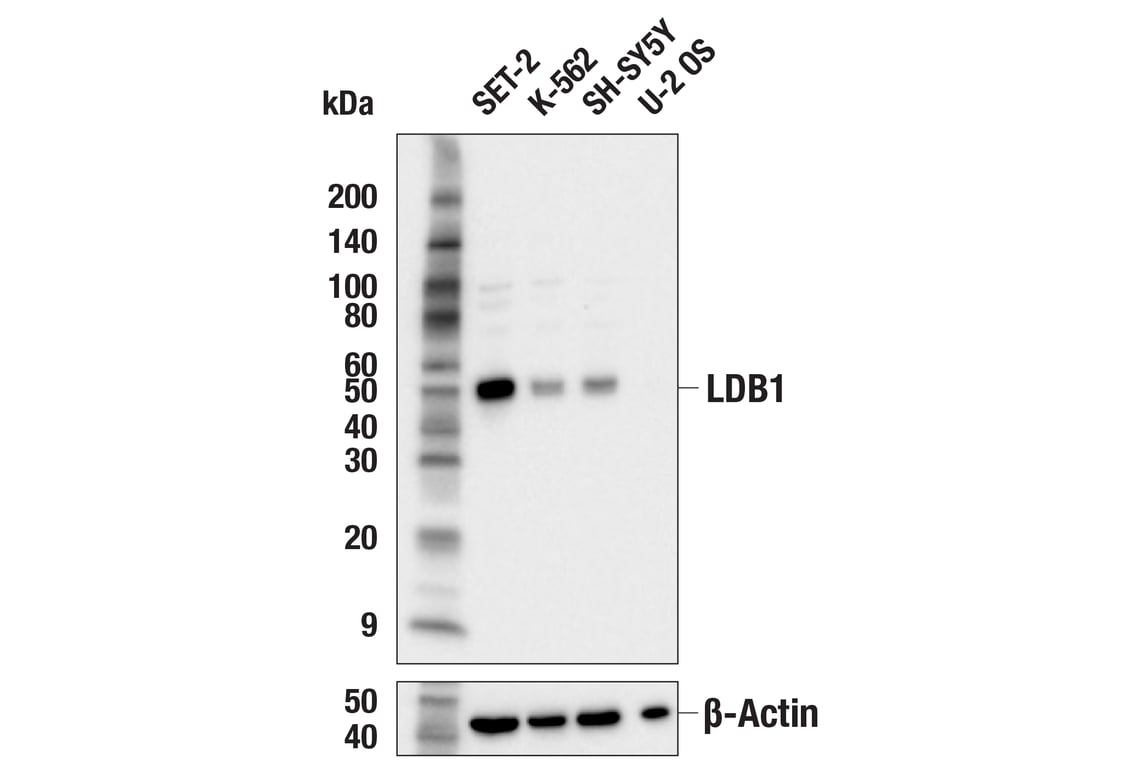
Western blot analysis of extracts from various cell lines using LDB1 (E2Y9Q) Rabbit mAb (upper) or β-Actin (D6A8) Rabbit mAb #8457 (lower). Low expression of LDB1 protein in U-2 OS cells is consistent with the predicted expression pattern.
Western Blotting Image 1: LDB1 (E2Y9Q) Rabbit Monoclonal Antibody
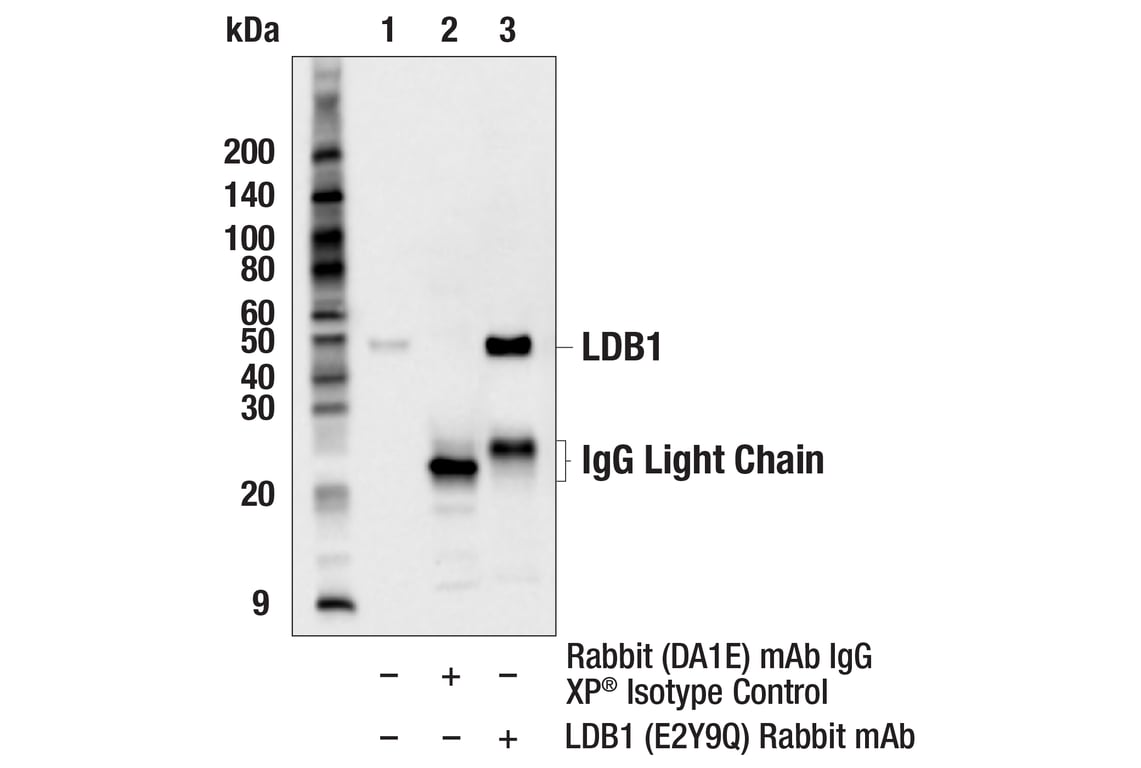
Immunoprecipitation of LDB1 protein from SH-SY5Y cell extracts. Lane 1 is 10% input, lane 2 is Rabbit (DA1E) mAb IgG XP® Isotype Control #3900, and lane 3 is LDB1 (E2Y9Q) Rabbit mAb. Western blot analysis was performed using LDB1 (E2Y9Q) Rabbit mAb. Mouse Anti-Rabbit IgG (Light-Chain Specific) (D4W3E) mAb (HRP Conjugate) #93702 was used as a secondary antibody.
Immunoprecipitation Image 1: LDB1 (E2Y9Q) Rabbit Monoclonal Antibody
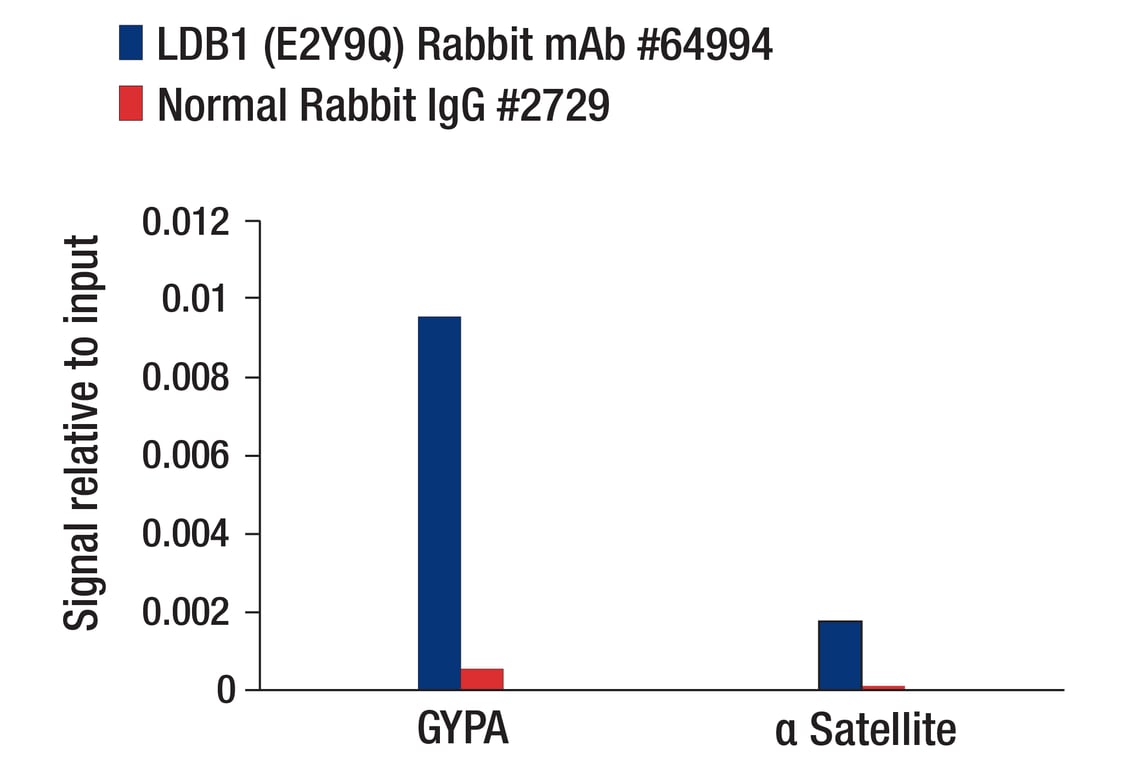
Chromatin immunoprecipitations were performed with cross-linked chromatin from TF-1 cells and either LDB1 (E2Y9Q) Rabbit mAb or Normal Rabbit IgG #2729, using SimpleChIP® Plus Enzymatic Chromatin IP Kit (Magnetic Beads) #9005. The enriched DNA was quantified by real-time PCR, using SimpleChIP® Human GYPA Promoter Primers #31805 and SimpleChIP® Human α Satellite Repeat Primers #4486. The amount of immunoprecipitated DNA in each sample is represented as signal relative to the total amount of input chromatin, which is equivalent to one.
Chromatin Immunoprecipitation Image 1: LDB1 (E2Y9Q) Rabbit Monoclonal Antibody
Orders: 877-616-CELL (2355) [email protected] Support: 877-678-TECH (8324) [email protected] Web: cellsignal.com
For Research Use Only. Not for Use in Diagnostic Procedures.

Revision 3

Cell Signaling Technology Logo
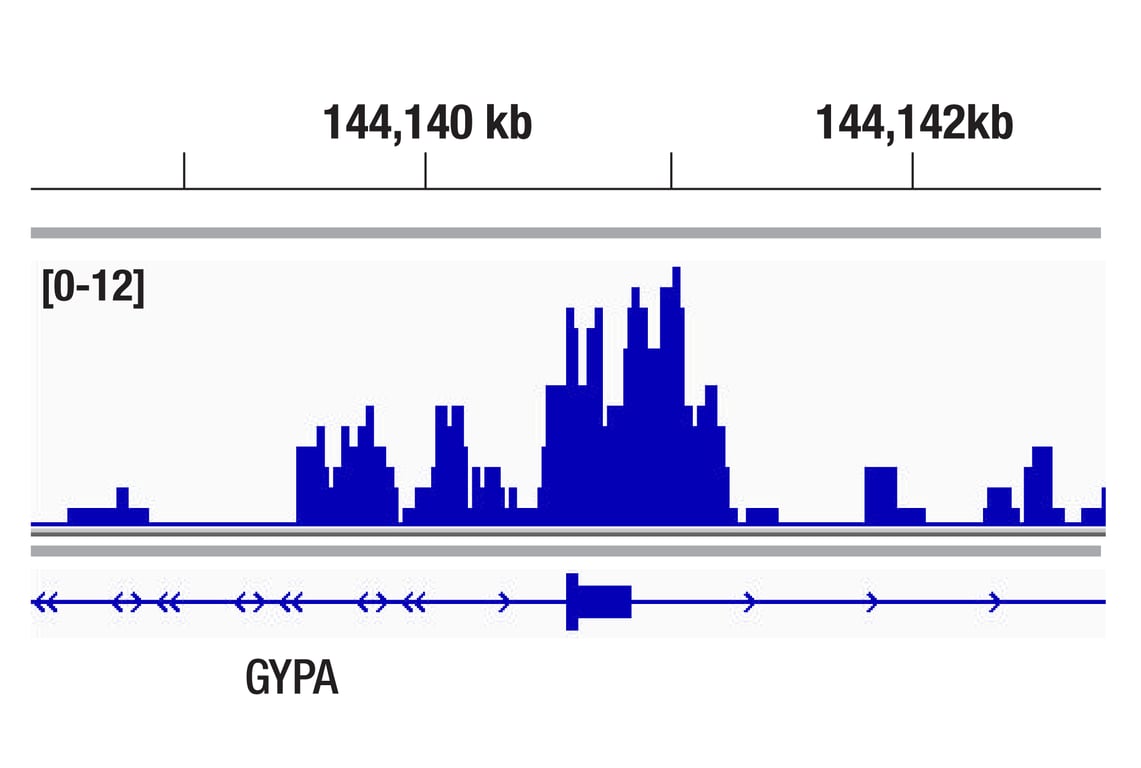
CUT&RUN was performed with TF-1 cells and LDB1 (E2Y9Q) Rabbit mAb, using CUT&RUN Assay Kit #86652. DNA Library was prepared using DNA Library Prep Kit for Illumina® (ChIP-seq, CUT&RUN) #56795. The figure shows binding across GYPA, a known target gene of LDB1 (see our ChIP-qPCR figure).
CUT & RUN Image 1: LDB1 (E2Y9Q) Rabbit Monoclonal Antibody
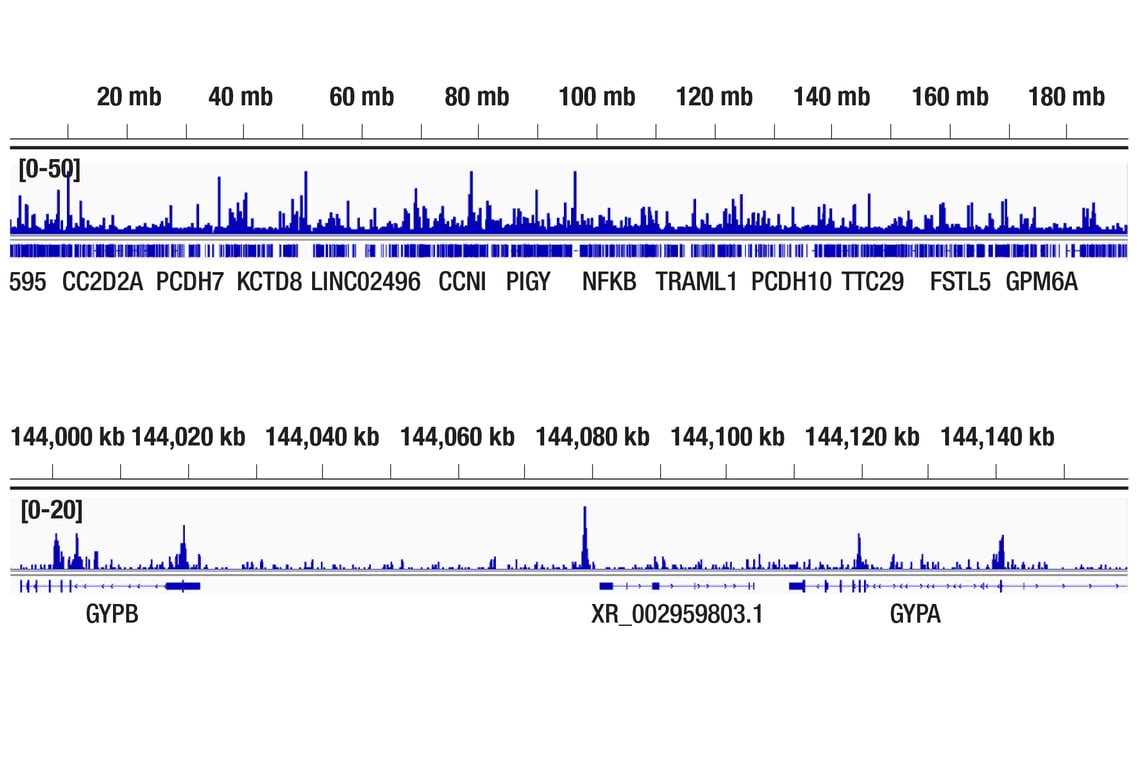
CUT&RUN was performed with TF-1 cells and LDB1 (E2Y9Q) Rabbit mAb, using CUT&RUN Assay Kit #86652. DNA Library was prepared using DNA Library Prep Kit for Illumina® (ChIP-seq, CUT&RUN) #56795. The figures show binding across chromosome 4 (upper), including GYPA (lower), a known target gene of LDB1 (see our ChIP-qPCR figure).
CUT & RUN Image 2: LDB1 (E2Y9Q) Rabbit Monoclonal Antibody
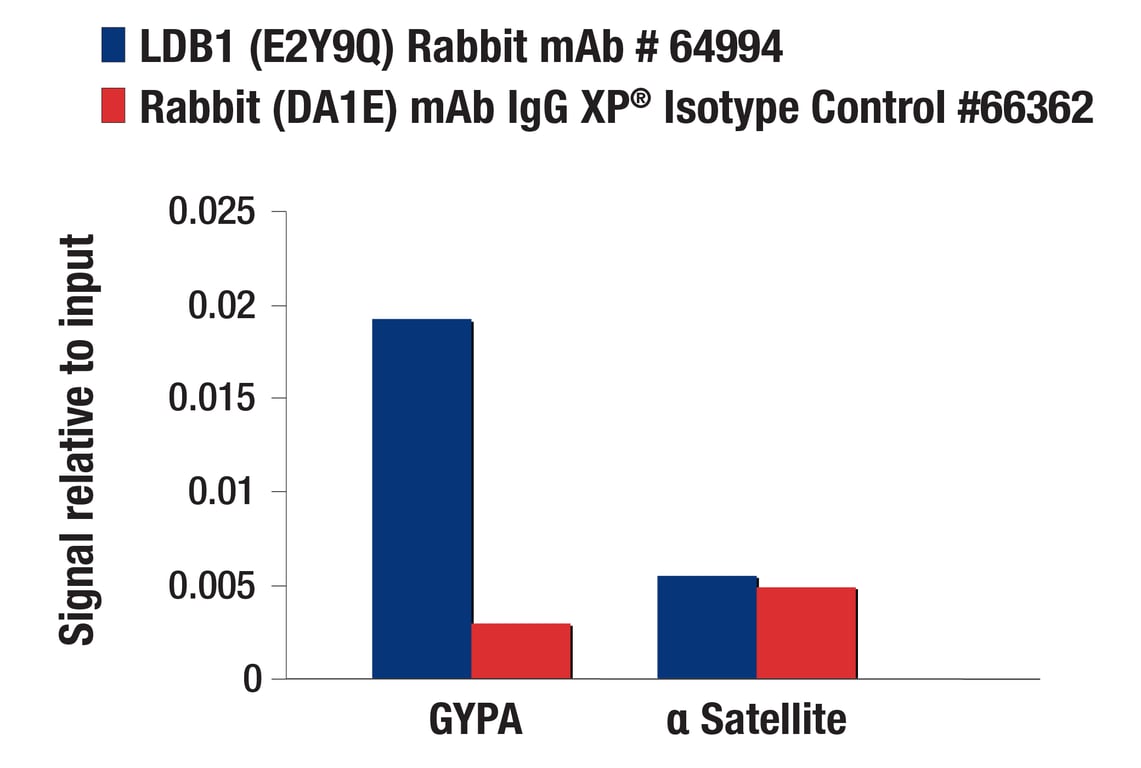
CUT&RUN was performed with TF-1 cells and either LDB1 (E2Y9Q) Rabbit mAb or Rabbit (DA1E) mAb IgG XP® Isotype Control (CUT&RUN) #66362, using CUT&RUN Assay Kit #86652. The enriched DNA was quantified by real-time PCR using human GYPA promoter primers and SimpleChIP® Human α Satellite Repeat Primers #4486. The amount of immunoprecipitated DNA in each sample is represented as signal relative to the total amount of input chromatin, which is equivalent to one.
CUT & RUN Image 3: LDB1 (E2Y9Q) Rabbit Monoclonal Antibody
Orders: 877-616-CELL (2355) [email protected] Support: 877-678-TECH (8324) [email protected] Web: cellsignal.com
For Research Use Only. Not for Use in Diagnostic Procedures.