Revision 2

#24876

Store at -20C

Sequestosome Signaling Antibody Sampler Kit

1 Kit

(6 x 20 microliters)

CST Logo
Orders:

877-616-CELL (2355)

[email protected]

Support:

877-678-TECH (8324)

3 Trask Lane | Danvers | Massachusetts | 01923 | USA

For Research Use Only. Not for Use in Diagnostic Procedures.

Product Includes Product # Quantity Mol. Wt Isotype/Source
SQSTM1/p62 (D5E2) Rabbit Monoclonal Antibody802520 µl62 kDaRabbit IgG
TRAF6 (D21G3) Rabbit Monoclonal Antibody802820 µl60 kDaRabbit IgG
K63-linkage Specific Polyubiquitin (D7A11) Rabbit Monoclonal Antibody562120 µlRabbit IgG
TrkA (12G8) Rabbit Monoclonal Antibody251020 µl140 kDaRabbit IgG
NRF2 (D1Z9C) Rabbit Monoclonal Antibody1272120 µl97-100 kDaRabbit IgG
KEAP1 (D6B12) Rabbit Monoclonal Antibody804720 µl60-64 kDaRabbit IgG
Anti-rabbit IgG, HRP-linked Antibody7074100 µlGoat

Please visit cellsignal.com for individual component applications, species cross-reactivity, dilutions, protocols, and additional product information.

Description

The Sequestosome Signaling Antibody Sampler Kit contains reagents to investigate sequestosome signaling within the cell. The kit contains enough antibodies to perform two western blot experiments per primary antibody.

Storage

Supplied in 10 mM sodium HEPES (pH 7.5), 150 mM NaCl, 100 µg/ml BSA, 50% glycerol and less than 0.02% sodium azide. Store at –20°C. Do not aliquot the antibody.

Background

Sequestosome 1 (SQSTM1, p62) is a ubiquitin binding protein involved in cell signaling, oxidative stress, and autophagy (1-4). It was first identified as a protein that binds to the SH2 domain of p56Lck (5) and independently found to interact with PKCζ (6,7). SQSTM1 was subsequently found to interact with ubiquitin, providing a scaffold for several signaling proteins and triggering degradation of proteins through the proteasome or lysosome (8). Interaction between SQSTM1 and TRAF6 leads to the K63-linked polyubiquitination of TRAF6 and subsequent activation of the NF-κB pathway (9). Protein aggregates formed by SQSTM1 can be degraded by the autophagosome (4,10,11). SQSTM1 binds autophagosomal membrane protein LC3/Atg8, bringing SQSTM1-containing protein aggregates to the autophagosome (12). Lysosomal degradation of autophagosomes leads to a decrease in SQSTM1 levels during autophagy; conversely, autophagy inhibitors stabilize SQSTM1 levels. SQSTM1 also interacts with KEAP1, which is a cytoplasmic inhibitor of NRF2, a key transcription factor involved in cellular responses to oxidative stress (3). Under basal conditions, KEAP1 binds and retains NRF2 in the cytoplasm where it can be targeted for ubiquitin-mediated degradation (13). Small amounts of constitutive nuclear NRF2 maintain cellular homeostasis through regulation of basal expression of antioxidant response genes. Following oxidative or electrophilic stress, KEAP1 releases NRF2, thereby allowing the activator to translocate to the nucleus and bind to ARE-containing genes (14). The coordinated action of NRF2 and other transcription factors mediates the response to oxidative stress (15). Thus, accumulation of SQSTM1 can lead to an increase in NRF2 activity (3). KEAP1 also targets the down regulation of NF-κB activity by targeting IKKβ degradation (16). TrkA is a member of Trk receptor tyrosine kinases and is activated by NGF, which stimulates TrkA polyubiquitination (17,18). TrkA regulates proliferation and is important for development and maturation of the nervous system (19). SQSTM1 interaction with TRAF6 controls synthesis of K63 polyubiquititination on TrkA (18, 20). TrkA polyubiquitination is essential for neurotrophin-dependent receptor internalization, cell differentiation, and signaling (18).

Trademarks and Patents

Cell Signaling Technology is a trademark of Cell Signaling Technology, Inc.

All other trademarks are the property of their respective owners. Visit cellsignal.com/trademarks for more information.

Limited Uses

Except as otherwise expressly agreed in a writing signed by a legally authorized representative of CST, the following terms apply to Products provided by CST, its affiliates or its distributors. Any Customer's terms and conditions that are in addition to, or different from, those contained herein, unless separately accepted in writing by a legally authorized representative of CST, are rejected and are of no force or effect.

Products are labeled with For Research Use Only or a similar labeling statement and have not been approved, cleared, or licensed by the FDA or other regulatory foreign or domestic entity, for any purpose. Customer shall not use any Product for any diagnostic or therapeutic purpose, or otherwise in any manner that conflicts with its labeling statement. Products sold or licensed by CST are provided for Customer as the end-user and solely for research and development uses. Any use of Product for diagnostic, prophylactic or therapeutic purposes, or any purchase of Product for resale (alone or as a component) or other commercial purpose, requires a separate license from CST. Customer shall (a) not sell, license, loan, donate or otherwise transfer or make available any Product to any third party, whether alone or in combination with other materials, or use the Products to manufacture any commercial products, (b) not copy, modify, reverse engineer, decompile, disassemble or otherwise attempt to discover the underlying structure or technology of the Products, or use the Products for the purpose of developing any products or services that would compete with CST products or services, (c) not alter or remove from the Products any trademarks, trade names, logos, patent or copyright notices or markings, (d) use the Products solely in accordance with CST Product Terms of Sale and any applicable documentation, and (e) comply with any license, terms of service or similar agreement with respect to any third party products or services used by Customer in connection with the Products.

Orders: 877-616-CELL (2355) [email protected] Support: 877-678-TECH (8324) [email protected] Web: cellsignal.com
For Research Use Only. Not for Use in Diagnostic Procedures.

Revision 2

Cell Signaling Technology Logo
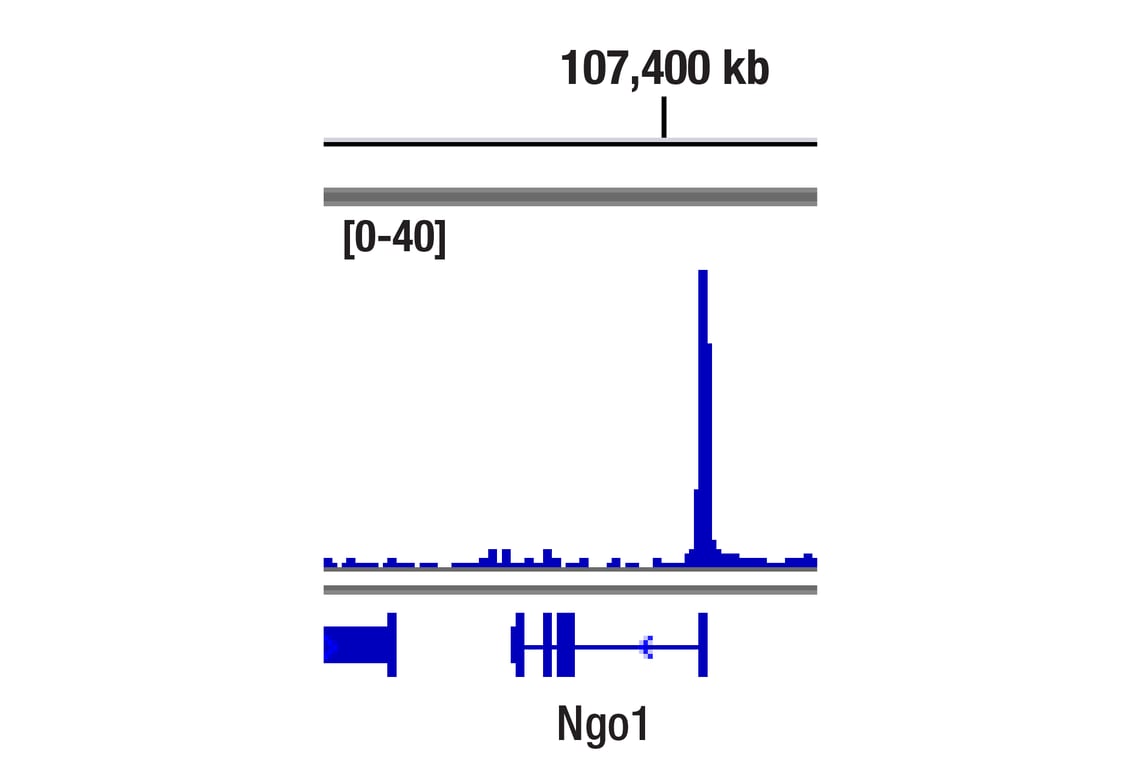
Chromatin immunoprecipitations were performed with cross-linked chromatin from MEF cells treated with DEM (50 μM, 3 hr) and NRF2 (D1Z9C) XP® Rabbit mAb, using SimpleChIP® Plus Enzymatic Chromatin IP Kit (Magnetic Beads) #9005. DNA Libraries were prepared using DNA Library Prep Kit for Illumina Systems (ChIP-seq, CUT&RUN) #56795. The figure shows binding across NQO1, a known target gene of NRF2 (see additional figure containing ChIP-qPCR data).
undefined Image 1: Sequestosome Signaling Antibody Sampler Kit
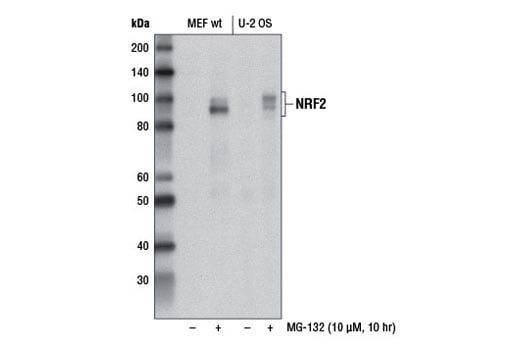
Western blot analysis of extracts from MEF wt and U-2 OS cells, untreated (-) or treated with MG-132 #2194 (10 μM, 10 hr; +), using NRF2 (D1Z9C) XP® Rabbit mAb.
undefined Image 2: Sequestosome Signaling Antibody Sampler Kit
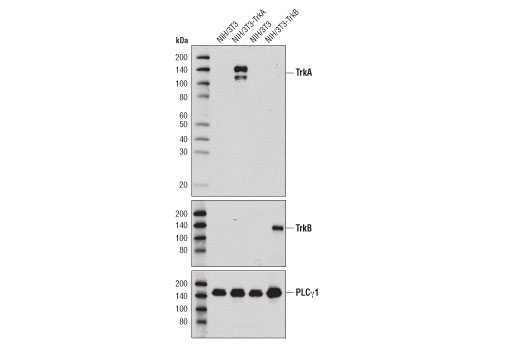
Western blot analysis of extracts from NIH/3T3, NIH/3T3-TrkA, and NIH/3T3-TrkB using TrkA (12G8) Rabbit mAb (upper) TrkB (80E3) Rabbit mAb Antibody #4603 (middle) and PLCγ1 (D9H10) XP® Rabbit mAb #5690 (lower).
undefined Image 3: Sequestosome Signaling Antibody Sampler Kit
Orders: 877-616-CELL (2355) [email protected] Support: 877-678-TECH (8324) [email protected] Web: cellsignal.com
For Research Use Only. Not for Use in Diagnostic Procedures.

Revision 2

Cell Signaling Technology Logo
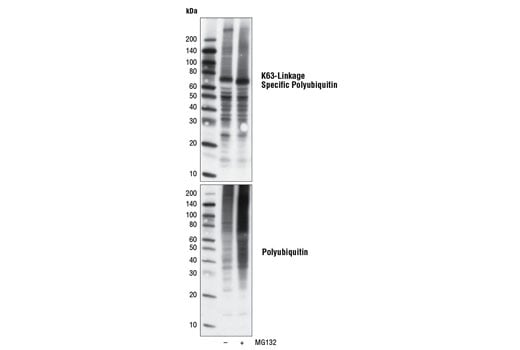
Western blot analysis of extracts from HeLa cells, untreated or treated with the proteasome inhibitor MG132 (10 µM for 6 hours), using K63-linkage Specific Polyubiquitin (D7A11) Rabbit mAb and Ubiquitin Antibody (lower).
undefined Image 4: Sequestosome Signaling Antibody Sampler Kit
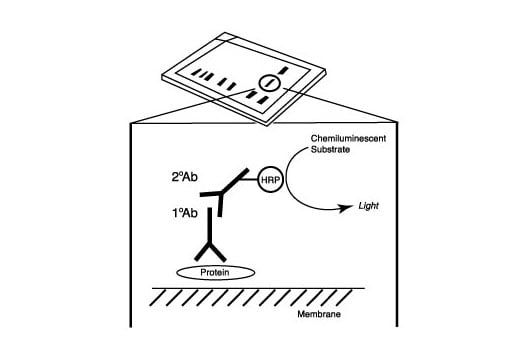
After the primary antibody is bound to the target protein, a complex with HRP-linked secondary antibody is formed. The LumiGLO® is added and emits light during enzyme catalyzed decomposition.
undefined Image 5: Sequestosome Signaling Antibody Sampler Kit
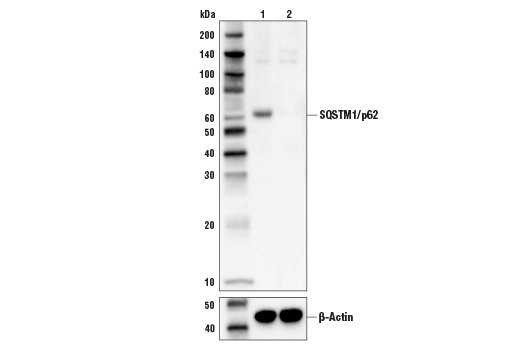
Western blot analysis of extracts from HeLa cells (lane 1) or SQSTM1 knock-out cells (lane 2) using SQSTM1/p62 (D5E2) Rabbit mAb #8025 (upper), and β-actin (D6A8) Rabbit mAb #8457 (lower). The absence of signal in the SQSTM1 knock-out HeLa cells confirms specificity of the antibody for SQSTM1.
undefined Image 6: Sequestosome Signaling Antibody Sampler Kit
Orders: 877-616-CELL (2355) [email protected] Support: 877-678-TECH (8324) [email protected] Web: cellsignal.com
For Research Use Only. Not for Use in Diagnostic Procedures.

Revision 2

Cell Signaling Technology Logo
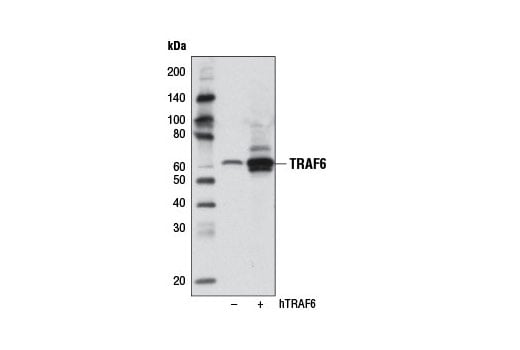
Western blot analysis of extracts from 293T cells, either mock transfected (-) or transfected with a cDNA expression construct encoding full-length human TRAF6 (+), using TRAF6 (D21G3) Rabbit mAb.
undefined Image 7: Sequestosome Signaling Antibody Sampler Kit
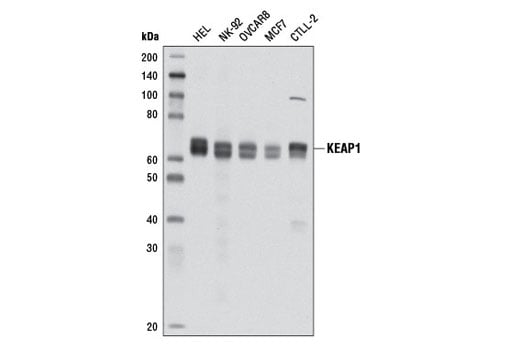
Western blot analysis of extracts from various cell lines using KEAP1 (D6B12) Rabbit mAb.
undefined Image 8: Sequestosome Signaling Antibody Sampler Kit
Chromatin immunoprecipitations were performed with cross-linked chromatin from MEF cells treated with DEM (50 μM, 3 hr) and NRF2 (D1Z9C) XP® Rabbit mAb, using SimpleChIP® Plus Enzymatic Chromatin IP Kit (Magnetic Beads) #9005. DNA Libraries were prepared using DNA Library Prep Kit for Illumina® (ChIP-seq, CUT&RUN) #56795. The figure shows binding across chromosome 8 (upper), including NQO1 (lower), a known target gene of NRF2 (see additional figure containing ChIP-qPCR data).
undefined Image 9: Sequestosome Signaling Antibody Sampler Kit
Orders: 877-616-CELL (2355) [email protected] Support: 877-678-TECH (8324) [email protected] Web: cellsignal.com
For Research Use Only. Not for Use in Diagnostic Procedures.

Revision 2

Cell Signaling Technology Logo
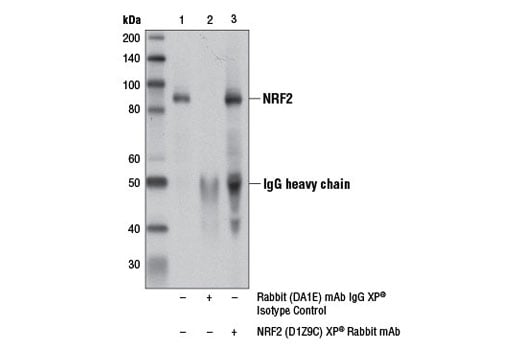
Immunoprecipitation of NRF2 from MEF wt cell extracts treated with MG-132 #2194 (10 μM, 10 hr) using Rabbit (DA1E) mAb IgG XP® Isotype Control #3900 (lane 2) or NRF2 (D1Z9C) XP® Rabbit mAb (lane 3). Lane 1 is 10% input. Western blot analysis was performed using NRF2 (D1Z9C) XP® Rabbit mAb (lane 3).
undefined Image 10: Sequestosome Signaling Antibody Sampler Kit
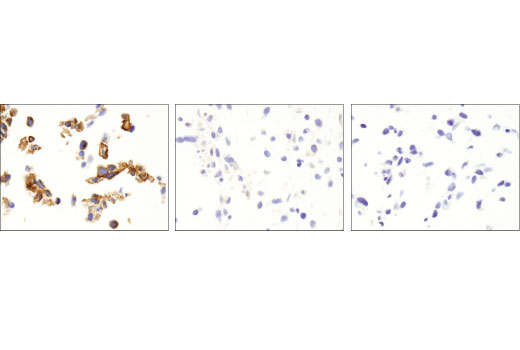
Immunohistochemical analysis of paraffin-embedded NIH/3T3-TrkA (left), NIH/3T3-TrkB (middle) and NIH/3T3-TrkC (right) cell pellets using TrkA (12G8) Rabbit mAb.
undefined Image 11: Sequestosome Signaling Antibody Sampler Kit
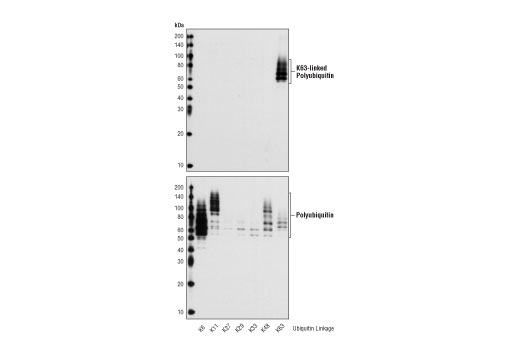
Western blot analysis of seven distinct recombinant polyubiquitin chains (300 ng each) using K63-linkage Specific Polyubiquitin (D7A11) Rabbit mAb (upper) and Ubiquitin Antibody (lower).
undefined Image 12: Sequestosome Signaling Antibody Sampler Kit
Orders: 877-616-CELL (2355) [email protected] Support: 877-678-TECH (8324) [email protected] Web: cellsignal.com
For Research Use Only. Not for Use in Diagnostic Procedures.

Revision 2

Cell Signaling Technology Logo
Western blot analysis of extracts from HeLa cells, transfected with 100 nM SignalSilence® Control siRNA (Unconjugated) #6568 (-), SignalSilence® SQSTM1/p62 siRNA I #6394 (+) or SignalSilence® SQSTM1/p62 siRNA II #6399 (+), using SQSTM1/p62 (D5E2) Rabbit mAb (upper) or α-Tubulin (11H10) Rabbit mAb #2125 (lower). The SQSTM1/p62 (D5E2) Rabbit mAb confirms silencing of SQSTM1/p62 expression, while the α-Tubulin (11H10) Rabbit mAb is used as a loading control.
undefined Image 13: Sequestosome Signaling Antibody Sampler Kit
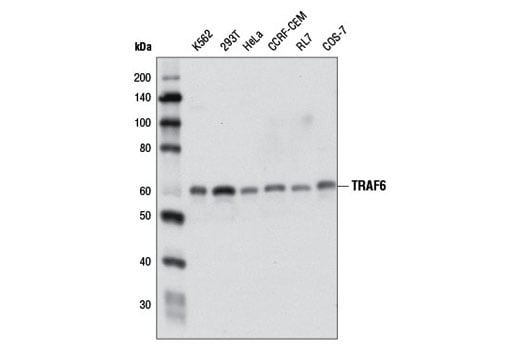
Western blot analysis of extracts from various cell lines using TRAF6 (D21G3) Rabbit mAb.
undefined Image 14: Sequestosome Signaling Antibody Sampler Kit
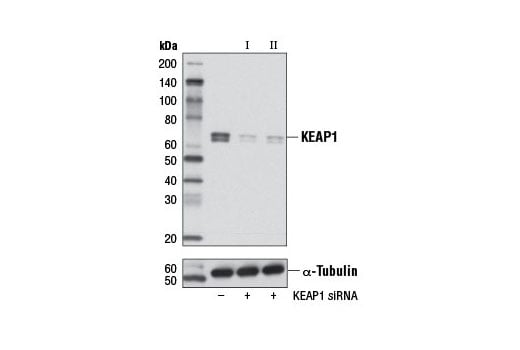
Western blot analysis of extracts from OVCAR8 cells, transfected with 100 nM SignalSilence® Control siRNA (Unconjugated) #6568 (-), SignalSilence® KEAP1 siRNA I #5285 (+) or SignalSilence® KEAP1 siRNA II (+), using KEAP1 (D6B12) Rabbit mAb (upper) or α-Tubulin (11H10) Rabbit mAb #2125 (lower). The KEAP1 (D6B12) Rabbit mAb confirms silencing of KEAP1 expression, while the α-Tubulin (11H10) Rabbit mAb is used as a loading control.
undefined Image 15: Sequestosome Signaling Antibody Sampler Kit
Orders: 877-616-CELL (2355) [email protected] Support: 877-678-TECH (8324) [email protected] Web: cellsignal.com
For Research Use Only. Not for Use in Diagnostic Procedures.

Revision 2

Cell Signaling Technology Logo
Chromatin immunoprecipitations were performed with cross-linked chromatin from MEF NRF2 wild-type (left) and NRF2 knock-out (right) cells, both treated with DEM (50 μM, 3 hr), and NRF2 (D1Z9C) XP® Rabbit mAb or Normal Rabbit IgG #2729 using SimpleChIP® Enzymatic Chromatin IP Kit (Magnetic Beads) #9003. The enriched DNA was quantified by real-time PCR using mouse MafG intron 1 primers, SimpleChIP® Mouse NQO1 Promoter Primers #12635, and SimpleChIP® Mouse RPL30 Intron 2 Primers #7015. The amount of immunoprecipitated DNA in each sample is represented as signal relative to the total amount of input chromatin, which is equivalent to one.
undefined Image 16: Sequestosome Signaling Antibody Sampler Kit
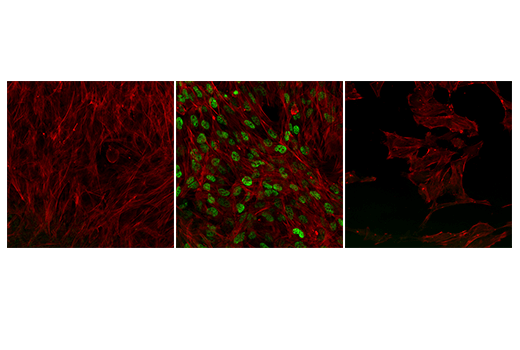
Confocal immunofluorescent analysis of wild-type NRF2 MEF cells, untreated (left) or treated with MG-132 #2194 (10 μM, 8 hr; center), and NRF2 knock-out MEF cells treated with MG-132 #2194 (10 μM, 8 hr; right), using NRF2 (D1Z9C) XP® Rabbit mAb (green pseudocolor). Actin filaments were labeled with Alexa Fluor® 488 Phalloidin #8878 (red pseudocolor).
undefined Image 17: Sequestosome Signaling Antibody Sampler Kit
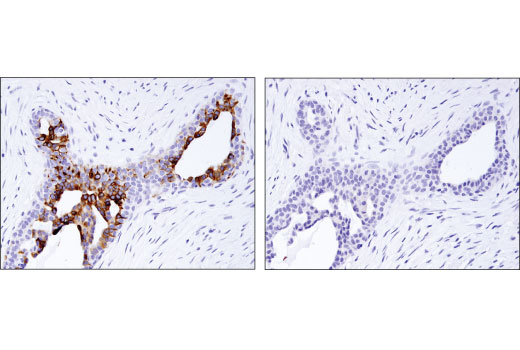
Immunohistochemical analysis of paraffin-embedded human breast carcinoma using TrkA (12G8) Rabbit mAb in the presence of control peptide (left) or antigen-specific peptide (right).
undefined Image 18: Sequestosome Signaling Antibody Sampler Kit
Orders: 877-616-CELL (2355) [email protected] Support: 877-678-TECH (8324) [email protected] Web: cellsignal.com
For Research Use Only. Not for Use in Diagnostic Procedures.

Revision 2

Cell Signaling Technology Logo
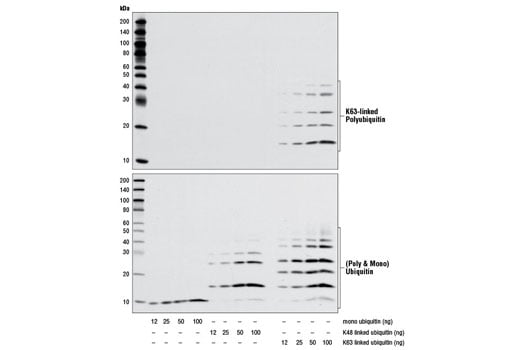
Western blot analysis comparing the titration of recombinant monoubiquitin, K48-linked polyubiquitin and K63-linked polyubiquitin using K63-linkage Specific Polyubiquitin (D7A11) Rabbit mAb (upper) and Ubiquitin Antibody (lower).
undefined Image 19: Sequestosome Signaling Antibody Sampler Kit
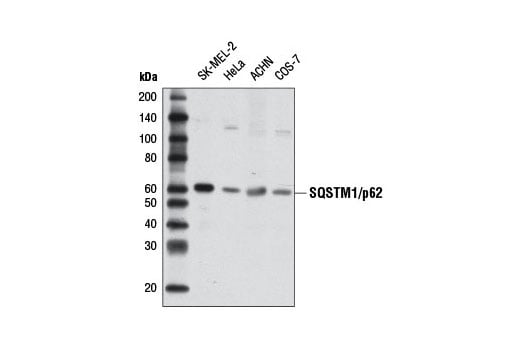
Western blot analysis of extracts from various cell lines using SQSTM1/p62 (D5E2) Rabbit mAb.
undefined Image 20: Sequestosome Signaling Antibody Sampler Kit
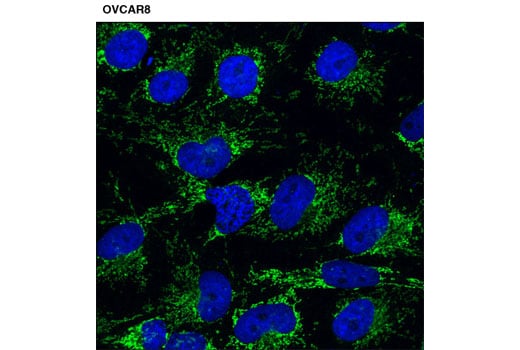
Confocal immunofluorescent analysis of OVCAR8 cells using KEAP1 (D6B12) Rabbit mAb (green). Blue pseudocolor = DRAQ5® #4084 (fluorescent DNA dye).
undefined Image 21: Sequestosome Signaling Antibody Sampler Kit
Orders: 877-616-CELL (2355) [email protected] Support: 877-678-TECH (8324) [email protected] Web: cellsignal.com
For Research Use Only. Not for Use in Diagnostic Procedures.

Revision 2

Cell Signaling Technology Logo
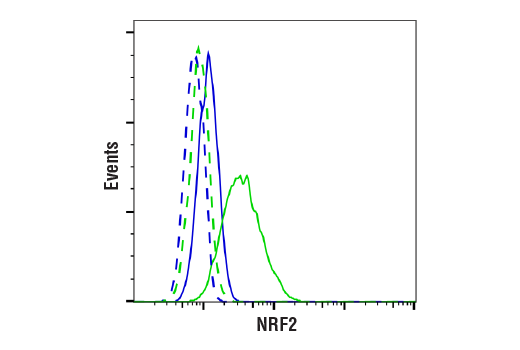
Flow cytometric analysis of MEF wt cells, untreated (blue) or treated with MG-132 #2194 (10uM, 4 hrs; green) using NRF2 (D1Z9C) XP® Rabbit mAb (solid line) compared to concentration-matched Rabbit (DA1E) mAb IgG XP® Isotype Control #3900 (dashed line). Anti-rabbit IgG (H+L), F(ab')2 Fragment (Alexa Fluor® 488 Conjugate) #4412 was used as a secondary antibody.
undefined Image 22: Sequestosome Signaling Antibody Sampler Kit
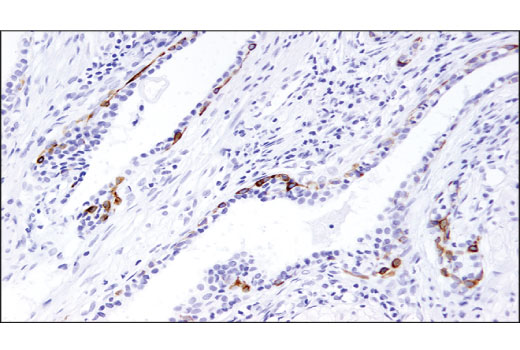
Immunohistochemical analysis of paraffin-embedded human prostate carcinoma using TrkA (12G8) Rabbit mAb.
undefined Image 23: Sequestosome Signaling Antibody Sampler Kit
Western blot analysis of various cell lines using K63-linkage Specific Polyubiquitin (D7A11) Rabbit mAb.
undefined Image 24: Sequestosome Signaling Antibody Sampler Kit
Orders: 877-616-CELL (2355) [email protected] Support: 877-678-TECH (8324) [email protected] Web: cellsignal.com
For Research Use Only. Not for Use in Diagnostic Procedures.

Revision 2

Cell Signaling Technology Logo
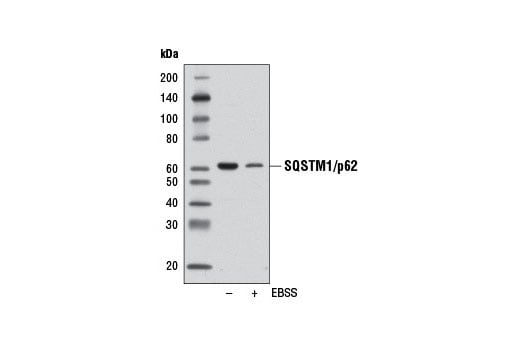
Western blot analysis of extracts from SK-MEL-2 cells, untreated (-) or starved overnight in Earle's Balanced Salt Solution (EBSS) (+), using SQSTM1/p62 (D5E2) Rabbit mAb.
undefined Image 25: Sequestosome Signaling Antibody Sampler Kit
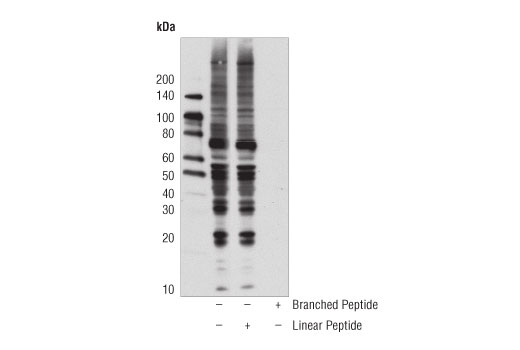
Western blot analysis of extracts from HeLa cells using K63-linkage Specific Polyubiquitin (D7A11) Rabbit mAb, untreated or following antibody pre-incubation with either K63 ubiquitinylated branched peptide to block the signal or a linear peptide surrounding K63 of ubiquitin that cannot block the signal.
undefined Image 26: Sequestosome Signaling Antibody Sampler Kit
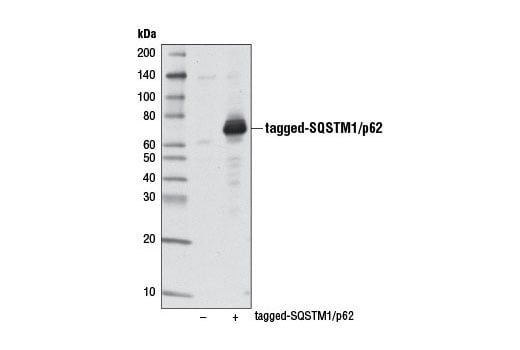
Western blot analysis of extracts from 293T cells, mock transfected (-) or transfected with a tagged human SQSTM1/p62 construct (+), using SQSTM1/p62 (D5E2) Rabbit mAb.
undefined Image 27: Sequestosome Signaling Antibody Sampler Kit
Orders: 877-616-CELL (2355) [email protected] Support: 877-678-TECH (8324) [email protected] Web: cellsignal.com
For Research Use Only. Not for Use in Diagnostic Procedures.

Revision 2

Cell Signaling Technology Logo
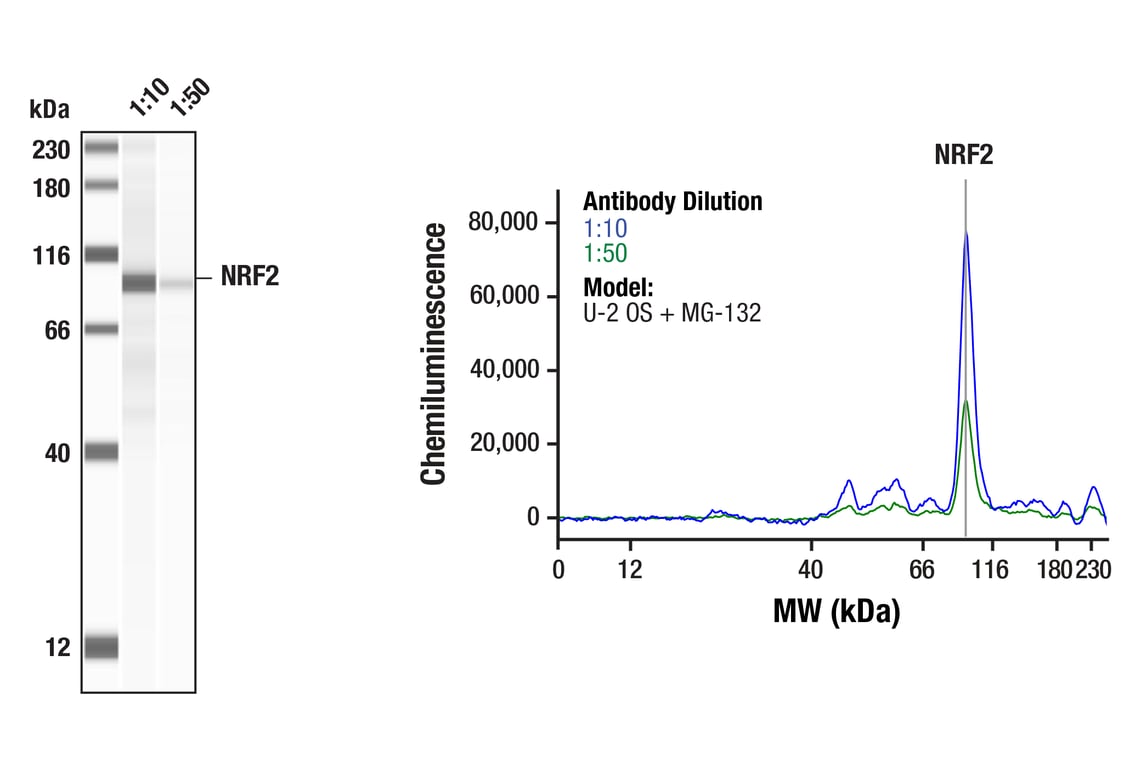
Simple WesternTM analysis of lysates (0.1 mg/mL) from U-2 OS + MG-132 using NRF2 (D1Z9C) XP® Rabbit mAb #12721. The virtual lane view (left) shows the target band (as indicated) at 1:10 and 1:50 dilutions of primary antibody. The corresponding electropherogram view (right) plots chemiluminescence by molecular weight along the capillary at 1:10 (blue line) and 1:50 (green line) dilutions of primary antibody. This experiment was performed under reducing conditions on the JessTM Simple Western instrument from ProteinSimple, a BioTechne brand, using the 12-230 kDa separation module.
undefined Image 28: Sequestosome Signaling Antibody Sampler Kit
Orders: 877-616-CELL (2355) [email protected] Support: 877-678-TECH (8324) [email protected] Web: cellsignal.com
For Research Use Only. Not for Use in Diagnostic Procedures.