Revision 1
#8655
Store at -20C
Wnt/beta-Catenin Activated Targets Antibody Sampler Kit
1 Kit
(8 x 20 microliters)

877-616-CELL (2355)
877-678-TECH (8324)
3 Trask Lane | Danvers | Massachusetts | 01923 | USA
For Research Use Only. Not for Use in Diagnostic Procedures.
| Product Includes | Product # | Quantity | Mol. Wt | Isotype/Source |
|---|---|---|---|---|
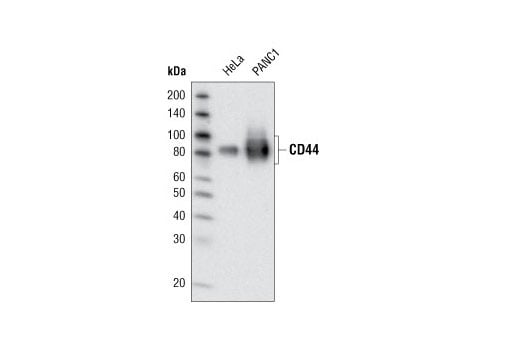
| CD44 (156-3C11) Mouse Monoclonal Antibody | 3570 | 20 µl | 80 kDa | Mouse IgG2a |
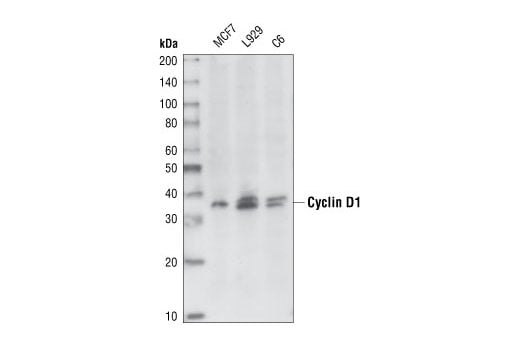
| Cyclin D1 (92G2) Rabbit Monoclonal Antibody | 2978 | 20 µl | 36 kDa | Rabbit IgG |
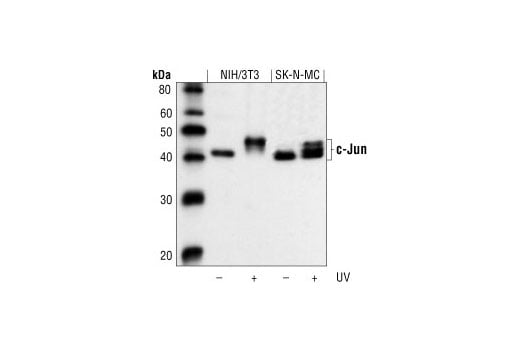
| c-Jun (60A8) Rabbit Monoclonal Antibody | 9165 | 20 µl | 43, 48 kDa | Rabbit IgG |
| LEF1 (C12A5) Rabbit Monoclonal Antibody | 2230 | 20 µl | 25-58 kDa | Rabbit IgG |
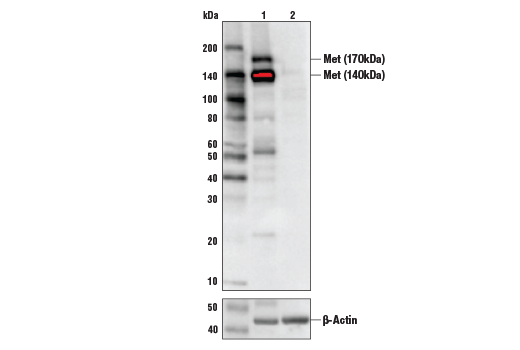
| Met (D1C2) Rabbit Monoclonal Antibody | 8198 | 20 µl | 140, 170 kDa | Rabbit IgG |
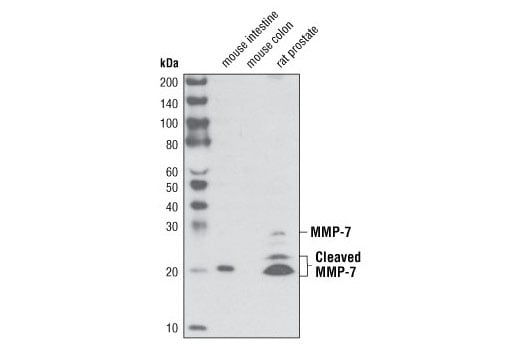
| MMP-7 (D4H5) Rabbit Monoclonal Antibody | 3801 | 20 µl | 28, 20-22 kDa | Rabbit |
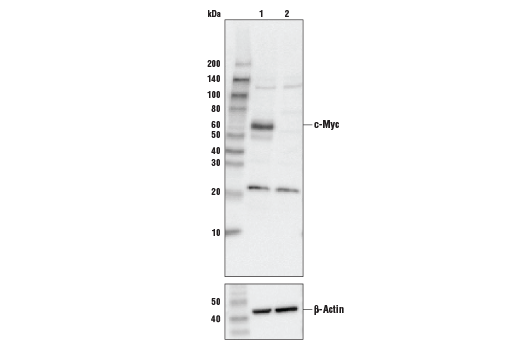
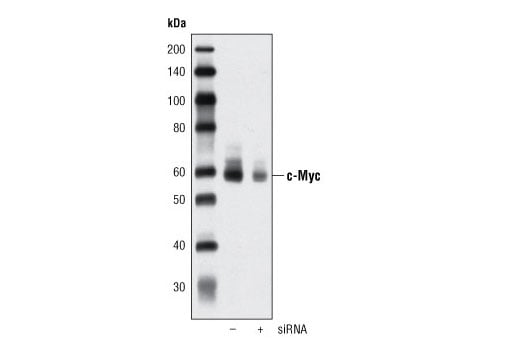
| c-Myc (D84C12) Rabbit Monoclonal Antibody | 5605 | 20 µl | 57-65 kDa | Rabbit IgG |
| TCF1/TCF7 (C63D9) Rabbit Monoclonal Antibody | 2203 | 20 µl | 48, 50 kDa | Rabbit IgG |
| Anti-mouse IgG, HRP-linked Antibody | 7076 | 100 µl | Horse | |
| Anti-rabbit IgG, HRP-linked Antibody | 7074 | 100 µl | Goat |
Please visit cellsignal.com for individual component applications, species cross-reactivity, dilutions, protocols, and additional product information.
Description
Storage
Background
Background References
- Cadigan, K.M. and Nusse, R. (1997) Genes Dev 11, 3286-305.
- Wodarz, A. and Nusse, R. (1998) Annu Rev Cell Dev Biol 14, 59-88.
- Polakis, P. (1999) Curr Opin Genet Dev 9, 15-21.
- Brantjes, H. et al. (2002) Biol Chem 383, 255-61.
- Zeilstra, J. et al. (2008) Cancer Res 68, 3655-61.
- Shtutman, M. et al. (1999) Proc Natl Acad Sci U S A 96, 5522-7.
- Mann, B. et al. (1999) Proc Natl Acad Sci U S A 96, 1603-8.
- Wilkins, J.A. and Sansom, O.J. (2008) Cancer Res 68, 4963-6.
- Boon, E.M. et al. (2002) Cancer Res 62, 5126-8.
- Brabletz, T. et al. (1999) Am J Pathol 155, 1033-8.
- Clevers, H. and Nusse, R. (2012) Cell 149, 1192-205.
Trademarks and Patents
Cell Signaling Technology is a trademark of Cell Signaling Technology, Inc.
U.S. Patent No. 7,429,487, foreign equivalents, and child patents deriving therefrom.
All other trademarks are the property of their respective owners. Visit cellsignal.com/trademarks for more information.
Limited Uses
Except as otherwise expressly agreed in a writing signed by a legally authorized representative of CST, the following terms apply to Products provided by CST, its affiliates or its distributors. Any Customer's terms and conditions that are in addition to, or different from, those contained herein, unless separately accepted in writing by a legally authorized representative of CST, are rejected and are of no force or effect.
Products are labeled with For Research Use Only or a similar labeling statement and have not been approved, cleared, or licensed by the FDA or other regulatory foreign or domestic entity, for any purpose. Customer shall not use any Product for any diagnostic or therapeutic purpose, or otherwise in any manner that conflicts with its labeling statement. Products sold or licensed by CST are provided for Customer as the end-user and solely for research and development uses. Any use of Product for diagnostic, prophylactic or therapeutic purposes, or any purchase of Product for resale (alone or as a component) or other commercial purpose, requires a separate license from CST. Customer shall (a) not sell, license, loan, donate or otherwise transfer or make available any Product to any third party, whether alone or in combination with other materials, or use the Products to manufacture any commercial products, (b) not copy, modify, reverse engineer, decompile, disassemble or otherwise attempt to discover the underlying structure or technology of the Products, or use the Products for the purpose of developing any products or services that would compete with CST products or services, (c) not alter or remove from the Products any trademarks, trade names, logos, patent or copyright notices or markings, (d) use the Products solely in accordance with CST Product Terms of Sale and any applicable documentation, and (e) comply with any license, terms of service or similar agreement with respect to any third party products or services used by Customer in connection with the Products.
Revision 1
Revision 1
Revision 1
Revision 1
Revision 1
Revision 1
Revision 1
Revision 1
Revision 1
Revision 1
Revision 1
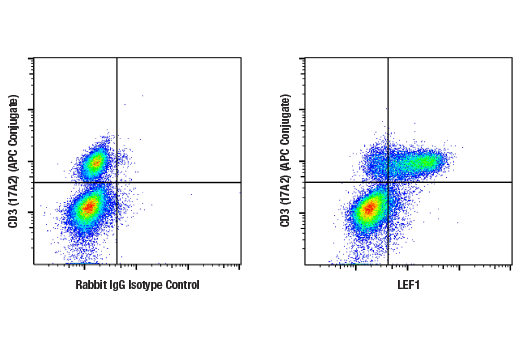
Flow cytometric analysis of mouse splenocytes using LEF1 (C12A5) Rabbit mAb (right) compared to concentration-matched Rabbit (DA1E) mAb IgG XP® Isotype Control #3900 (left), co-stained with CD3 (17A2) Rat mAb (APC Conjugate) #24265. Anti-rabbit IgG (H+L), F(ab')2 Fragment (Alexa Fluor® 488 Conjugate) #4412 was used as a secondary antibody.
Revision 1
Revision 1
Revision 1
Revision 1

Revision 1
Revision 1
Revision 1
Revision 1
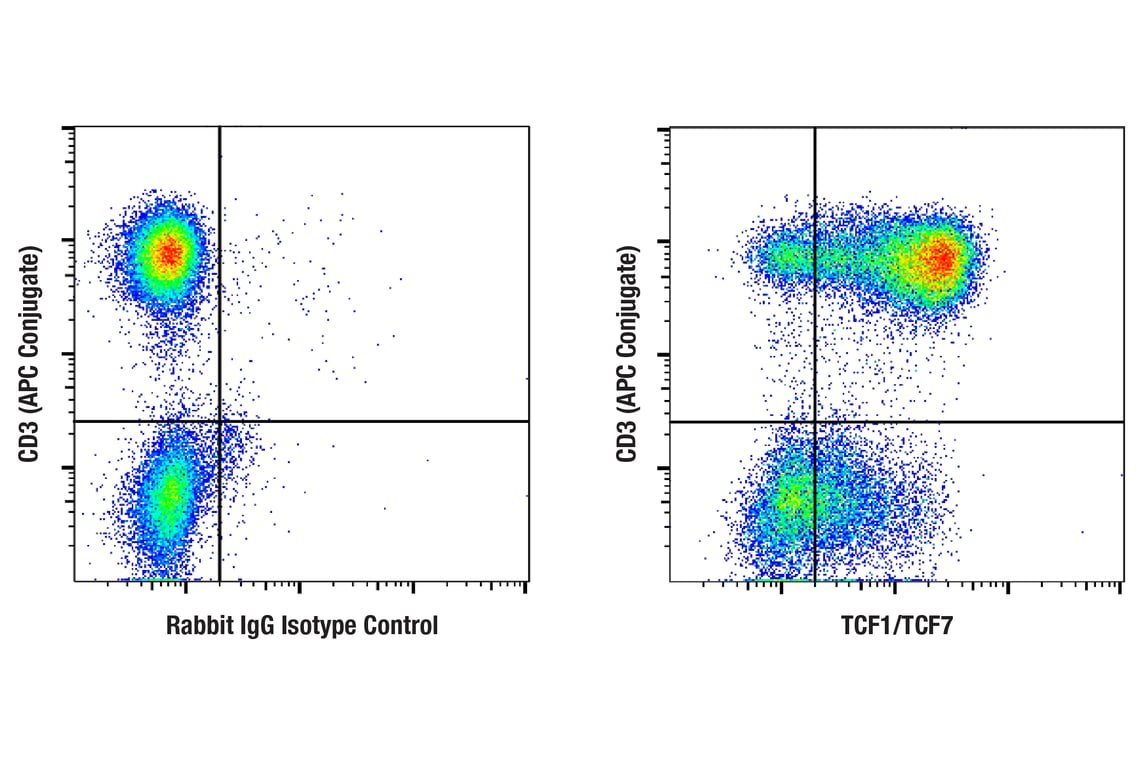
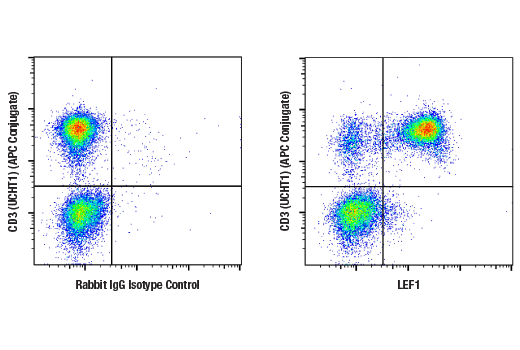
Flow cytometric analysis of human peripheral blood mononuclear cells using LEF1 (C12A5) Rabbit mAb (right) compared to concentration-matched Rabbit (DA1E) mAb IgG XP® Isotype Control #3900 (left), co-stained with CD3 (UCHT1) Mouse mAb (APC Conjugate) #19881. Anti-rabbit IgG (H+L), F(ab')2 Fragment (Alexa Fluor® 488 Conjugate) #4412 was used as a secondary antibody.
Revision 1
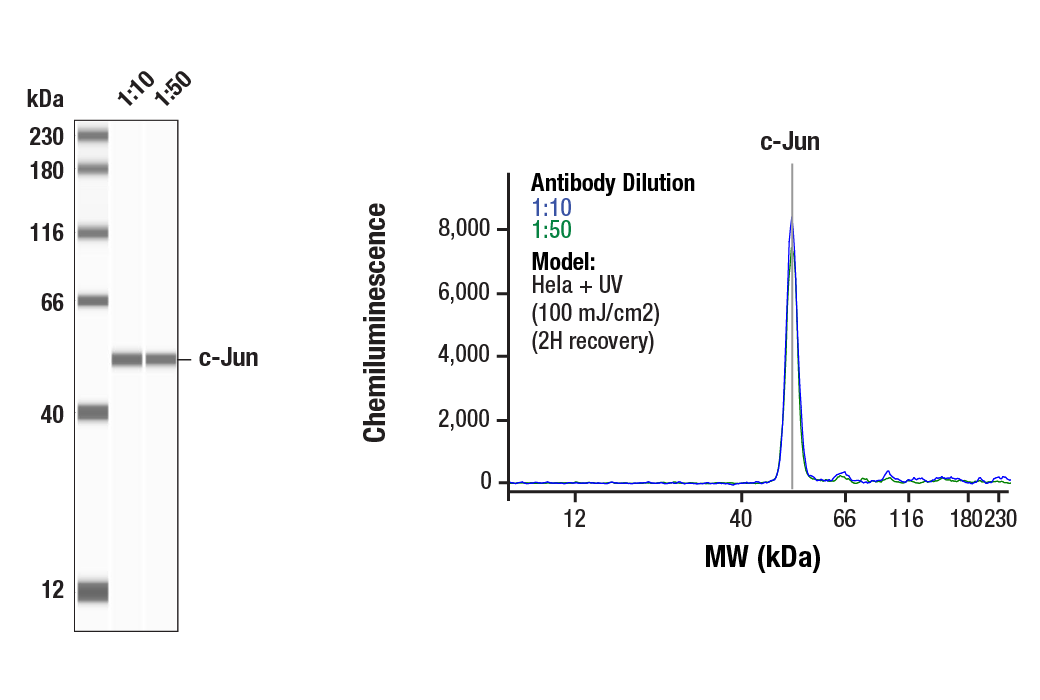
Simple Western™ analysis of lysates (0.1 mg/mL) from HeLa cells treated with UV (100 mJ/cm2; 2H recovery) using c-Jun (60A8) Rabbit mAb #9165. The virtual lane view (left) shows the target band (as indicated) at 1:10 and 1:50 dilutions of primary antibody. The corresponding electropherogram view (right) plots chemiluminescence by molecular weight along the capillary at 1:10 (blue line) and 1:50 (green line) dilutions of primary antibody. This experiment was performed under reducing conditions on the Jess™ Simple Western instrument from ProteinSimple, a BioTechne brand, using the 12-230 kDa separation module.
Revision 1