Revision 3

#32952

Store at -20C

CST Logo
Orders:

877-616-CELL (2355)

[email protected]

Support:

877-678-TECH (8324)

3 Trask Lane | Danvers | Massachusetts | 01923 | USA

For Research Use Only. Not for Use in Diagnostic Procedures.

Applications:
W, IHC-P

Reactivity:
Vir

Sensitivity:
Endogenous (IHC-P), Transfected (W)

MW (kDa):
65

Source/Isotype:
Rabbit IgG

UniProt ID:
#O89339

Entrez-Gene Id:
1446470

Product Usage Information

Application Dilution
Western Blotting 1:1000
Immunohistochemistry (Paraffin) 1:400 - 1:1600

Storage

Supplied in 10 mM sodium HEPES (pH 7.5), 150 mM NaCl, 100 µg/mL BSA, 50% glycerol, and less than 0.02% sodium azide. Store at –20°C. Do not aliquot the antibody.

Specificity/Sensitivity

Nipah/Hendra virus Nucleocapsid (F5N9K) Rabbit Monoclonal Antibody recognizes endogenous levels of total Nipah/Hendra virus nucleocapsid protein. This antibody has been shown to recognize both Malaysia and Bangladesh strains of Nipah virus.

Source / Purification

Nipah/Hendra virus Monoclonal antibody is produced by immunizing animals with a synthetic peptide corresponding to residues surrounding Ala530 of Nipah/Hendra virus nucleocapsid protein.

Background

Nipah virus (NiV) and Hendra virus (HeV) are highly pathogenic zoonotic paramyxoviruses belonging to the Henipavirus genus. They both possess a non-segmented, negative-sense single-stranded RNA genome, which is tightly encapsidated by the nucleocapsid (N) protein to form a helical ribonucleoprotein (RNP) complex, the fundamental unit for viral RNA synthesis and genome protection (1). The N protein, which is largely conserved between the two viruses, is a major structural component and a key player in its replication cycle. The primary function of the NiV/HeV N protein is to encapsidate viral genomic and antigenomic RNA. Encapsidation is essential for genome protection, template assembly for RNA synthesis, and nucleocapsid assembly. It also interacts with other viral proteins, such as the viral phosphoprotein (P), which acts as a chaperone for newly synthesized N protein subunits (2). Understanding the structure and function of the NiV and HeV N protein is critical for developing targeted antiviral therapies against this and other highly pathogenic viruses in the Paramyxoviridae family (3).

Species Reactivity

Species reactivity is determined by testing in at least one approved application (e.g., western blot).

Western Blot Buffer

IMPORTANT: For western blots, incubate membrane with diluted primary antibody in 5% w/v nonfat dry milk, 1X TBS, 0.1% Tween® 20 at 4°C with gentle shaking, overnight.

Applications Key

W: Western Blotting IHC-P: Immunohistochemistry (Paraffin)

Cross-Reactivity Key

Vir: Virus

Trademarks and Patents

Cell Signaling Technology is a trademark of Cell Signaling Technology, Inc.

All other trademarks are the property of their respective owners. Visit cellsignal.com/trademarks for more information.

Limited Uses

Except as otherwise expressly agreed in a writing signed by a legally authorized representative of CST, the following terms apply to Products provided by CST, its affiliates or its distributors. Any Customer's terms and conditions that are in addition to, or different from, those contained herein, unless separately accepted in writing by a legally authorized representative of CST, are rejected and are of no force or effect.

Products are labeled with For Research Use Only or a similar labeling statement and have not been approved, cleared, or licensed by the FDA or other regulatory foreign or domestic entity, for any purpose. Customer shall not use any Product for any diagnostic or therapeutic purpose, or otherwise in any manner that conflicts with its labeling statement. Products sold or licensed by CST are provided for Customer as the end-user and solely for research and development uses. Any use of Product for diagnostic, prophylactic or therapeutic purposes, or any purchase of Product for resale (alone or as a component) or other commercial purpose, requires a separate license from CST. Customer shall (a) not sell, license, loan, donate or otherwise transfer or make available any Product to any third party, whether alone or in combination with other materials, or use the Products to manufacture any commercial products, (b) not copy, modify, reverse engineer, decompile, disassemble or otherwise attempt to discover the underlying structure or technology of the Products, or use the Products for the purpose of developing any products or services that would compete with CST products or services, (c) not alter or remove from the Products any trademarks, trade names, logos, patent or copyright notices or markings, (d) use the Products solely in accordance with CST Product Terms of Sale and any applicable documentation, and (e) comply with any license, terms of service or similar agreement with respect to any third party products or services used by Customer in connection with the Products.

Orders: 877-616-CELL (2355) [email protected] Support: 877-678-TECH (8324) [email protected] Web: cellsignal.com
For Research Use Only. Not for Use in Diagnostic Procedures.

Revision 3

Cell Signaling Technology Logo
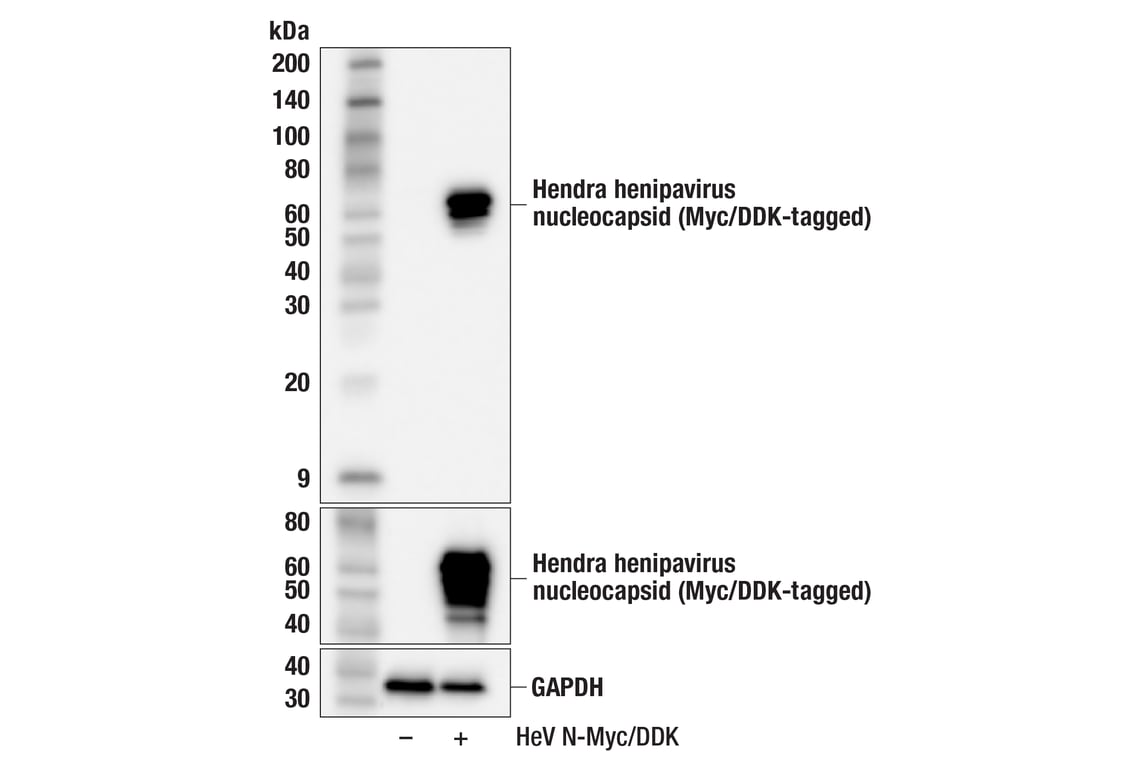
Western blot analysis of extracts from 293T cells, mock transfected (-) or transfected with a construct expressing Myc/DDK-tagged full-length Hendra henipavirus nucleocapsid (HeV N-Myc/DDK; +), using Nipah/Hendra virus Nucleocapsid Rabbit mAb (upper), DYKDDDDK Tag (D6W5B) Rabbit mAb #14793 (middle), or GAPDH (D16H11) XP® Rabbit mAb #5174 (lower).
Western Blotting Image 1: Nipah/Hendra virus Nucleocapsid (F5N9K) Rabbit Monoclonal Antibody
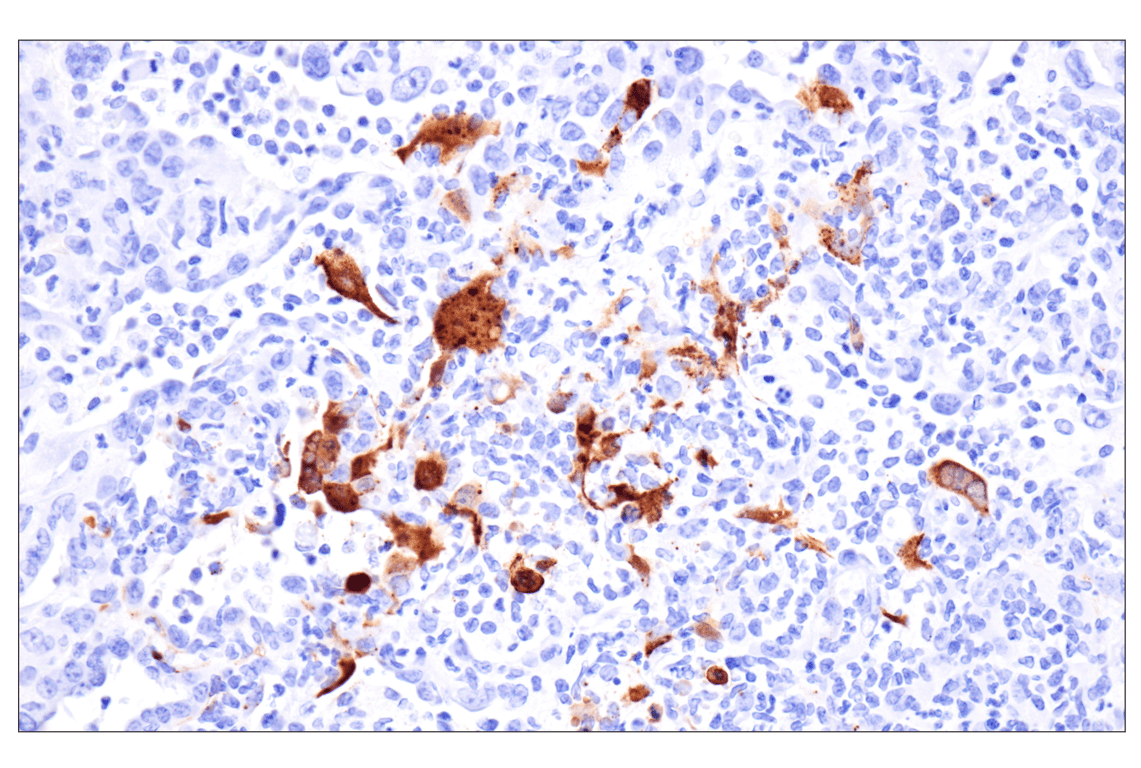
Immunohistochemical analysis of paraffin-embedded Nipah virus-infected Syrian hamster lung using Nipah/Hendra virus Nucleocapsid Rabbit mAb. Nipah virus-infected Syrian hamster lung tissue was generously provided by Dr. Nicholas Crossland, National Emerging Infectious Diseases Laboratories, Boston University, Boston, MA.
Immunohistochemistry Image 1: Nipah/Hendra virus Nucleocapsid (F5N9K) Rabbit Monoclonal Antibody
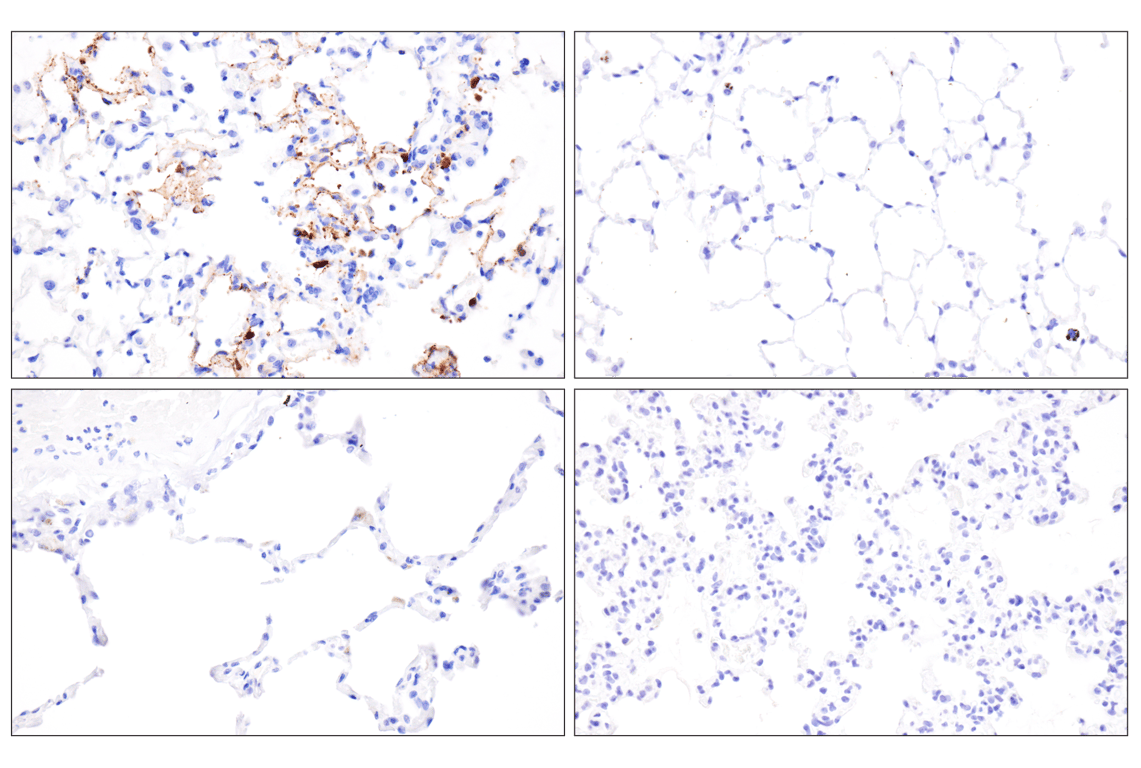
Immunohistochemical analysis of paraffin-embedded Nipah virus-infected Syrian hamster lung (left-top), normal Syrian hamster lung (right-top), normal human lung (left-bottom), and mouse lung (right-bottom) using Nipah/Hendra virus Nucleocapsid Rabbit mAb. Nipah virus-infected Syrian hamster lung tissue was generously provided by Dr. Nicholas Crossland, National Emerging Infectious Diseases Laboratories, Boston University, Boston, MA.
Immunohistochemistry Image 2: Nipah/Hendra virus Nucleocapsid (F5N9K) Rabbit Monoclonal Antibody
Orders: 877-616-CELL (2355) [email protected] Support: 877-678-TECH (8324) [email protected] Web: cellsignal.com
For Research Use Only. Not for Use in Diagnostic Procedures.

Revision 3

Cell Signaling Technology Logo
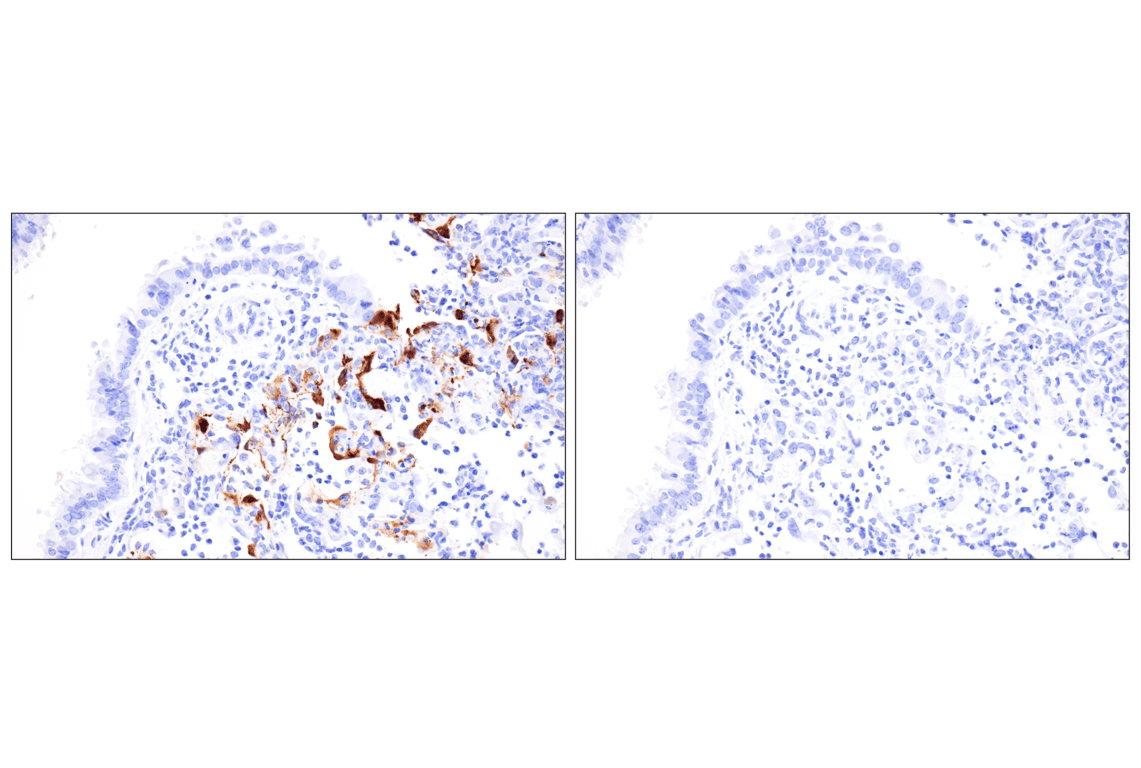
Immunohistochemical analysis of paraffin-embedded Nipah virus-infected Syrian hamster lung using Nipah/Hendra virus Nucleocapsid Rabbit mAb. (left) compared to concentration-matched Rabbit (DA1E) mAb IgG XP® Isotype Control #3900 (right). Nipah virus-infected Syrian hamster lung tissue was generously provided by Dr. Nicholas Crossland, National Emerging Infectious Diseases Laboratories, Boston University, Boston, MA.
Immunohistochemistry Image 3: Nipah/Hendra virus Nucleocapsid (F5N9K) Rabbit Monoclonal Antibody
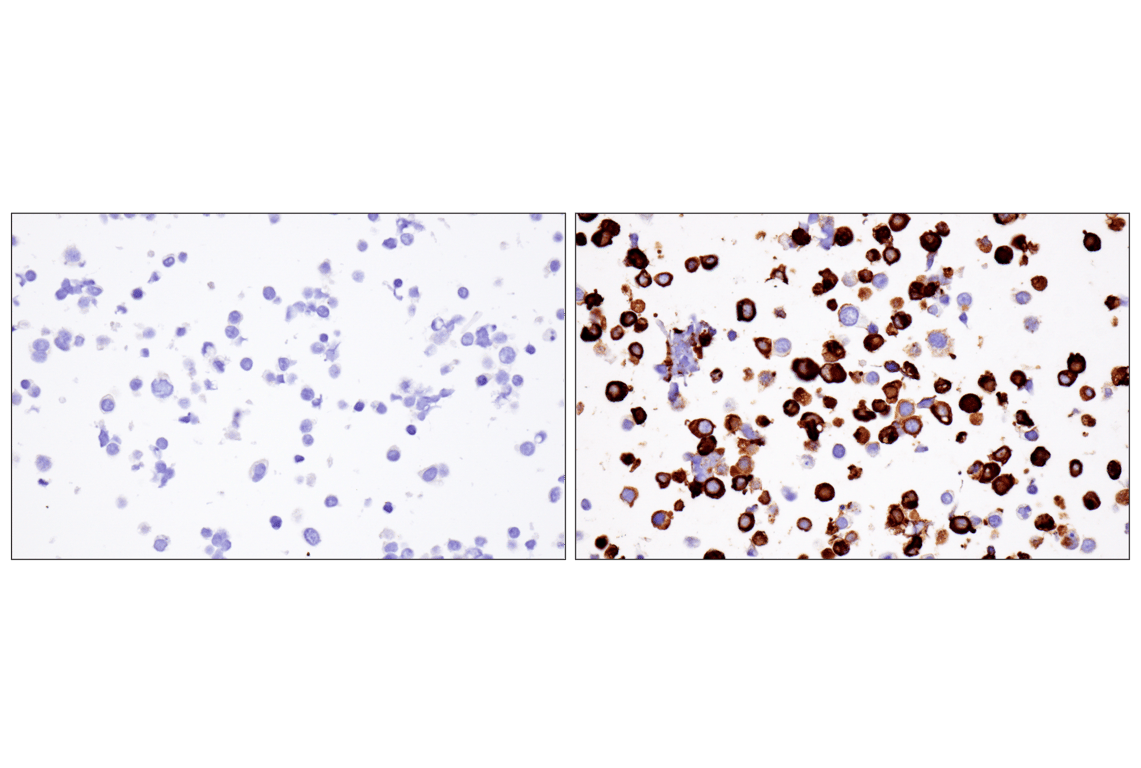
Immunohistochemical analysis of paraffin-embedded 293T cell pellet, untransfected (left) or Hendra henipavirus nucleocapsid-transfected (right), using Nipah/Hendra virus Nucleocapsid Rabbit mAb.
Immunohistochemistry Image 4: Nipah/Hendra virus Nucleocapsid (F5N9K) Rabbit Monoclonal Antibody
Orders: 877-616-CELL (2355) [email protected] Support: 877-678-TECH (8324) [email protected] Web: cellsignal.com
For Research Use Only. Not for Use in Diagnostic Procedures.