Revision 11

#47954

Store at +4C

CST Logo
Orders:

877-616-CELL (2355)

[email protected]

Support:

877-678-TECH (8324)

3 Trask Lane | Danvers | Massachusetts | 01923 | USA

For Research Use Only. Not for Use in Diagnostic Procedures.

Applications:
IHC-Bond, IHC-P, IF-IC

Reactivity:
H

Sensitivity:
Endogenous

Source/Isotype:
Mouse IgG1

UniProt ID:
#P40692

Entrez-Gene Id:
4292

Product Usage Information

Application Dilution
IHC Leica Bond 1:100 - 1:400
Immunohistochemistry (Paraffin) 1:50 - 1:200
Immunofluorescence (Immunocytochemistry) 1:400 - 1:800

Storage

Supplied as liquid tissue culture supernatant containing sodium azide as a preservative. Stable for 12 months when stored at 4°C. Do not aliquot the antibody.

Note: This product is only available in the format listed above. We are unable to provide this in a carrier free, custom formulation.

Specificity/Sensitivity

MLH1 (ES05) Mouse Monoclonal Antibody recognizes endogenous levels of MLH1 protein. Non-specific cytoplasmic staining was observed in pancreas by immunohistochemistry.

Source / Purification

Monoclonal antibody is produced by immunizing animals with a prokaryotic recombinant protein corresponding to 210 amino acids of human MLH1 protein.

Background

Mismatch repair (MMR), a conserved process that involves correcting errors made during DNA synthesis, is crucial to the maintenance of genomic integrity. MLH1 is the human homologue of the E. coli MMR gene mutL. MMR requires recognition of a base mismatch or insertion/deletion loop by a MutS homolog followed by recruitment of a MutL heterodimeric complex consisting of MLH1 and PMS1 (MutL-γ), PMS2 (MutL-α), or MLH3 (MutL-γ). Other factors required for MMR in eukaryotes are EXO1, PCNA, RFC, RPA, DNA polymerases, and DNA ligases (reviewed in 1). Inactivation of the MLH1 gene causes genome instability and predisposition to cancer (2-5). The MLH1 gene is frequently mutated in hereditary nonpolyposis colon cancer (HNPCC) (6). MLH1 also plays a role in meiotic recombination (7).

Species Reactivity

Species reactivity is determined by testing in at least one approved application (e.g., western blot).

Applications Key

IHC-Bond: IHC Leica Bond IHC-P: Immunohistochemistry (Paraffin) IF-IC: Immunofluorescence (Immunocytochemistry)

Cross-Reactivity Key

H: Human

Trademarks and Patents

Cell Signaling Technology is a trademark of Cell Signaling Technology, Inc.

SignalStain is a registered trademark of Cell Signaling Technology, Inc.

All other trademarks are the property of their respective owners. Visit cellsignal.com/trademarks for more information.

Limited Uses

Limited Uses

Except as otherwise expressly agreed in a writing signed by a legally authorized representative of CST, the following terms apply to Products provided by CST, its affiliates or its distributors. Any Customer's terms and conditions that are in addition to, or different from, those contained herein, unless separately accepted in writing by a legally authorized representative of CST, are rejected and are of no force or effect.

Products are labeled with For Research Use Only or a similar labeling statement and have not been approved, cleared, or licensed by the FDA or other regulatory foreign or domestic entity, for any purpose. Customer shall not use any Product for any diagnostic or therapeutic purpose, or otherwise in any manner that conflicts with its labeling statement. Products sold or licensed by CST are provided for Customer as the end-user and solely for research and development uses. Any use of Product for diagnostic, prophylactic or therapeutic purposes, or any purchase of Product for resale (alone or as a component) or other commercial purpose, requires a separate license from CST. Customer shall (a) not sell, license, loan, donate or otherwise transfer or make available any Product to any third party, whether alone or in combination with other materials, or use the Products to manufacture any commercial products, (b) not copy, modify, reverse engineer, decompile, disassemble or otherwise attempt to discover the underlying structure or technology of the Products, or use the Products for the purpose of developing any products or services that would compete with CST products or services, (c) not alter or remove from the Products any trademarks, trade names, logos, patent or copyright notices or markings, (d) use the Products solely in accordance with CST Product Terms of Sale and any applicable documentation, and (e) comply with any license, terms of service or similar agreement with respect to any third party products or services used by Customer in connection with the Products.

Orders: 877-616-CELL (2355) [email protected] Support: 877-678-TECH (8324) [email protected] Web: cellsignal.com
For Research Use Only. Not for Use in Diagnostic Procedures.

Revision 11

Cell Signaling Technology Logo
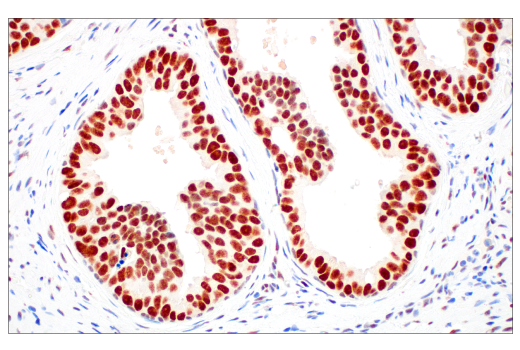
Immunohistochemical analysis of paraffin-embedded human prostate adenocarcinoma using MLH1 (ES05) Mouse mAb performed on the Leica® BOND™ Rx.  
Immunohistochemistry Image 1: MLH1 (ES05) Mouse Monoclonal Antibody
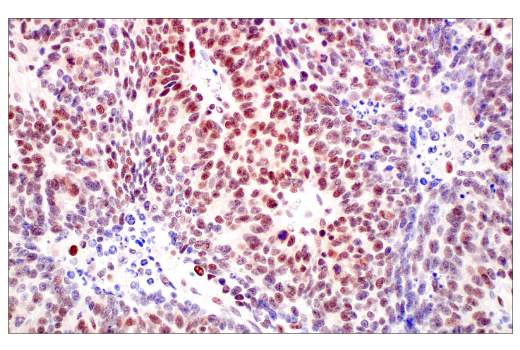
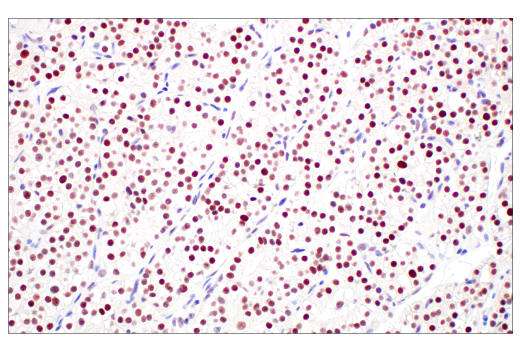
Immunohistochemical analysis of paraffin-embedded human colon adenocarcinoma using MLH1 (ES05) Mouse mAb.
Immunohistochemistry Image 1: MLH1 (ES05) Mouse Monoclonal Antibody
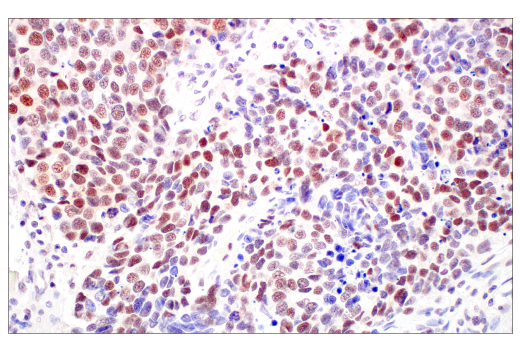
Immunohistochemical analysis of paraffin-embedded human large cell neuroendocrine lung carcinoma using MLH1 (ES05) Mouse mAb.
Immunohistochemistry Image 2: MLH1 (ES05) Mouse Monoclonal Antibody
Orders: 877-616-CELL (2355) [email protected] Support: 877-678-TECH (8324) [email protected] Web: cellsignal.com
For Research Use Only. Not for Use in Diagnostic Procedures.

Revision 11

Cell Signaling Technology Logo
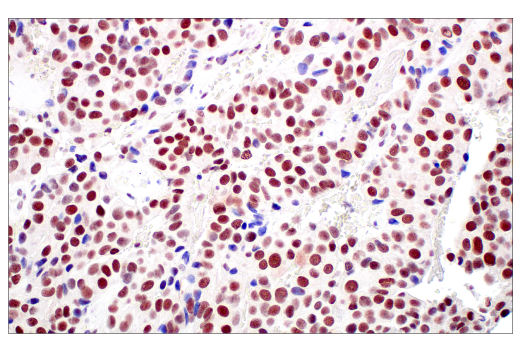
Immunohistochemical analysis of paraffin-embedded human ductal breast carcinoma using MLH1 (ES05) Mouse mAb.
Immunohistochemistry Image 3: MLH1 (ES05) Mouse Monoclonal Antibody
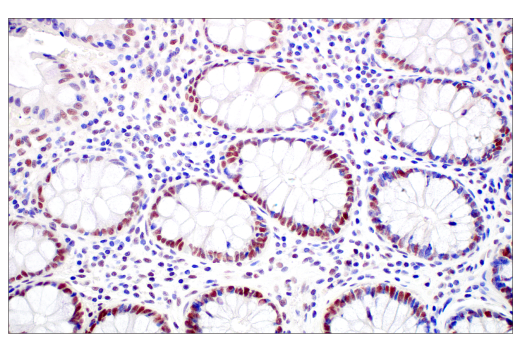
Immunohistochemical analysis of paraffin-embedded normal human colon using MLH1 (ES05) Mouse mAb.
Immunohistochemistry Image 4: MLH1 (ES05) Mouse Monoclonal Antibody
Immunohistochemical analysis of paraffin-embedded normal human parathyroid gland using MLH1 (ES05) Mouse mAb.
Immunohistochemistry Image 5: MLH1 (ES05) Mouse Monoclonal Antibody
Orders: 877-616-CELL (2355) [email protected] Support: 877-678-TECH (8324) [email protected] Web: cellsignal.com
For Research Use Only. Not for Use in Diagnostic Procedures.

Revision 11

Cell Signaling Technology Logo
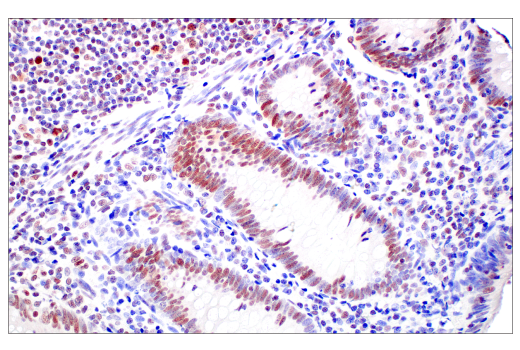
Immunohistochemical analysis of paraffin-embedded human appendix using MLH1 (ES05) Mouse mAb.
Immunohistochemistry Image 6: MLH1 (ES05) Mouse Monoclonal Antibody
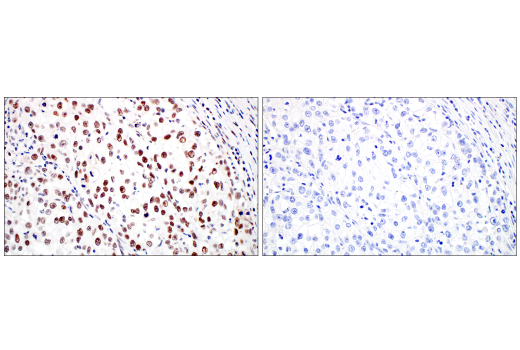
Immunohistochemical analysis of paraffin-embedded human non-small cell lung carcinoma using MLH1 (ES05) Mouse mAb (left) compared to concentration-matched Mouse (G3A1) mAb IgG1 Isotype Control #5415 (right). 
Immunohistochemistry Image 7: MLH1 (ES05) Mouse Monoclonal Antibody
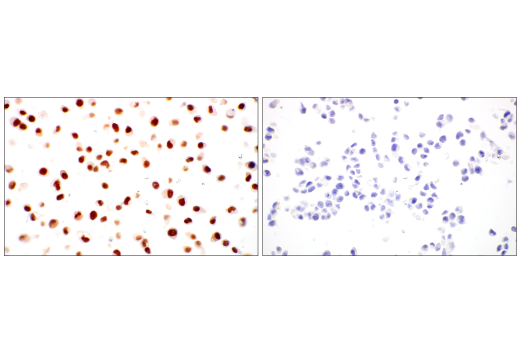
Immunohistochemical analysis of paraffin-embedded HeLa cell pellet (left, positive) or HCT 116 cell pellet (right, negative) using MLH1 (ES05) Mouse mAb.
Immunohistochemistry Image 8: MLH1 (ES05) Mouse Monoclonal Antibody
Orders: 877-616-CELL (2355) [email protected] Support: 877-678-TECH (8324) [email protected] Web: cellsignal.com
For Research Use Only. Not for Use in Diagnostic Procedures.

Revision 11

Cell Signaling Technology Logo
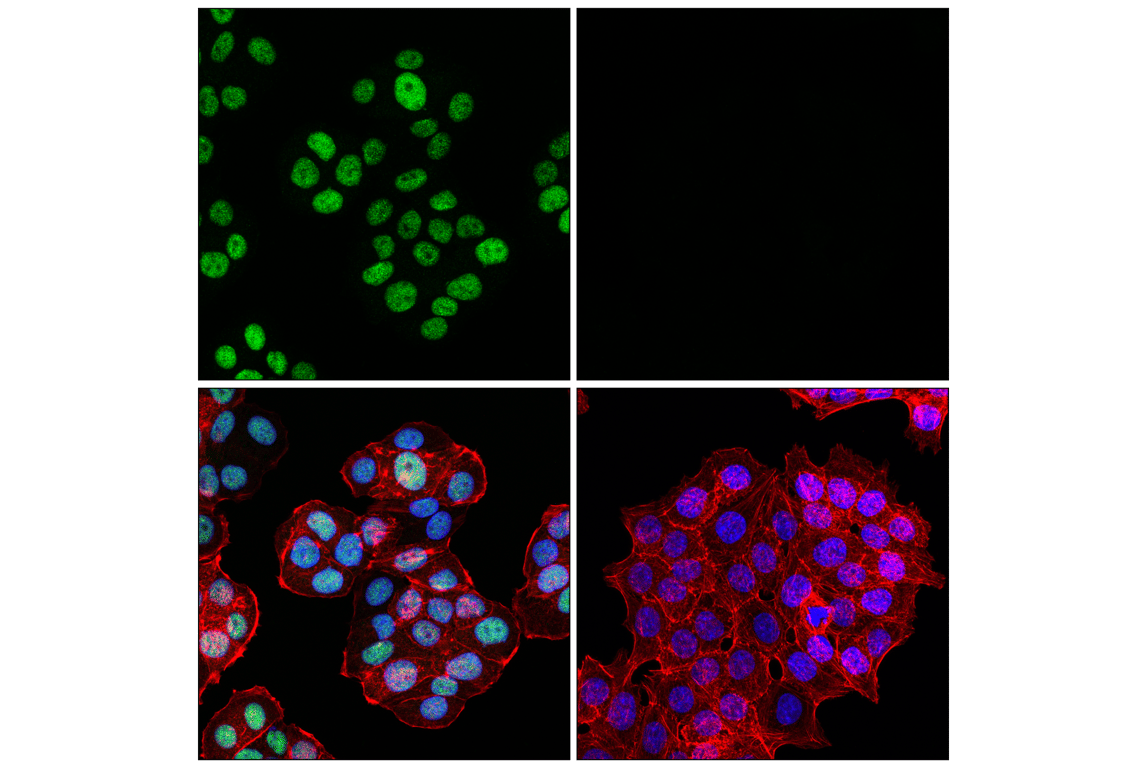
Confocal immunofluorescent analysis of T-47D cells (left, positive) and HCT 116 cells (right, negative) using MLH1 (ES05) Mouse mAb (green), DyLight™ 554 Phalloidin #13054 (red), and DAPI #4083 (blue).
Immunofluorescence Image 1: MLH1 (ES05) Mouse Monoclonal Antibody
Orders: 877-616-CELL (2355) [email protected] Support: 877-678-TECH (8324) [email protected] Web: cellsignal.com
For Research Use Only. Not for Use in Diagnostic Procedures.