

Cancer Resource Center
Cancer is a complex and heterogeneous disease arising from the disruption of normal cellular functions through genetic or epigenetic changes. To better understand the mechanisms driving cancer, researchers can examine the key traits acquired by all cancer cells that enable them to grow, survive, and spread, as described by Hanahan and Weinberg in The Hallmarks of Cancer.
With decades of scientific expertise in building innovative assay tools for cancer research, CST offers a range of kits and reagents you can trust to drive innovative cancer breakthroughs, no matter which cancer hallmark you’re investigating. Whether you’re focused on basic cancer research or targeting an underlying cause behind cancer pathogenesis, CST offers products to support your workflow from start to finish.
Use the menu on the right to explore how CST can guide you through your cancer research project planning, assay design, and beyond.

Learn Biological Processes
Browse these educational resources from CST to find out more about the key characteristics driving cancer progression, as they align with The Hallmarks of Cancer.

Evading Growth Suppressors
Nonmutational Epigenetic Reprogramming
Blog: Hallmarks of Cancer–Nonmutational Epigenetic Reprogramming
Avoiding Immune Destruction
Blog: Hallmarks of Cancer—Avoiding Immune Destruction
Blog: Immunology—What are toll-like receptors and how do they invoke tumor tolerance?
Tumor-Promoting Inflammation
Activating Invasion and Metastasis
Blog: Hallmarks of Cancer—Activating Invasion and Metastasis
Blog: Key Epithelial-Mesenchymal Transition (EMT) Markers in Cancer
Blog: Targeting the Tumor Microenvironment—Key Markers of the Extracellular Matrix (ECM)
Inducing or Accessing Vasculature (Angiogenesis)
Blog: Hallmarks of Cancer—Inducing or Accessing Vasculature (Angiogenesis)
Senescent Cells
Blog: Hallmarks of Cancer—Senescent Cells
Blog: 10 Must-Have Markers for Senescence Research
Blog: IHC-Validated p16 INK4A Antibody—Jump-Start Your Senescence Research
Genome Instability and Mutation
Resisting Cell Death
Blog: Hallmarks of Cancer—Resisting Cell Death
Blog: Mechanisms of Cell Death—Apoptosis
Blog: Mechanisms of Cell Death—Ferroptosis
Deregulating Cellular Metabolism
Blog: Hallmarks of Cancer—Deregulating Cellular Metabolism
Blog: The Role of Metabolism in Cancer
Blog: Interrogating Immunometabolism in the TME Using a Metabolic Checkpoint
Blog: Hypoxia & Cancer: The role of HIF-1α in Oxygen Sensing, Metabolism, and Tumorigenesis
Unlocking Phenotypic Plasticity
Sustaining Proliferative Signaling
Blog: Hallmarks of Cancer—Sustaining Proliferative Signaling
Resources by Cancer Type
Blog: Pancreatic Cancer—Targeting Novel Drivers in the Tumor Microenvironment blog
Blog: Emerging Therapeutic Approaches for Prostate Cancer
Blog: Melanoma—Aberrant Signaling Pathways and Therapeutic Approaches
Blog: Understanding BRCA Mutations & PARP Inhibitor Resistance in Breast Cancer
Blog: Novel Therapeutic Approaches for Diffuse Large B-Cell Lymphoma
Blog: Multiple Myeloma Therapy Advances: Proteasome Inhibitors, CAR-T & More
Blog: Menin-KMT2A Inhibitors: A Promising Approach to Acute Myleoid Leukemia (AML) Treatment

Experimental Design & Assay Enablement
Antibody-based tools power your cancer research. Whether you are visualizing protein localization, analyzing DNA-protein interactions, or determining protein quantification, CST offers a wide range of products and resources to build your next assay.
Protein Expression
Protein Localization
DNA-Protein Interactions
Protein Quantification
Pair-Based Assay & Immunoassay Development
Proteomic Analysis
RNA-Protein Interactions & Single-Cell Analysis
Assessing Cellular Metabolism & Viability
Blog: Which assays can be used to measure metabolism?
Blog: Seven Assays to Detect Apoptosis
Blog: Cell Process—What is cell viability and how can it be measured?
Tools for Cellular Immunoassay Analysis
Blog: Tools to Confirm Antibody Specificity
Blog: Tools for Classifying Cells and Identifying Protein Localization
Blog: Tools to Perform Genomic Profiling
Blog: Tools for Screening & Quantifying Proteins: ELISA vs Mass Spectrometry
Looking for CST solutions based on a specific cancer hallmark? Visit the Interrogate the Hallmarks of Cancer page for examples of antibodies, kits, and assays that will help you answer commonly asked questions for each hallmark.

Characterize Cells and Tissue
When investigating a specific cancer hallmark, it is essential to study a relevant cell type or model system in an appropriate physiological state; otherwise, your findings may be unreliable. For instance, cells should not be undergoing cell death when examining markers for proliferative growth. Moreover, when focusing on specific cellular processes, it is often crucial to consider the subcellular localization of the proteins involved.
CST provides highly specific, validated antibodies against key markers, enabling you to characterize cells and tissues with confidence.
Cell Type Markers
Blog: Guide to accessing tumor-infiltration immune cell types and functions
Compatibility Table for Immune Signaling and Phenotyping by Flow Cytometry
Blog: Immunology: What are lymphoid cells and how are they identified?
Blog: Immunology—What are myeloid cells and how are they identified?
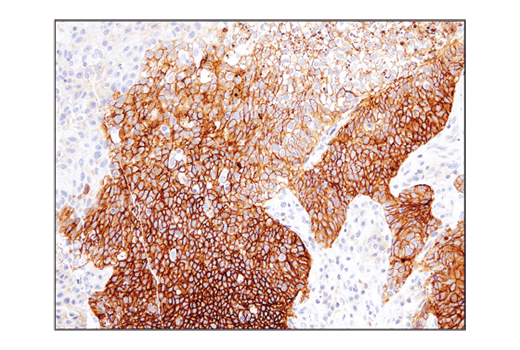
Refer to the Cancer Biomarkers Guide for Immunohistochemistry to find highly specific, rigorously validated antibodies against a wide variety of biomarkers for specific cancer types to help you examine cancer development and progression.

Discover
Use this curated collection of pathways, diagrams, and products relevant to key cancer hallmarks to help you examine the cellular mechanisms driving cancer. The meticulously researched and designed pathway diagrams represent evidence-based signaling information, helping you find the best products to fuel your research.
Evading Growth Suppressors
Nonmutational Epigenetic Reprogramming
Epigenetic Writers and Erasers of Histone H3
Avoiding Immune Destruction
Immune Checkpoint Signaling in the Tumor Microenvironment
Human Immune Cell Marker Guide for Flow Cytometry
Human Immune Cell Marker Guide for IHC
Enabling Replicative Immortality
Tumor-Promoting Inflammation
Jak/Stat: IL-6 Receptor Signaling
Human Immune Cell Marker Guide for Flow Cytometry
Human Immune Cell Marker Guide for IHC
Activating Invasion and Metastasis
Contribution of ECM and Cytoskeletal Factors to EMT
Contribution of Soluble Factors to EMT
Inducing or Accessing Vasculature (Angiogenesis)
Genome Instability and Mutation
Resisting Cell Death
Deregulating Cellular Metabolism
Unlocking Phenotypic Plasticity
ATP-Dependent Chromatin Remodeling Complexes
Sustaining Proliferative Signaling

Translate
Leverage the expertise of CST scientists to streamline your discovery and accelerate cancer therapeutic development. Our comprehensive portfolio to support cancer research includes recombinant monoclonal antibodies, ELISA and cellular assay kits, custom products, and services.
Subscribe to our newsletter
Subscribing to CST eNews is the best way to stay informed about product releases, helpful resources, and events.